A ‘Godzilla’ El Niño is brewing – and scientists are concerned about how the weather phenomenon is set to impact the UK and wider world.
The phenomenon develops every few years, and involves the eastern and central equatorial Pacific Ocean becoming hotter than normal. But this year temperatures are ramping up to never-seen-before extremes.
An El Niño is declared when sea temperatures in the tropical eastern Pacific rise 0.5°C above the long-term average. As of 19 September, these temperatures were at a record-breaking 3.05°C above average.
The event isn’t expected to peak until December, so it’s likely we’ll see them rise even more – some forecasts suggest they might reach nearer 4°C.
For the UK, it’s likely we’ll experience wetter, stormier weather this autumn and possibly cooler, drier weather in the winter as a result of El Niño.
Globally, the outlook is far more sobering.
Scientists share their concerns over El Niño’s potential impact
El Niño, which is a natural part of our climate system, shifts rainfall and temperature patterns across the globe.
Prof Hayley Fowler, Professor of Climate Change Impacts and director of the Centre for Climate and Environmental Resilience at Newcastle University, explained that in some places, like western US and south America coastlines, “that means much more extreme rainfall and flooding”.
In others, particularly Asia and Australia, it can mean drought and extreme heat.
”What concerns me most is where these extremes hit places that are already vulnerable,” she said, “particularly where there are existing problems with water and food security.”
Climate scientists have estimated this year’s weather phenomenon could result in over 450,000 deaths due to the extreme heat alone.
Nigeria, Indonesia, Sudan and India are just some of the countries which are predicted to be most impacted by this, according to the Climate Impact Lab report.
Dr Akshay Deoras, a senior research scientist in high-impact weather at the University of Reading, noted El Niño will potentially contribute to 2027 becoming the hottest year on record.
He pointed to effects which are already being seen: “The South Asian monsoon is already weaker than average, which is significant because around two billion people depend heavily on monsoon rainfall for water and agriculture.”
Indonesia is also seeing reduced rainfall, noted Prof John Marsham, Professor of Atmospheric Science at the University of Leeds. “We expect droughts in southern Africa and South America, and floods in East Africa,” he continued.
“This disruption will increase food prices globally, which for the UK (and Europe) comes on the back of the some of the worst harvests on record, due to the 2026 summer heatwaves and drought.
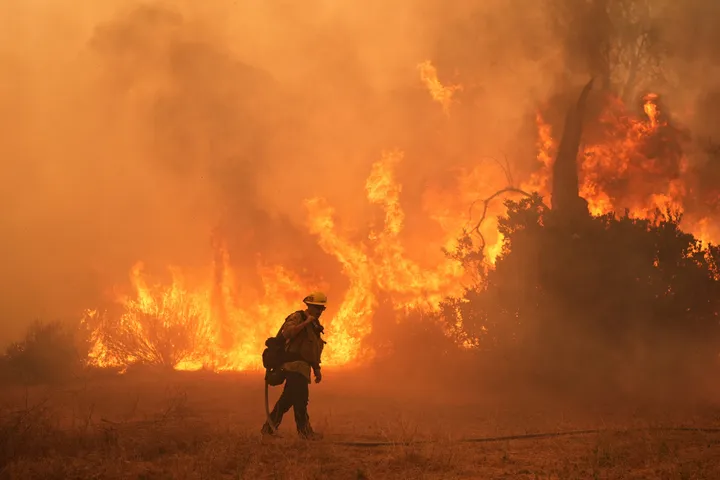
“Droughts and heatwaves will also drive wildfires, damaging vulnerable ecosystems such as the Amazon and Indonesian rain forests, further worsening the climate crisis.”
As a hydrologist, Prof Fowler is particularly concerned about extremes of water – both having too much and too little.
“We know that extreme rainfall is becoming more intense as our climate warms. That can translate into devastating flooding, particularly where intense rainfall falls very quickly or where catchments are already saturated,” she said.
“But at the same time, extreme heat and prolonged periods without rain can produce severe drought, with impacts on water supplies, agriculture, ecosystems and food production.”
It’s also not just about the immediate weather, but the knock-on impact of that.
“A drought doesn’t just mean dry weather. It can mean crop failure, water shortages, higher food prices and energy problems,” she said.
“Flooding can mean homes and businesses damaged, transport and other infrastructure disrupted and people displaced. These events can therefore become much bigger societal and economic crises.”
Is climate change ‘super-charging’ El Niño?
There’s some disagreement between experts on how much of a role climate change plays in how strong this year’s El Niño is. Dr Deoras said there’s no robust evidence yet that climate change is making El Niño stronger.
That said, we do know that El Niño is happening in a world that has already been made much warmer by climate change.
“That really matters,” said Prof Fowler. “Our oceans are warmer and our atmosphere is warmer. A warmer atmosphere can hold more moisture, increasing the potential for extreme rainfall.
“At the same time, higher temperatures can intensify drought through increased evaporation and drying of soils.
“So El Niño is now shifting weather patterns around a climate system that is already warmer and carrying more energy and moisture. That means we need to be prepared for extremes that may be outside our previous experience.”
Prof Richard Allan, Professor of Climate Science at the University of Reading, believes the extreme weather events unleashed across the globe as a result of El Nino will be “further intensified by the human-caused warming of climate”.
What needs to happen now?
Experts agree adapting infrastructure for modern weather and climates is key, as is tackling climate change so extreme weather events don’t get even worse.
Prof Ilan Kelman, Professor of Disasters and Health at University College London, said “we are not ready” for the expected intensity of El Niño’s effects on weather.
“If we were fully ready for changing weather and weather variability, then El Niño and La Niña would not be much of a concern. We can be ready for weather, if we choose to do so,” he said.
Homes, cities, transport systems, drainage systems, water supplies and other critical infrastructure need to be built for future climates, not historic ones. That means building for extreme heat, flooding, drought and storms.
Prof Fowler noted we need to also better prepare for both drought and flooding in the UK, as climate change is increasing the challenges we face from both.
Tackling climate change is also of urgent concern, with Prof Fowler warning “we need to reduce greenhouse gas emissions as rapidly as possible to limit how much worse these extremes become”.
Dr Deoras also wants to see governments act on emissions and adaptation. “We need to reduce greenhouse gas emissions, particularly by cutting fossil fuel use, whilst also preparing communities for more extreme weather,” he said.
“El Niño is a reminder of how quickly changes in the climate system can have consequences across the world, from food and water security to flooding and extreme heat.”
To help other countries most at risk from El Niño, up to £15 million is being made available by the UK government through the Humanitarian Crisis Fund.
Prof Fowler ended: “We are all connected through the climate system and through our global food and economic systems.
“So the lesson from this El Niño is not simply that we need to get through one exceptional year. We need to build resilience to a climate that is continuing to change, while reducing emissions as quickly as possible to stop these risks becoming progressively worse.”
What can people in the UK do?
The key advice from experts is to be prepared for all eventualities. Keep an eye on Met Office forecasts and weather warnings, and prepare for flooding and storms (especially if you live in an area that’s already vulnerable to those issues).
Prof Kelman said El Niño is expected to make the UK’s autumn milder, wetter, and stormier, the UK’s winter colder and stormier, and next year’s UK summer hotter.
He urged people to be “ready for major disruptions involving weather”.
“Everyone in the UK should have supplies, abilities, and readiness to be in their household on their own without external help for a minimum of two weeks,” he said.
His advice echoes that of environment secretary Dame Angela Eagle, who recently said that because of extreme weather events like El Niño, “if you’ve got a store of a bit of food that can keep you going for a while before the emergency services can get to you, you’re going to be a lot better off than if you haven’t”.
Bottled water, tinned foods including veg, meat or fish; dried fruit; cereal; oats; nuts; cereal bars; and UHT milk or plant-based milk alternatives are just some items a nutritionist has advised having on hand in emergency stores. Having some ready-made baby formula in your cupboard for emergencies, as well as spare pet food, can also be useful.
In the event of a power cut, a battery or wind-up torch and/or radio (as well as spare batteries) is recommended.
“The real tragedy in this country is not that so few people are prepared, but that so many people cannot afford to be prepared, such as stockpiling for at least two weeks,” continued Prof Kelman.
“When far too many households struggle to put sufficient food on the table each day, they have no option to prepare for El Niño, for La Niña, for climate change, or for other changes to the weather.”