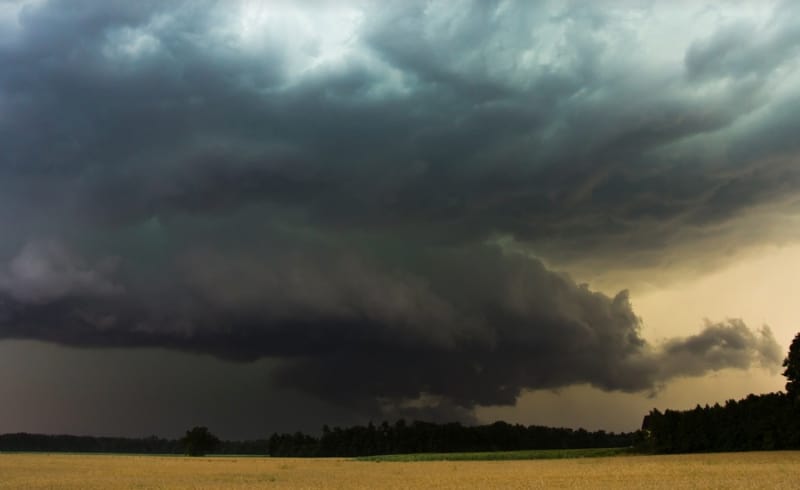
Insured losses from severe convective storms (SCS) are expected to be below average in 2026, according to KCC’s latest U.S. SCS Bulletin catastrophe model.
The updated outlook is based on losses in the first six months of the year. Historically, cumulative losses incurred through the end of June accounted for more than 75% of SCS’ total annual insured losses.
Despite several multi-million dollar storm events in the first half of the year, long-term atmospheric patterns during the spring peak have kept total losses low.
The main reason for the reduced losses was the persistence of a high pressure system over the Southeast in May.
Analysts explain that in the spring, the jet stream – a significant driver of storm activity – is typically positioned further south, producing storms in the Southeast and Texas, where higher losses typically occur.
However, in May 2026, a persistent ridge of high pressure blocked the paths of these typical storms for much of the month, bringing warm, dry weather and sinking air that inhibited the formation of severe storms.
While this weather pattern prolonged dry conditions in the region and contributed to above-average wildfire activity, the region experienced few severe storms throughout the month, pushing much of the South China Sea’s impact onto the Central Plains.
Aon’s preliminary estimates support KCC’s outlook, suggesting economic and insured losses from the South China Sea outbreak could fall below the billions of dollars.
South China Sea activity was recorded between June 18 and 25, 2026, affecting the Gulf Coast, central United States, High Plains, and Midwest, involving 14 tornadoes and a long-track derecho.
In total, the incident caused widespread damage to the residential, commercial and infrastructure sectors and killed at least three people, according to Aon.