Martha Stewart may be a home and garden expert across the pond, but she failed to read the room in a spectacular fashion this Halloween.
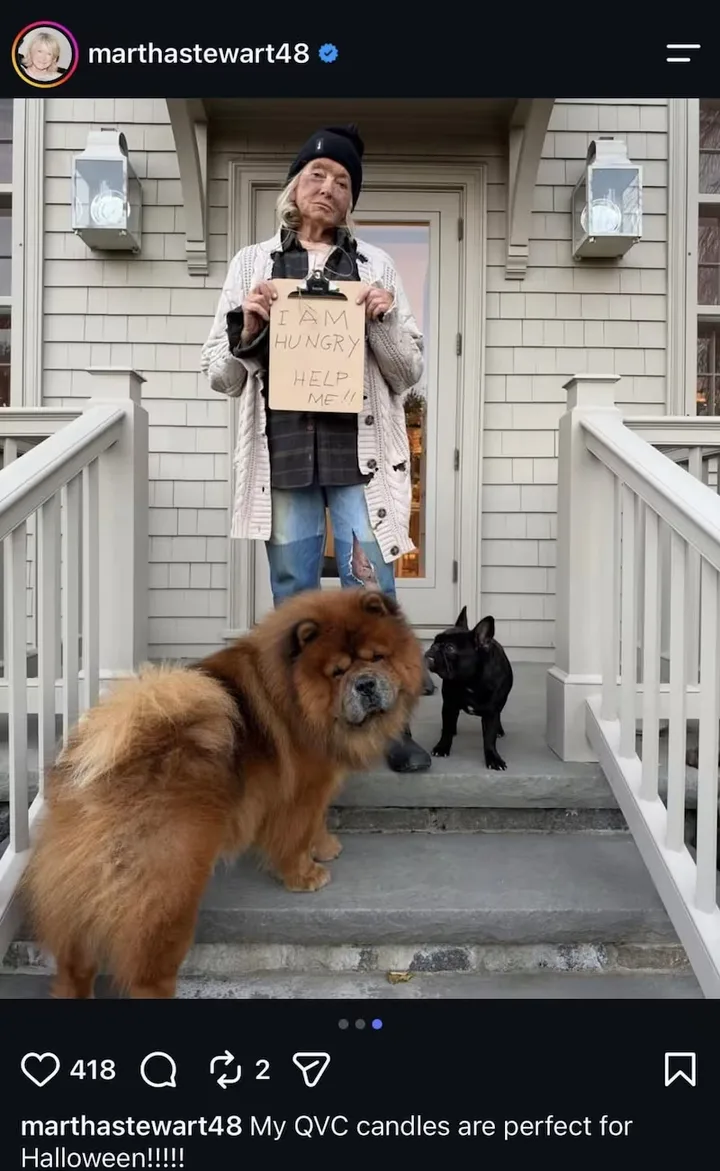
The lifestyle mogul was met with widespread backlash after posting photos of herself dressed up in a costume that included a dirt-smudged face, ripped clothes and a sign that said: “I AM HUNGRY HELP ME!!”
A statement to Page Six on Sunday didn’t exactly clear things up, as Martha wrote that she was “distressed” to learn she had offended people with her costume, which she claimed “was intended to bring more awareness to the very serious subject of homelessness”.
Instagram/MarthaStewart48
“Homelessness continues to remain one of America’s greatest challenges and ongoing crises, something that I care deeply about and I have spent a significant amount of time and effort supporting charities that combat this ongoing social epidemic,” she wrote. “[I’m] committed to continuing to make a difference.”
Nothing in the Halloween post directly referenced any of Martha’s advocacy, but the media mogul, who is worth a reported $400 million (around £298 million), did promote her line of QVC candles in the caption, as well as in the two other photos in the Instagram carousel.
It seems Martha then realised her initial statement didn’t quite cut it, as hours later, she took to Instagram with a brief “Notes app” apology which read: “It’s hard to admit when you’ve really screwed up. My earlier statement didn’t go far enough. I know many people are suffering economically. Wearing a costume like I did was insensitive and not funny. I am very sorry.”
Martha’s second statement finally seemed to acknowledge why the costume came off as insensitive, given how average Americans’ economic anxieties have been dominating conversations in the lead up to Tuesday’s midterm elections.
In polling released by the Pew Research Center in mid-October, 60% of respondents said “they do not currently have enough income to lead the kind of life they want” while more than four in 10 Americans (44%) reported trouble paying for basic necessities like food, housing, daily transportation and medical care.