There’s been a lot of talk about NDAs – or non-disclosure agreements – in the news this week, particularly after comedian Lucy Beaumont claimed she’d offered to pay the legal fees of a woman who had allegedly signed an NDA relating to David Walliams.
Earlier this week, a joint investigation by The Guardian and the news broadcaster ITN named Walliams as the subject of allegations from multiple women claiming that he “groomed” them as teenagers, with one in particular accusing him of “sexual assault”.
The former Britain’s Got Talent judge has denied all of the allegations against him, including all criminal activity. You can read his full statement here.
Speaking to Sky News after the allegations were made public, Beaumont claimed she was “one of the whistleblowers” who spoke about the Little Britain comedian to The Guardian as part of its investigation.
She explained that “about three years ago”, she worked with “a young person” whose previous role had seen them working on a project with Walliams.
“They took me aside and said, ‘I need to tell somebody something’ and confided in me,” the former Celebrity Traitors contestant recalled, explaining that she’d been told the crew member’s job had been to take “young girls” to Walliams’ dressing room, and feared that the girls in question were “vulnerable”.
“At the time, he didn’t think there was a process, a way to let people know within the TV company what was happening and how he felt,” she continued. “And I was really worried.”
Beaumont went on to say that she subsequently reached out to one of the girls, who she noted was in a “really bad way”, and claimed she feared the girl may have been close to taking her own life.
The comic even said she’d offer to pay legal fees that would cover the girl if she were to break the non-disclosure agreement she’d allegedly signed, but she declined.
In the same week, Zelda Perkins, who previously broke an NDA she’d signed with ex-boss Harvey Weinstein to bring him to justice, appeared on the News Agents podcast to discuss Russell Brand, who had been found guilty of one count of rape and three counts of sexual assault.
Brand had pleaded not guilty to all of the charges levelled against him. On 9 November, he was sentenced to 10 years and six months in prison.
It’s since been reported that police officers are investigating allegations of rape against Brand by two more women.
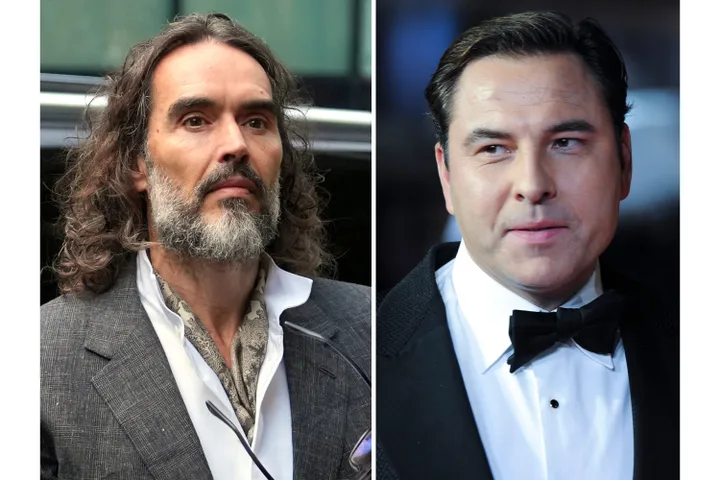
(AP Photos/Kin Cheung, Ki Price)
Speaking to the News Agents, Perkins, who campaigns against NDAs being used to silence women, said she’d been in touch with several women held under NDAs in relation to Russell Brand’s case, “who will never be able to speak about what’s happened to them, because it’s not a criminal offence what’s happened to them”.
She added that where NDAs were taken out by both Brand and media companies, media bosses could dissolve the NDAs, so these people could then speak to their families, their friends or even a therapist about their experiences.
“There are managers, and execs and companies who will be feeling quite nervous at the moment – and my suggestion to them would be to dissolve these NDAs,” Perkins said, according to The Independent. “It is in their power to do so.”
What are NDAs used for?
Raj Chavda, a senior corporate, commercial and finance lawyer in England, said an NDA (also called a confidentiality agreement) “may be a standalone contract or a clause within a wider agreement, such as an employment contract, a settlement agreement, a shareholders’ agreement or a commercial contract”.
“Businesses use them daily, for example before discussing a sale, an investment or a joint venture, to protect trade secrets, pricing, customer data and deal terms,” he said.
Why do celebrities use them?
For celebrities, they might be used to encourage discretion among staff for privacy and security reasons.
Chavda noted an NDA “makes the expected standard of discretion explicit from the outset” among household staff, nannies, drivers, security teams, personal assistants and others who have close access to a celebrity’s home life, family, health, relationships and movements.
NDAs might also be used where a celebrity’s name and image underpin endorsement, sponsorship and media contracts, he said, as “leaks about private matters, fees or unreleased projects can damage that value or breach obligations owed to commercial partners”.
Guests at private events, like weddings or parties, and crew on film or music projects are also frequently asked to sign NDAs to prevent photographs, spoilers or details being released.
The lawyer said an NDA will typically set out:
- What information is confidential, and what is excluded (for example, information already made public);
- What the recipient may and may not do with it;
- Who it may be shared with, such as professional advisers;
- How long the obligation lasts;
- The consequences of breaching the contract.
What happens if a person breaches an NDA?
It depends on the agreement and the circumstances, but the lawyer suggested the consequences may include:
- An injunction. “The court can order a person not to disclose, or to stop disclosing, the information, sometimes on an urgent basis,” said Chavda. “Where an injunction would restrict publication, the court will only grant it before trial if it is satisfied the applicant is likely to succeed at trial. Breaching an injunction is contempt of court, which can lead to a fine, seizure of assets or imprisonment, and third parties such as publishers who knowingly undermine it may also be at risk.”
- Damages. In this case, the “injured party” can claim compensation for loss caused. “Reputational and privacy harm can be difficult to quantify, so awards vary widely,” said the lawyer.
- Contractual consequences. “Many settlement NDAs require repayment of the settlement sum, or payment of a pre-agreed amount, on breach.”
- Legal costs. Where the losing party in litigation is usually ordered to pay a substantial part of the winner’s legal costs, which can exceed the damages.
If a crime is committed, you can report it to the police – even under NDA
An NDA does not sit above the law, said Chavda, meaning “it cannot lawfully prevent someone from reporting a crime to the police, making a protected whistleblowing disclosure, co-operating with a regulator, or complying with a court order”.
In England and Wales, victims of crime can make a ‘permitted disclosure’ under the Victims and Prisoners Act 2024, per Acas. This means they can share information about a crime with some people, such as close family, counsellors, healthcare professionals and police, to seek advice and emotional support.
But there are situations where a breach could land you in hot water legally. For example, if the information is released into the public domain (ie. talking to the press), or if confidential information is shared that doesn’t relate to the crime.
After Beaumont’s interview with Sky this week, equalities minister Bridget Phillipson told Sky’s Cathy Newman she wants government to look at a possible ban on NDAs being misused.
The minister said: “We cannot have a system where rich and powerful individuals – rich and powerful men – are able to silence women, buy their silence, and stop things coming to light.”