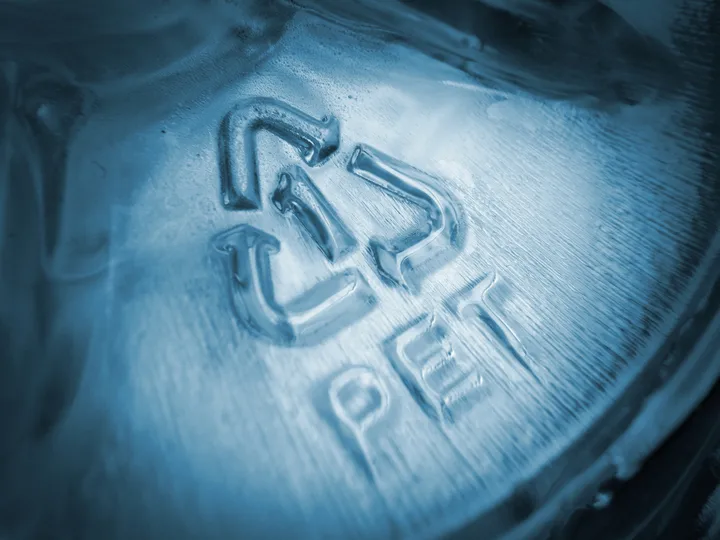
You know those little triangles with three arrows that you sometimes see on plastic containers?
I always figured those meant an item was recyclable, and I didn’t pay any attention to the numbers that lie inside.
But as it turns out, these can sometimes be a “Resin Identification Code”, and the digits they contain could reveal how easy (or otherwise) a product is to recycle.
The figures, which range from one to seven, inform the user about the best place to put their waste – be it general recycling or a specialist point. Some may sadly need to be put in the bin with your general waste if you have no suitable facilities nearby.
Anson_iStock via Getty Images
What do the numbers on plastic recycling symbols mean?
- PET, or polyethylene terephthalate. This is found in some bottles and food packaging and is widely recycled.
- HDPE, or high-density polyethylene. You’ll find this on containers like milk bottles and cleaning product bottles; like PET plastic, it’s widely recycled.
- PVC, or polyvinyl chloride. PVC is commonly seen on things like car parts and window fittings, and it’s not widely recycled. Recycle Now says you should generally put this in the waste bin.
- LDPE, or low-density polyethylene. You might spot this on plastic wrapping and some plastic bags. It can be recycled at specialist points, but most councils don’t take it.
- PP, or polypropylene. Commonly used for containers that hold hot liquid, like some tubs and trays, it’s widely recycled.
- PS, or polystyrene. This foamy plastic is “notoriously difficult to recycle”, says London Recycles. It should generally go in your bin, but, they add, we should avoid it as much as possible when we can and reuse it when we can’t.
- Miscellaneous or “other” plastics. This can refer to crisp packets, DVDs, or any other plastics that don’t fit into the six other categories. Some stores or designated points have special type 7 recycling facilities, but they’re not usually accepted in standard recycling collections.
What should I do if my recycling centre doesn’t accept the type of plastic I have?
Start by looking up your council’s rules on plastic recycling. Even if they don’t accept your plastic type, they may have advice on where will.
Some major supermarkets, including Tesco. Lidl, Aldi, Sainsbury’s, ASDA, Morrisons, Waitrose, and Co-Op have special collection points for some hard-to-recycle plastics. These are usually for soft plastics like shopping bags.
If your type 7 plastic is from a DVD or CD, consider donating these to a charity shop or selling them second-hand instead of throwing them away.
Where possible, steer clear of very hard-to-recycle materials like polystyrene. Reuse rarely-recycled plastic, like shopping bags, when you can.
Lastly, don’t mix non-recyclable materials in with your regular recycling. Items like plastic film and flexible bags can cause issues at recycling plants, i.e., through clogging up sorters “and potentially causing whole loads of recyclable waste to go to landfill”, said Zero Waste Scotland.