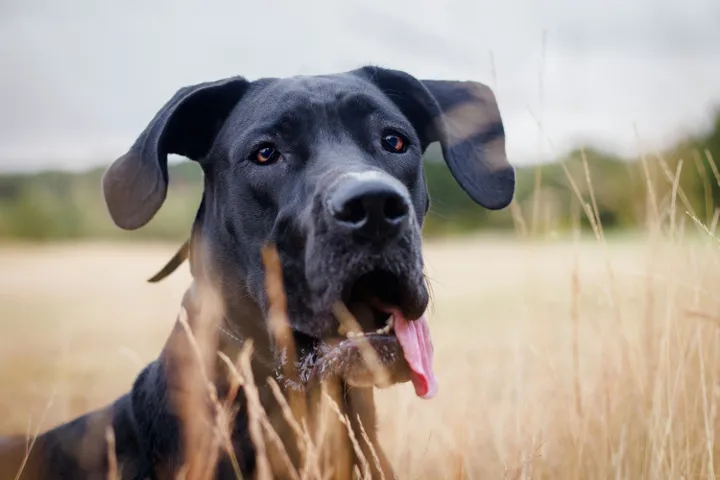
The average lifespan of a Great Dane is around eight to 10 years, while their teeny tiny counterparts, Chihuahuas, can live well into their late teens.
But why is there such a big disparity in life expectancy between bigger and smaller pups?
Researchers have long been interested in this strange relationship – especially given that, in the mammal world, larger species tend to have longer lifespans than smaller ones. The average lifespan of a blue whale is thought to be between 80 and 90 years, for example, while mice generally live for a year or so.
In a new study, experts wanted to find a possible explanation as to why big dogs tend to die younger and are more susceptible to age-related diseases than smaller dogs – so, they honed in on DNA.
And they discovered something interesting.
Using data from The Dog Aging Project, experts were able to look closely at a biological process called “DNA methylation” in almost 900 dogs.
What is DNA methylation?
DNA methylation is the process in which tiny chemical tags called methyl groups grab onto DNA. These tags help regulate how DNA is used, and can influence whether genes are turned on or off, without changing the underlying genetic code.
A large portion of DNA in mammals consists of sequences that can copy themselves or move around the genome, also known as “jumping genes”.
One type is called LINE1, which can “copy and paste” itself across the genome. But in some instances, it could disrupt DNA in the process.
The body has its own mechanisms to keep these LINE1s in check – DNA methylation being one of them.
But as dogs age, this may impact DNA methylation’s effectiveness, potentially allowing LINE1s to become more active.
What did the study find?
The study found that more than 40% of the LINE1-associated areas researchers looked at showed a loss of methylation with age – and larger dogs experienced the fastest declines.
On average, big dog breeds lost LINE1 methylation at a rate approximately 35% higher per year than the smaller breeds.
Noah Snyder-Mackler, study author and a professor at Arizona State University, suggested that the loss of this regulation of LINE1 “appears to be a major factor shaping how quickly different dogs age”.
Co-author and research scientist Blaise Mariner added: “It suggests that faster ageing in larger dogs may be driven, at least in part, by reduced control over these ‘jumping genes.’”
Further research is needed to now establish whether this actually contributes to faster ageing, or is caused by it.
But researchers suggested the findings could ultimately have implications for man’s best friend, too.
As Prof Snyder-Mackler said: “Because they are companion animals, they can also be a powerful model with immediate relevance to human health.
“Living with us means that we share experiences and environments, while our love for our pets means we provide them food, exercise and lifelong healthcare – meaning we can translate many findings in our shorter-lived pets to humans.”
Stephanie McGrath, a veterinary neurologist from Colorado State University who is involved in The Dog Aging Project, previously told CNN that dogs, as a species, have naturally occurring diseases of ageing – just like humans.
“Cancer, dementia, all these diseases that we see as humans age occur in dogs,” she told the publication. But dogs age a lot faster than humans, she noted, so “we can get a ton of information that would take decades to [gather] in humans”.