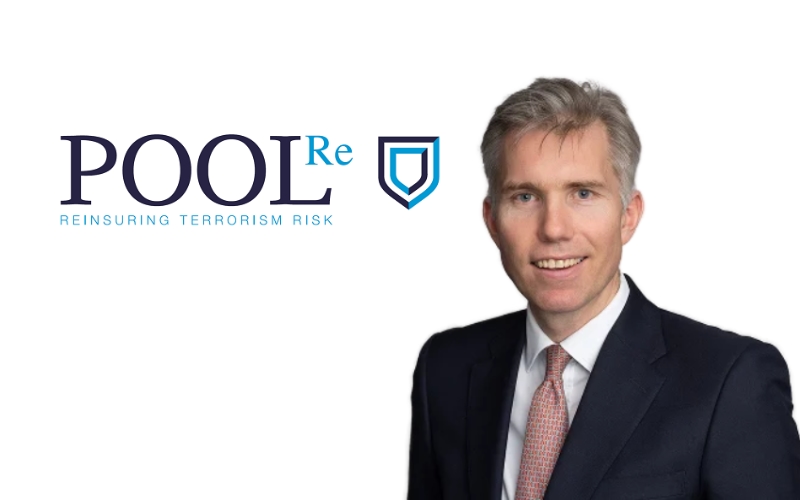
as Chizai A new incentive scheme has been launched to encourage members to re-include terrorism cover as standard in SME property policies, CEO says Tom Clementi It said the initiative has the potential not only to increase the resilience of SMEs, but also to improve economic security and significantly increase the uptake of terrorism insurance across the UK.
Pool Re, designed in consultation with members and HM Treasury, revealed in an announcement earlier this week that members will now have the option to reinstate terrorism cover in some or all of their commercial property portfolios in exchange for reduced Pool Re reinsurance pricing.
In an interview with Reinsurance News, Clementi noted that profits for small and medium-sized businesses are being squeezed, while inflation is not helped by rising again in the wake of recent conflicts in the Middle East.
“When Pool Re was established in 1993 by the UK government in partnership with the UK insurance market, it was set up to make terrorism insurance affordable and accessible to all businesses, not just the big ones,” said Clementi.
He continued, “The reality is that, more than 30 years later, terrorism insurance coverage among UK SMEs remains low. According to recent surveys, the current penetration rate is around 4%, which means the protection gap is very large.”
“Not only is there a coverage gap, but there’s also a huge expectation gap. While only about 4% of people may actually have insurance, many more believe they do.”
Clementi said the challenge of increasing acceptance among SMEs has been around for quite some time.
He pointed out that when small and medium-sized enterprises were struggling during the epidemic, the need to address this issue was illustrated to strengthen the UK’s economic resilience and thereby enhance its economic security.
“If there was an incident where SMEs were unable to access their premises and trade for two, three or four weeks, that could be life or death for very small businesses, particularly those that are smaller. We recognize that this group of businesses often lack the economic resilience that larger businesses might see,” Clementi said.
He added: “We therefore believe that the best way to address the SME protection gap is not on the demand side, but on the supply side.
We have a voluntary discount program. This is not enforced by our members, but for those who choose to participate, they will be entitled to a substantial discount if they can demonstrate that they have reintroduced terrorism cover as standard into their small business property blanket policies and in such a way that it is impossible for basic policyholders to cancel terrorism cover.
“Essentially, we are encouraging members to add terrorism coverage back into their standard property policies through pricing incentives.
“I would add that the scheme does not apply to central London, but outside central London the discount is up to 90% so it makes sense.
“Following extensive consultation with our members, we believe this will enable participating members to offer terrorism cover to their basic policy holders at a negligible additional cost, or possibly at no additional cost.”
Clementi continued: “Over time, we believe that the current 4% penetration will increase significantly. It will take time, but we are already getting very positive signs and actually some commitments from our members that they will take advantage of the program. So we are optimistic about a significant increase in penetration over the next few years.”
Speaking about the overall impact the scheme will have on the wider UK insurance market and the SME community, Clementi said: “The impact on SMEs will be to make them more resilient. The Prime Minister has now said publicly that economic security is national security.”
“So if we’re in a situation where 96 per cent of small and medium-sized businesses don’t have terrorism insurance, then if a terrorism incident occurs we could see a significant number of businesses really struggling and potentially going bankrupt.
“It’s also important to remember that the vast majority of businesses in the UK are SMEs; 99% of businesses in the UK fall into this category and, as I said, around 96% of them are currently uninsured. So in terms of the positive impact on the UK economy, this is really about strengthening national security by making the economy more resilient.
“We consulted extensively, including with the private market, so we don’t believe anything we do would offend the interests of private insurers.
“In this case, our definition of SME is a business with a total insured value of £10m or less. This initiative is really targeting the smaller end of the SME group rather than the larger and medium-sized businesses.”
Commenting on the scheme, which comes into force on 1 April, Economic Secretary Lucy Rigby KC MP said: “Pool Re plays an important role in supporting the resilience of the UK economy and this incentive scheme delivers real market change for UK SMEs.
“The government stands ready to support efforts to strengthen the resilience of UK businesses and we encourage Pool Re’s members to take advantage of this fantastic opportunity to expand their small business insurance cover – this is great news for Pool Re, its members and the UK business community.”