We’ve written before at HuffPost UK about the real meaning of the “power” symbol, as well as why we call it “cc” and “bcc” over email.
Maybe it’s because I was writing about the doomed aviator Amelia Earhart recently, but I’ve begun wondering what “SOS” actually stands for, too.
I’d always believed it was short for “save our souls”, but then I once thought “WiFi” stood for “wireless fidelity” – and it turns out I was wrong on that front.
What does “SOS” stand for?
Well, the three letters “SOS” mean what you probably think they do – they’re an international signal from Morse code (··· — — — ···) that suggests someone needs urgent help.
This was chosen by the International Radio Telegraphic Convention in 1906 so that ships could signal when they were in distress.
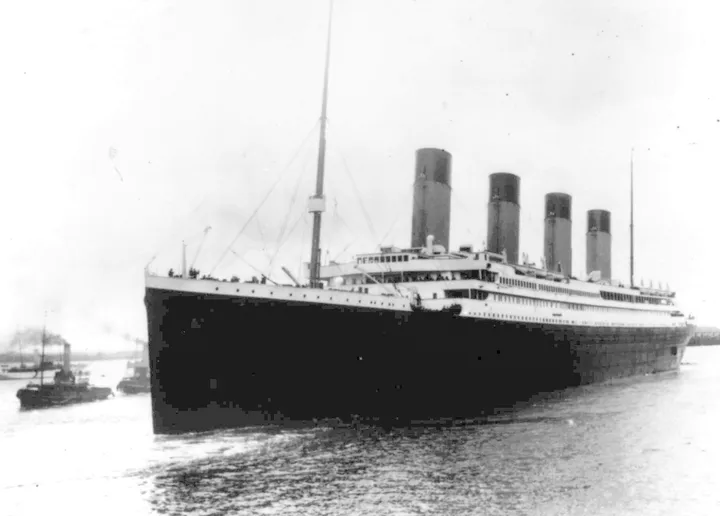
But it took time to become the standard option – when the Titanic crashed in 1912, it originally used the British signal CQD, from “CQ”, meaning “seeking you” or “all stations, and “D” for “distress”. The Titanic’s crew only switched to “SOS” mid-transmission.
Unlike CQD, though, none of the letters in SOS were chosen because of what the letters mean in any standard spoken language. Instead, they were picked because of how they look in dot-and-dash form.
In other words, it’s not an acronym, even though people have suggested it’s short for “save our ship”, “sink or swim”, or (as I thought) “save our souls”.
The layout of the message in Morse code, which was historically commonly used in the shipping industry, is symmetrical and memorable.
It’s simple, which might make it more easy to recall in an emergency, and it’s an obvious pattern people receiving or sending Morse code would recognise immediately.
But the letters “SOS” don’t actually “mean” anything in this context, in and of themselves.
SOS is a “prosign”
Signals like SOS are classed as “prosigns” or “procedure signs”. They’re seen as one “character” in Morse code, and don’t have the usual gaps or full stops between them.
As we’ve mentioned, the British used to prefer CGD, while the Germans used SOE and the Americans went with NC.
After the Titanic sank, many countries, including the US, adopted SOS as its distress signal. But as part of a United Nations agreement in 1999, Morse code was no longer deemed the official communications method for distress calls between ships.
Now, emergency marine communication relies on the satellite-based Global Maritime Distress and Safety System instead.