Labour’s “scattergun” Budget has been criticised by experts for spreading cost of living support “too thinly” – meaning Brits have a tough period ahead of them.
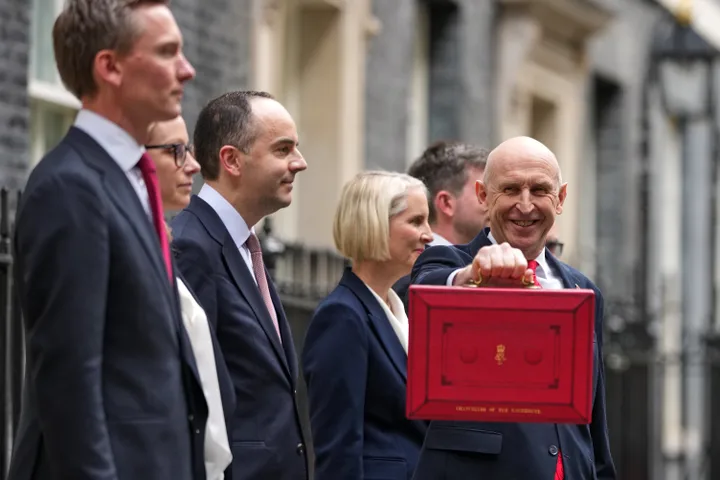
Chancellor John Healey promised to offer the public “breathing space” in his maiden Budget on Wednesday with a £4.4 billion cost of living support package.
That included giving a £100 lump sum to 20 million households in council tax bands A to D and scrapping standing gas charges, saving 60% of households an average of £45 a year.
However, the Budget has been widely criticised for tinkering around the edges, rather than offering significant change.
Prominent think tank, the Resolution Foundation, said the Healey’s support package is “badly targeted” and accused the government of a “complete failure to target help at those who need it most”.
The experts said the new measures mean even families who receive help will still face higher energy bills in the coming months than during the last energy price shock.
It calculates the poorest half of households will gain £158, on average, from support measures this year and in the next.
That’s only £14 more than the £144 received by the richest half.
It comes as typical energy bills net of government support are forecast to be £1,750 this year.
That’s higher in real terms than the huge spike seen in 2022 to 2023, when net bills soared to £1,685.
The Resolution Foundation also pointed out that the government departments got a bigger boost than households, with an extra £9 billion.
The specialists noted that median real annual disposable incomes for working age households are expected to increase by just £600 over this entire parliament – and that hike is already behind us, meaning further hardship lies ahead.
Chief executive of the think tank, Ruth Curtice, said: “Faced with a tough backdrop amid global economic turmoil, the chancellor delivered a scattergun Budget that did little to address the sharp challenges facing Britain.
“Cost of living support is being spread far too thinly and will leave even those families receiving help facing higher energy bills than they did during the last energy price shock.
“Stepping back, this parliament is increasingly looking like one of two halves, which yesterday’s budget did little to address.
“The first half has been marked by rising living standards, solid economic growth and extra funding for public services – funded by huge tax rises – none of which was enough to prevent dramatic half-time substitutions in Downing Street.
“The new occupants will hope for better political fortune in the second half, but it could prove tough going against a projected £1,000 fall in disposable incomes.
“A more dramatic change of tactics may be needed, and we did not learn how the government will choose between public service ambitions and household incomes. Next year the choices will unavoidably get starker.”
Yet, prime minister Andy Burnham has rejected claims the Budget did not go far enough.
He told reporters: “lt’s pretty bold to help 20 million households with their energy costs through a council tax cut this winter. It’s bold to lift 70,000 businesses out of business rates altogether.”
Meanwhile, the country’s public finances watchdog, the Office for Budget Responsibility (OBR) also predicted rising inflation would slow down anticipated economic growth on Wednesday.
While UK gross domestic product (GDP) is expected to improve by 1.2% this year – up from an estimate of 1.1% – it will go down in 2027.
The OBR previously predicted the UK economy would grow by 1.6% next year.
The forecast is also a blow to the government, which has vowed to offer “growth in every postcode”.
Listen to Commons People, the podcast that makes politics easy. Every week, Kevin Schofield and Kate Nicholson unpack the week’s biggest stories to keep you informed. Join us for straightforward analysis of what’s going on at Westminster.