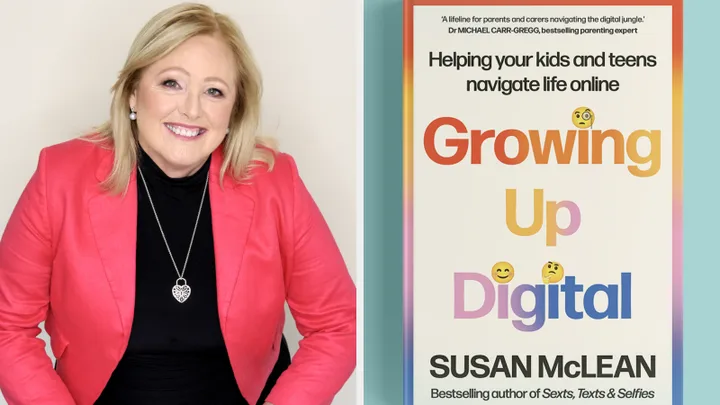
“It was never going to work,” says former Victoria police officer of 27 years, Susan McLean, of Australia’s social media ban for under-16s.
The ban came into effect last December and meant 10 major social media platforms, including Facebook, Instagram, Snapchat and YouTube, had to take “reasonable steps” to stop under-16s from using their platforms – or face large fines.
Yet a study from Australia’s eSafety Commissioner found there’d been little drop in social media use among teens three months after the ban took effect, while an observational study from the University of Newcastle found that 85% of under-16s in Australia said they were still using social media after it came into play.
McLean, who advises governments, schools and families on online child safety, suggested that, on paper, a social media ban “reads well”. But she pointed out there are quite a lot of pitfalls, the key one being that it’s difficult to enforce.
With the UK government set to follow suit, announcing a similar ban will come into effect in March 2027, the cyber safety expert and author of Growing Up Digital, is keen the UK learns from some of Australia’s errors.
“Do not rush this,” she said. “If you are going to do it, you are better off to wait 12 months and get it right than try and retrofit your mess.”
The downfalls of the social media ban
There are several issues McLean has highlighted. “First of all, you’re relying on the platforms giving you, the government, information,” she told HuffPost UK. “You have to assume they’re giving you truthful information.”
In Australia, social media platforms were tasked with removing accounts they suspected of belonging to under-16s and data reported by these platforms suggests over 4.7 million accounts were deactivated, removed or restricted after the ban came into play.
But McLean asks: “How many of the accounts removed did the person then turn around and start a new account straight away?”
The age restriction systems are also “flawed”, the expert claimed. “This is one of the, I believe, errors that our government made. It told the platforms that they had to use systems to work out an age – they were not allowed to use verified ID. So, no passports, birth certificates, nothing like that. They had to use biometric programmes and look at what the child was posting, look at the content, time and date of use … But that’s flawed in itself.”
The University of Newcastle’s research found around two-thirds (66%) of adolescents reported encountering any form of age verification – the most commonly reported methods were self-declared age (which is as simple as stating your age or date of birth) and uploading a selfie.
McLean suggested age assurance technologies, such as those where you take a photo of yourself, are effective at spotting adults, but as for saying how old a person is (ie. are they a 15-year-old or an 18-year-old?), not so much.
Through her work in schools, she speaks to around 250,000 children a year – and she noted there are “still kids today where their account has not been flagged, they’ve not even got a ‘please explain’, they just carry on as normal”.
Then, there’s the enforcement of it. In June 2026, Australia’s prime minister Anthony Albanese admitted to the BBC that “it’s clear big tech are not doing enough to comply with the law” and raised the fines companies could face for non-compliance.
McLean said of the enforcement of the ban: “We know there are a lot of kids on the platform … there have been no prosecutions, we don’t know whether the law will actually stand up in court as it hasn’t been tried yet…”
She added that much larger fines are needed, otherwise companies may well just pay the fine and not change the practice: “If you are going to put a number on a fine, then it needs to be a percentage of profit or a percentage of income generated in the UK – because that would be a much better measure.”
‘Do not rush a ban’, warn experts
McLean’s message to the UK government is clear: Do not rush a social media ban. Her advice is echoed by other experts in the field who are equally cautious of rapidly bowling into this.
Dr Harry Dyer, Associate Professor in Education at the University of East Anglia (UEA), said he fears the plans “are being rushed through without enough support for the many individuals and institutions that will need to better understand the implications of the policy”.
He suggested comprehensive media education and media literacy needs to be put in place ahead of the ban next March, including in the Early Years Foundation Stage, and there should be publicly available guidance for parents and carers about how to support young people through it.
“If kids are on platforms ‘illegally’ – even though the duty will be on the platform, not the kids – they may be less willing to tell trusted adults about problems. Guidance for adults about how to have these conversations is vital,” added Dr Dyer.
He also called for serious investment in third spaces where kids can go in lieu of social media, as well as more money plunged into youth mental health services.
“Rather than a negative policy that keeps kids away from something, investing in infrastructure and provisions for kids in their communities will be vital,” he said.
“A ban without a serious and sustained investment in youth mental health is dangerous, and leaves kids to fend for themselves.”
McLean suggested officials should be speaking to experts on the ground about how is best to move forward with a ban, including those who disagree with a ban.
Even the Molly Rose Foundation, which was set up in the wake of 14-year-old Molly Russell taking her own life after viewing thousands of images promoting suicide and self-harm on social media, is sceptical of how much a ban would help prevent harm.
As the charity said, while a ban “might feel like a positive step for some parents, it does not remove the risks children face online and may create unintended consequences that make it more challenging to keep children safe from online harms”.
‘We don’t tell children they can’t go in the ocean until they’re 16’
The cyber safety expert shared the analogy of teaching children to be safe in the sea, explaining that “we don’t tell children they can’t go in the ocean until they’re 16 and then we throw them in and hope for the best”.
She added: “We put them in [the sea] from a suitable age. You don’t put a newborn in but you put them in [when they’re a bit older], you carry them in, you play with them, you put floaties on, you do all those things so that, as they grow and develop, they become ready and aware of the risks and the dangers of what they’re doing, so that they can start to manage it themselves.”
It’s the same for social media. Education and teaching safe use is important. Parents need to be involved and monitoring children’s online worlds – what apps and platforms are they using it? Who are they talking to? “It’s not invading their privacy, it’s parenting,” the safety expert said.
The UK government needs to invest in teaching parents and educators about this, she added, because “if you don’t know what you’re trying to protect your children from, you’re not going to be able to protect them”.
Should Big Tech be making platforms safer, instead?
McLean suggested that while under-13s should not be allowed on social media at all, once children reach between 13 and 17 years old, they could be given access to specific areas of social media platforms that are “controlled and better managed”.
But for this to work, social media platforms need to be made safer for young people. “For me, you can’t ban yourself to safety. We need to be making the place where kids go as safe as humanly possible,” she said.
This might mean having an opt-in feature for algorithms, making reporting harmful content easier, and improving systems that remove problematic content. “And these are all things that I know are doable,” she added.
“We need to make the platforms safer, we need to have age-appropriate areas that children can go and hang out with their friends, because when you talk to kids, all kids want to do is go online, hang with their friends, have some fun.
“They don’t want to be harassed, they don’t want to see inappropriate content, they don’t want paedophiles contacting them.”
After all, while social media can be harmful, it can also be a lifeline for some young people – for example, disabled teens or LGTBQ+ young people. Research has established that access to the internet and social media is “vital” for the latter group in particular.
Fiona Yassin, a family psychotherapist and the founder and clinical director of The Wave Clinic, previously told HuffPost UK that “the mental health fallout from removing access could be profound”.
“Their core community of people are on the internet,” added McLean, “and if you wipe that out from under them, well, that’s not helpful either.”