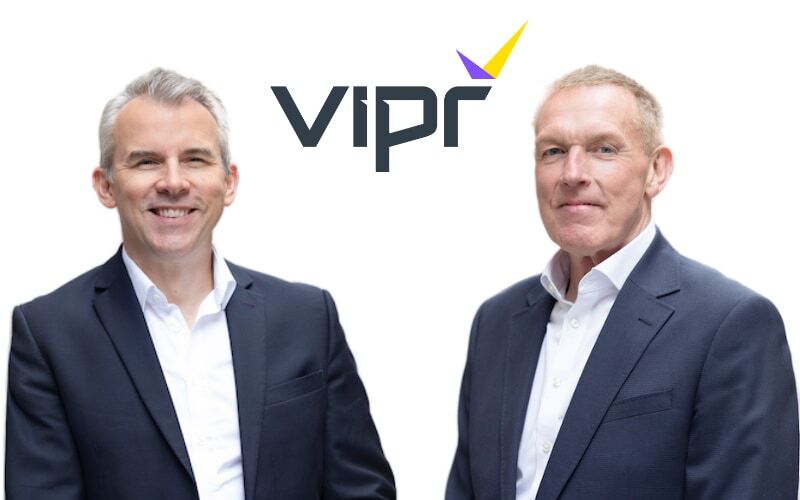
in the most recent Reinsurance News In an interview, VIPR Solutions CEO Paul Templar and Chief Revenue Officer Tony Russell discuss the rapid expansion of the authorized market, Bermuda’s growing importance as an authorized underwriting center, and the technology and data challenges facing the risk transfer industry.
VIPR Solutions is a technology provider designed to help authorized markets manage boundary data, increase transparency and streamline operations across the insurance and reinsurance value chain.
With the licensing and MGA markets continuing to grow strongly, supported by increased investment and the appeal of specialist underwriting models, Templar and Russell offer their views on the sector.
“The MGA market is attracting significant private equity investment and, as a result, many large company underwriters see an opportunity to establish their own MGA.
“As a result, we are seeing a number of specialist underwriters forming their own specialist MGAs around the world. This is currently the fastest growing segment of the industry. It’s fair to say that at around 20% growth per annum (approximately $260 billion globally), this level of growth is another attraction for people to start their own businesses,” explains Russell.
He added that licensing provides an effective growth path for insurers, allowing them to access expertise and new areas without establishing direct business.
Russell continued: “What we see is that this is a distribution channel and if you can do it well and affordably, in terms of collecting and cleaning data, it’s a great foundation for scaling your business.”
Templar noted that current market conditions also support growth. “In the soft market cycles that we’ve just entered, licensing is really attractive to operators and they like this model very much. It provides them with certainty and protection against these soft market cycles. We do often see additional growth in the MGA space during these soft cycles,” he said.
The pair also highlighted the growing importance of mandates in major insurance markets. “Most of the managing agents and operators we spoke to globally have a mandate to grow this part of their business, so every CEO we spoke to is focused on expanding distribution channels without any additional budget. So they need to automate, or at least simplify, the way they collect and clean data. That’s another driver for us, but it will certainly drive growth within the market.
“As I said, private equity has become involved in MGA, which is positive because it means they need to be more sophisticated in the way they operate. We’re definitely seeing that from the data they’re starting to send out now,” Russell said.
Templar added that in the U.S., research shows that MGA and project spaces have experienced four or five consecutive years of double-digit growth. “In the UK, when we started working in this area, around 30% of Lloyd’s total written premium was done through commissioned arrangements. Today that is arguably higher than 45% and they want to get it closer to 50%, so it’s definitely a hot topic,” he added.
While Bermuda has long been considered a global center for reinsurance, Templar believes it is also becoming an increasingly important market for delegated underwriting and planning business.
“We’ve spent a lot of time in Bermuda over the past few years and it’s a very interesting and exciting market. I think it’s the closest thing to the London insurance market we’ve seen on a foreign territory,” he said.
“If you look at the U.S. and even Canada, insurance companies are typically spread across multiple cities. In Bermuda, Hamilton is a real hub of activity, and the treaty quota share reinsurance space, which is really similar to the mandate side of things, is an area that is growing in line with the program and the binder business because it is directly related to very similar challenges,” he explained.
One of the challenges, Templar said, is the large amount of incoming data that needs to be cleaned and normalized. “Other unique challenges we see include things like data reconciliation, which you don’t see as much in other areas. Another challenge that reinsurers face is that the quality of the data is diluted when it arrives. So part of what we’re doing is trying to make sure that data quality is maintained at all times so that insurers and reinsurers can understand the data and make informed decisions,” Templar explained.
Russell expanded on this, telling Reinsurance News that one of the things VIPR is doing as an organization is exiting the value chain. “A lot of our competitors are doing more than just dealing with one part of the value chain, we’re looking at how to really provide some kind of return on investment for every player in the supply chain. We really believe that if we can really benefit MGAs, brokers, front-end carriers and reinsurers, as Paul said, by collecting data at the source and keeping that data intact across the supply chain, we can actually change the way this market behaves and operates.
“If you only try to solve part of the problem, the rest of the problem remains. We want to work to provide benefits to every stakeholder in the supply chain so that everyone benefits,” Russell said.
The conversation then turned to how mandate allocation models are changing and the trends VIPR is seeing in the relationships between MGAs, carriers, reinsurers and brokers.
“I would say the best MGAs are constantly improving in the way they use technology and data to their advantage, but the gap between the best in the MGA space and the laggards is huge,” Templar said.
“As Tony mentioned before, we’re seeing a lot of investment coming into MGAs through private equity and other investment vehicles, which means MGAs have to operate very smartly and really master their numbers and systems and work as efficiently as possible. And maybe some of the more traditional MGAs that have been around for a while are still operating on paper, they’re handwriting cover notes, they’re re-entering data, and they’re finding that it’s a fairly manual process, so there’s a huge gap there.”
The result, Templar said, is wide variation in the quality and completeness of data flowing through brokers, carriers and reinsurers. He continued: “That’s where our software comes in to help manage these different data sets, but a lot of what we’ve been doing is trying to improve the quality of the data before it gets into the insurance market. It’s a tough job when you know there’s such a huge gap between the best and the worst data in the market.”
Russell highlighted the cost burden this places on MGAs, citing figures from a recent conference of European underwriters, some of whom spend 17% to 25% of their revenue managing and delivering data in exchange for compensation.
“This is unsustainable,” Russell said. “So, what we want to do is provide an option that means they don’t have to change their behavior, but we’re collecting the data and helping them distribute it into the supply chain to get paid.”
“That’s the benefit that MGAs are going to get, because you can reduce the administrative cost of constantly answering questions about bad data, missing data, incomplete data, etc., and actually getting the data into the system as quickly and correctly as possible, which means they’re probably going to get paid faster. If we can provide them with a way to streamline their business, then obviously when the data gets to the carrier and when it gets to the reinsurer, we keep the data intact and everyone benefits,” he continued.
Templar pointed to increasing regulatory scrutiny and growing volumes of data, explaining that “there is growing interest from regulators in this world and we are already seeing the UK FCA bringing documents to the market on delegated regulation.”
AI scrutiny is also increasing, and data quality and management are critical to supporting client outcomes, he said. He added that VIPR recently processed more than one million rows of data, highlighting the need for a platform capable of handling growing mandated portfolios.
Russell further explained: “We have now given customers direct access to the data source, which means we may now move to collecting that data on a weekly basis, which will be a game changer.”
Templar added that faster access to information is especially important after a catastrophic event or geopolitical shock. “Insurers and reinsurers will absolutely want to know what risks they face and what the likely risks are if a large-scale catastrophic event or global conflict occurs.”
Russell believes the industry’s biggest opportunity lies in creating a consistent data source by retaining information throughout the authorization chain. He noted that as regulatory expectations and transparency requirements continue to increase, stronger data quality will support better decision-making.
Executives also emphasized the role of technology in helping businesses address these challenges. Templar noted that automation can increase efficiency and profitability, while Russell said automated processing allows companies to expand commissioned operations without increasing costs.