Some things in our routine are inevitable: we brush our teeth, we wash our faces, and we put on our daily moisturiser.
But when it comes to our genitals, there’s almost no care. No one teaches you you’re not meant to use scented soap on a vulva, and unless you frequent the sexual health clinic (represent), no one’s teaching you about the benefits of using lube during sex.
I know, spit probably cut it for a few years, but using a good lube can actually make sex better – and isn’t that always the goal?
“A good lube helps your body feel things more intensely or less intensely, depending on whatever your mood is,” explains Alexander Giebel, founder and CEO of lube company pjur, and creator of the first ever commercial silicone lube for sex (an accolade to behold).
“If you use it in combination with foreplay or with sex toys, lube gives you a more intense feeling. So why not use it?” Preach.
The bad news is: there’s no such thing as a ‘one size fits all’ lube, just like there’s no one face cream everyone likes. But the good news is, that means you can try a few things out depending on the kind of sex you’re having.
While visiting a sex toy convention, I sat down with Giebel to find out exactly what to ask for a lube during anal, oral, and vaginal sex, and when using sex toys.
What makes a good lube?
Having run pjur since 1995, Giebel knows what makes an excellent lube. All of the brand’s lubes are classed as a ‘medical device’, meaning they’re subjected to a strict testing process to make sure they’re safe to be used inside your body.
“A personal lubricant is designed to enter your body in its most intimate areas,” explains Giebel.
“It should be safe; that’s the most important thing, and it shouldn’t anything that might be able to harm you, such as colouring or flavouring.”
“We want to make it safe and we want to make it feel good. It’s a medical device, so we have to design it carefully and do a lot of tests.”
What are the different types of lube?
If the idea of using lube is overwhelming simply because there are so many to choose from, fear not. The first step (yes, to accepting lube) is to know the different types you’re dealing with.
- Silicone-based lube
- Water-based lube
- Oil-based lube
- Flavoured lube.
What lube should you use for anal sex?
Generally, silicone lube is recommended for anal sex, because “it’s super slippery and gliding”, says Giebel.
Silicone molecules are bigger than the pores in our skin, he tells me, which is why silicone lube won’t get absorbed into your skin in the same way and can stay slippery for longer.
That’s ideal for anal sex because the skin in your anus is thinner than other parts of the body and, unlike the vagina, it’s not self-lubricating.
This anatomy played a large part in informing in how Giebel created pjur’s silicone formulas.
“We put ingredients in anal lube that helps to thicken the skin, which helps to make anal sex more comfortable,” he says.
But the type of lube you use could depend on your personal preference, too, Giebel explains.
“If you use a silicone lubricant, you only need a couple of drops,” he says.
“You can always add more, but if you use it in the same way you’d use a water-based lubricant, it’s probably too much and it will be so slippery you won’t be able to feel that much anymore.”
Some people might prefer to use a water-based lube during anal, which will allow you to feel more.
What lube should you use for vaginal sex?
The same goes for vaginal sex. Depending on what kind of sensations you want to experience during sex, you could use water-based lube or silicone lube for vaginal penetration.
Both can be used with condoms, so it really comes down to whether you want (or need) extra slip ’n slide, and whether you find that using a silicone lube means you can’t feel enough.
Using a silicone lube might be particularly useful if you’re experiencing vaginal dryness – during menopause, or otherwise.
What lube should you use with sex toys?
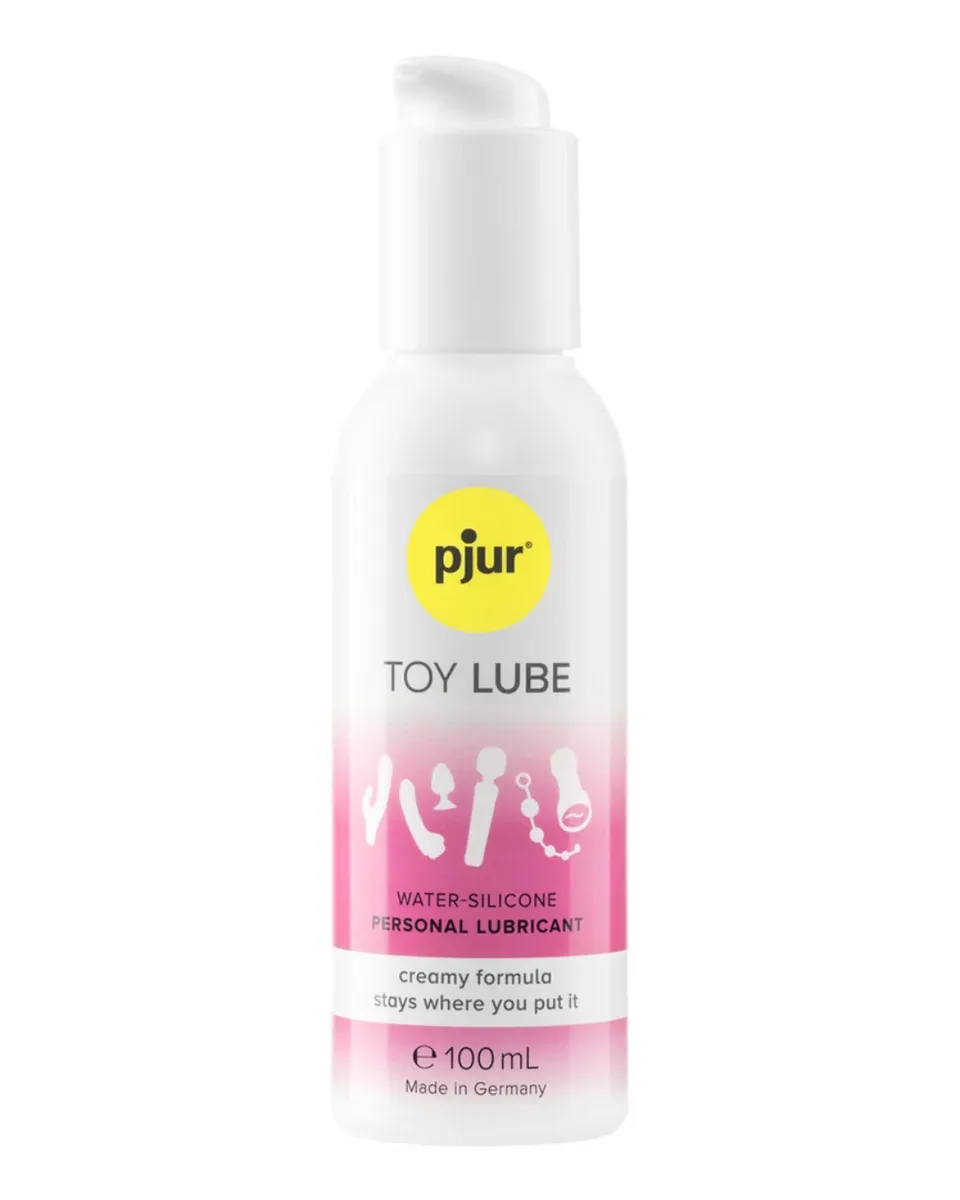
While often the advice goes that silicone lube shouldn’t be used with silicone sex toys, this isn’t necessarily true, says Giebel.
If your silicone lube is good enough quality, it should be safe to use with sex toys.
“There are a lot of people who say that if you’re using a toy, don’t use silicone lube,” he explains.
“If you’re using a silicone toy and silicone lube and they’re not the right quality they can harm each other.
“But we use only medical grade silicone so you don’t have that effect, and we say you can use our silicone lube with toys. Again, sometimes when you’re using toys, you want to feel them more intensely.”
What lube should you use during oral sex?
You don’t necessarily need to use a lube during oral sex, because your mouth is already (hopefully) wet.
However, some people like to add a lube into the mix to make it more exciting.
Flavoured lubes are an option, but you need to be cautious when choosing a lube that has flavouring in it, says Giebel.
“There are a lot of flavoured lubes on the market that contain sugar and people aren’t aware of the kind of discomfort that could cause,” he explains. If you’re not clear already, think: thrush, UTIs, and bacterial vaginosis.
The latest addition to pjur’s line up is a flavoured lube, which Giebel says took two years to develop so that it wouldn’t result in a doctor’s trip.
“We wanted to come up with something that we are able to say is completely not harmful, even if there is a taste, so we wanted to have an organic base,” he says.
“We didn’t want to put sugar or artificial sugar in, which might cause an allergic reaction, so we just took it out.”
The flavoured lube comes in four flavours: cherry, vanilla, strawberry, and caramel, and is intended to be suitable for sensitive skin.
The formula is made of 99% natural ingredients, and doesn’t contain any added sugar, alcohol, artificial flavours, or fragrances.
However, if you’re ever buying a lube and you’re not sure about whether it’s body-safe, it’s important to do your research, Giebel says.
“With our mobile phones, we can scan every ingredient list in seconds,” he notes.
“Go online and find out what’s good, what’s not good. Check the manufacturing company. Do a little research on how long they’ve been in business, and if their product is a medical device.
“That means it’s getting controlled, and then go for reputation, and then just start by testing a little. If you go that way, and be a little more careful, then you’re not ending up at the doctor’s office.”