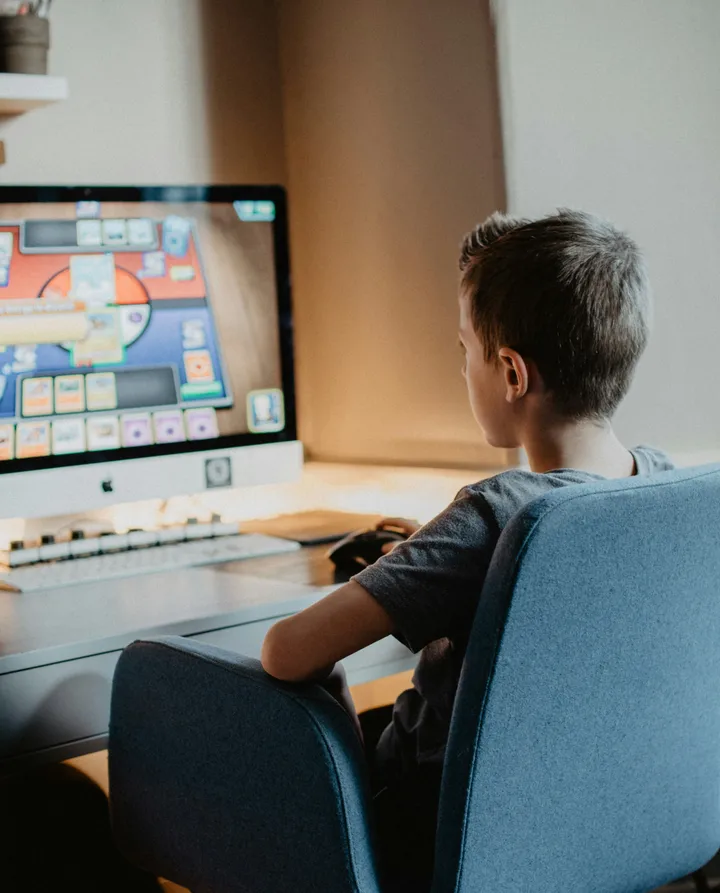
Children’s screen time has (rightly) received plenty of scrutiny of late.
We know that excessive use of screens can impact concentration levels and negatively impact academic outcomes. Studies have also linked it to poor language development, as well as problems with development, including obesity, sleep disturbances, depression, and anxiety.
But what about the impact on brain function? Well, a new study from Finland found kids who had higher amounts of screen time during childhood ended up with better cognitive processing in their teen years.
Cognitive processing refers to the mental functions which are linked to thinking, learning, memory and executive function.
Researchers said the findings suggest screen time can support children’s and adolescents’ cognitive processing. But they stressed a key consideration here is what kind of things children do during their screen time.
The findings are based on an eight-year follow-up of the PANIC study on children’s physical activity and nutrition. The study involved 124 girls and 136 boys, whose average age was 15.
Physical activity and sedentary behaviour were measured by a device that combined heart rate and movement measurements and also by a survey questionnaire, while learning, attention and working memory were also assessed.
Doctoral researcher Petri Jalanko, from the University of Jyväskylä, said children should be encouraged to use screens in ways that promote active thinking, problem-solving, creativity and learning.
Parents shouldn’t just see screen time as harmful, he added, but should seek balance between physical activity and screen time that promotes active thinking.
The research tracks with previous research on brain function and screen time. A 2023 study of nearly 12,000 children in the United States found no evidence that screen time impacted brain function or wellbeing.
A study in older adults, meanwhile, found active screen use was generally associated with better cognitive outcomes, particularly in memory, executive function, and attention.
Passive screen use, on the other hand, was linked to poorer outcomes, including verbal memory and global cognition declines.
The latest findings come after a survey found almost one-quarter (24%) of parents of three‑ to five‑year‑olds find it hard to control their child’s screen time, and 98% of two‑year‑olds watch screens every day.
In the UK, the government has issued guidance on screen time for under-fives, suggesting under twos should avoid screen time other than for shared activities that encourage bonding, interaction and conversation (ie. FaceTiming family).
Meanwhile two- to five-year-olds should stick to no more than one hour of screen time a day, and screen time should be avoided at mealtimes and in the hour before bed, so as not to disrupt sleep.
Watching screens with an engaged adult where parents talk and ask questions has been linked to better cognitive development than solo use.
Slow-paced content is also considered far better for development than fast-paced social media-style videos.
Paediatrician Dr Joel Warsh, aka Dr Gator on social media, previously shared in his newsletter that he tells parents to ask four questions when it comes to the impact of screen time on their kids.
- Is my child sleeping well?
- Are they able to focus without screens?
- Do they play independently?
- And how do they behave when the screen is taken away?
If their sleep, focus and ability to play independently is on track, and they don’t have meltdowns or angry outbursts when screens are taken away, this is a positive sign.
The paediatrician noted that “sometimes it’s not about the number of hours” but rather the effect of screen time on our kids that we should pay attention to.