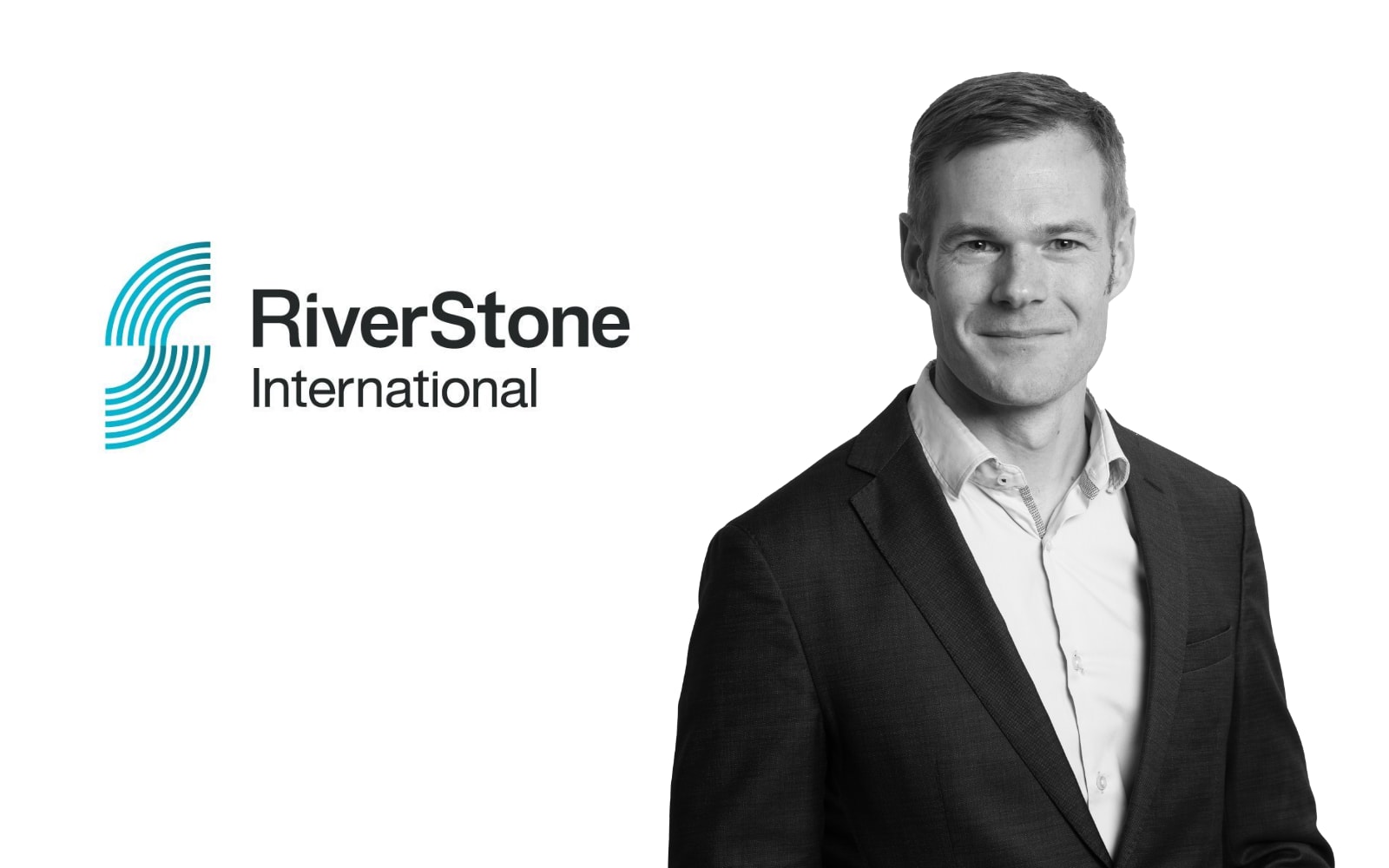
Group president and group chief financial officer (CFO) Andrew Creed said global legacy acquirer RiverStone International is keen to be more proactive in deal origination and is committed to continuing to build brand and legacy market recognition while leveraging new technologies to support its growth objectives.
At the 2026 IRLA conference in Brighton in early May, Reinsurance News spoke with Creed about RiverStone International’s three core areas of focus over the next three to five years.
“Number one, we definitely want to be more proactive in terms of deal origination,” Creed said. “Our new CEO, Paul Brockman, and I were very aware of this when Paul joined us and would be more structured and disciplined in our efforts to build this pipeline.”
He went on to explain that this includes visiting counterparties, capital providers, regulators and others in multiple different jurisdictions.
“This ensures that we continue to educate, continue to deliver our message, but more importantly, we continue to listen to what our customers actually need. If we don’t fully engage with our markets and potential customers, it’s always going to be trickier for us to design products and come up with customized solutions that proactively support needs. So we want to focus more on being proactive in deal origination, making it a core part of what we do, rather than being reactive by default to opportunities that come our way,” Creed said.
The company’s second area of focus in the coming months and years is continuing to build brand and legacy market recognition. Creed explains that while respect for the retrospective space is indeed growing, it’s important not to become complacent about its current status.
“I think there’s always more we can do to get out there and talk about who we are, how resilient we are, why we’re not just here to clean up disrupted and problematic businesses, and how we can provide clear capital and operational relief solutions across the insurance and reinsurance space. Building that brand is really important to creating a highly sustainable business and lifting our market,” he said.
RiverStone’s third and perhaps broadest focus is technology. The company has its own in-house claims management system, which is currently being fully upgraded to take advantage of newer tools and updated systems.
Creed explains: “We are very focused on making sure we identify areas where there are really clear value use cases for the technology and how we can apply these automation and AI products into our day-to-day work to improve operational efficiencies and help us create more value for us and our customers.
“It does mean embedding automation and AI solutions into what we do, which I think is critical for a number of reasons. Firstly, operational efficiency is really important when it comes to scaling our business and how we maintain differentiation. Managing costs effectively through systems is critical to that. Secondly, being able to manage and distribute Analyzing large volumes of data sources to accommodate underwriting and pricing discipline remains key, particularly in an environment where claims control is not in place, where you need a higher level of comfort that reserves you assume are fully understood, and the use of data and analytics powered by artificial intelligence and automation becomes a real key component of this.
“It’s also important from an ongoing business development, business maturity and talent perspective, particularly in terms of continuing to attract highly skilled talent to our business.
“It’s important that this market continues to evolve its technology and data stance in the right way, engage in things that have clear value cases and use cases, and continue to build resilience. Resilience is key across the business, and cyber resilience in particular must remain one of our more important focus areas.”
Creed is optimistic that the company is ready and able to capitalize on market opportunities as RiverStone International increases its focus on these three core areas, with Lloyd’s and the United States being a focus.
“The last wave of activity came on the heels of Decile 10 and the bottom quartile review – it was more about operational restructuring and capital recycling into hard markets. Since then, activity has been more of a background trickle.
However, the amount of tail liabilities accumulated on syndicate balance sheets since the last wave of RITC will drive more activity beyond this.
“I do think we will see more opportunities emerge at Lloyd’s over the next four or five years. The Lloyd’s market has been relatively quiet since 2023, with only a handful of deals completed since then. This more limited activity does suggest that the RITC market is not currently being systematically used by Lloyd’s live operators and capital providers. The last deal we saw was mainly in Decile 10 What’s driven by the review, and ultimately the quartile review, is some incremental activity around operational restructuring and capital recycling to support hard market growth.
“We’re still trying to change the dynamics there. But the amount of tail liabilities that have now accumulated in active group balance sheets over the last three or four years since the last wave of RITC, I’m sure will drive more activity,” Creed said.
For Creed, the United States remains a huge untapped market for RiverStone and the broader traditional market. Despite the country’s huge debt, Creed believes the region still needs the most education.
“It’s easy to think of the region as a single, monolithic market, but unfortunately it’s not that simple. More education is still key, both among regulators and between operators and counterparties. Ratings agencies are also becoming more familiar with traditional markets, which is great, and that helps, especially in the US. But there’s more to do. Ultimately, the US is a region where I see significant opportunity and where I want us to be active,” he said.