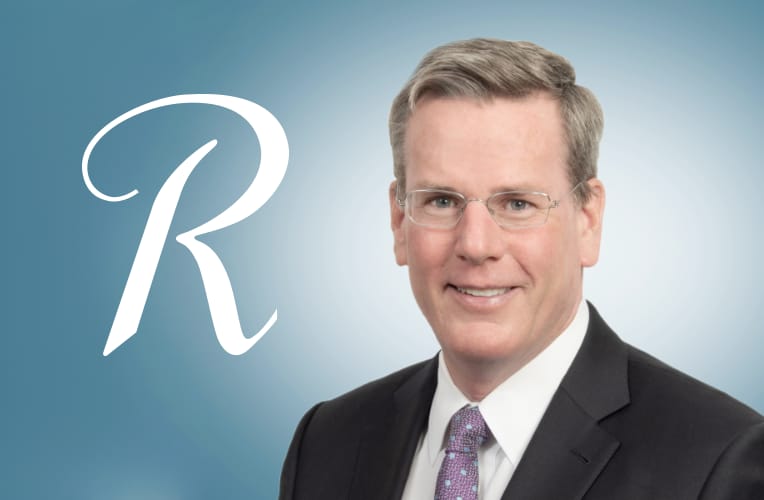
During RenaissanceRe’s second-quarter 2026 earnings call, CEO Kevin J. O’Donnell said the company has spent decades dealing with real estate disaster markets and has a clear understanding of when to expand and when to stay disciplined.
He added that real estate catastrophe rates remain broadly adequate and continues to guide the company’s underwriting approach.
The Bermuda-based reinsurer generated underwriting revenue of $599.1 million in the second quarter of 2026 and a combined ratio of 72.8%.
While underwriting revenue was essentially flat from $601.7 million in the second quarter of 2025, the combined ratio improved from 75.1%, reportedly reflecting strong underwriting performance this year, lower catastrophe losses and favorable prior-year reserve development.
During the earnings call, O’Donnell said the results reflected the long-term, disciplined execution of RenaissanceRe’s strategy, which has enabled the company to continue to expand.
The executive explained: “Our strategy does not change every quarter. We manage the business to build an effective portfolio of venture capital investments that maximize profitability. However, as the market changes, the tactics we employ to achieve that strategy change.
“You can see this with mid-year renewals. Real estate disaster rates are down into the teens, which is consistent with what we expected.
“Our leadership position allows us to increase real estate catastrophe limits with high-quality clients. The result is that our portfolio remains well-funded at today’s pricing.”
O’Donnell added: “We remain bullish on the real estate catastrophe market. The recent rate declines follow gradual changes in pricing and terms that reset this market in 2023. As a result, real estate catastrophe rates remain broadly adequate and that is the determining factor in our underwriting behavior.”
“Thinking about our business in terms of rate adequacy gives us a more nuanced strategy, rather than having one playbook for hard markets and another for soft markets. What sets us apart is that we know how to navigate the transition between the two and have more tools to do that.”
RenaissanceRe’s CEO said his company has been navigating the real estate disaster market for decades and knows when to evolve and when to exercise discipline.
O’Donnell continued: “Rate changes tend to be asymmetrical. Periods of gradual decline are punctuated by rapid and sharp increases, which is what happened in 2023. We recognized the opportunity at the time and grew aggressively through both organic growth and the acquisition of Validus. This puts us well-positioned in the current market.”
“Ultimately, this is a margin business, not a growth business. In a falling interest rate environment, discipline is not about how much you write; it’s about how much you retain.
“We start by looking at the entire market from both an internal and external perspective. This allows us to understand where the best risks actually lie.
“We conduct risk selection, focus on specific accounts and tiers where the economics are strongest, and actively manage line size.
“Then we deploy the rest of our toolkit, including sublease purchase and capital partner tools, to shape what we retain.
“This combination allows us to grow the gross portfolio where we see opportunity while managing the net portfolio to achieve the optimal mix of risk and return to maximize long-term growth in tangible book value.”