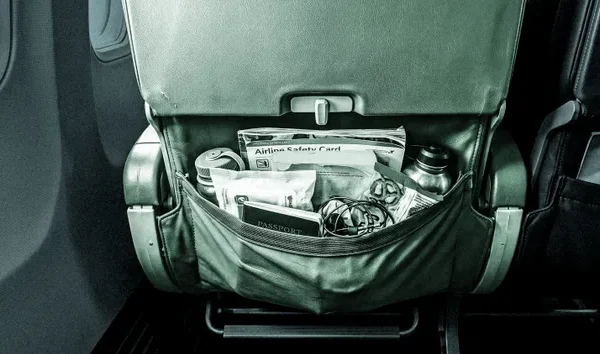
!function(n){if(!window.cnx){window.cnx={},window.cnx.cmd=[];var t=n.createElement(‘iframe’);t.display=’none’,t.onload=function(){var n=t.contentWindow.document,c=n.createElement(‘script’);c.src=”//cd.connatix.com/connatix.player.js”,c.setAttribute(‘async’,’1′),c.setAttribute(‘type’,’text/javascript’),n.body.appendChild(c)},n.head.appendChild(t)}}(document);(new Image()).src=”https://capi.connatix.com/tr/si?token=ff7fdddc-5441-4253-abc4-f12a33fad58b”;cnx.cmd.push(function(){cnx({“playerId”:”ff7fdddc-5441-4253-abc4-f12a33fad58b”,”mediaId”:”1c640239-9ba3-401c-a104-d7514bf80019″}).render(“6ad8d5ace4b0ba084e13bd7f”);}); No one would argue that modern plane seats have the greatest designs, but I always thought the seatback pocket was a nice touch. A little extra storage to hold your in-flight reading material, empty coffee cup or stash your boarding pass? Yes, please. It turns out I could not have been…