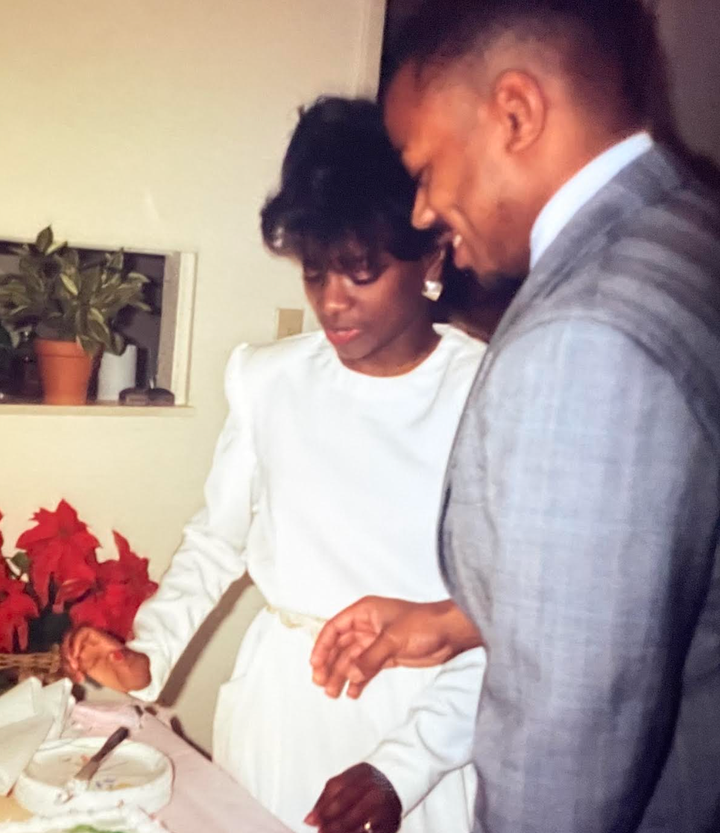
Our 33-year-long marriage ended over Zoom.
Not in a courtroom. Not with slammed doors, raised voices or a dramatic final goodbye. Because we were still living in the aftermath of Covid-19, our divorce hearing happened quietly through a computer screen … as casually as any routine virtual meeting.
I wrestled with what to wear that day. Should it be businesslike or casual? In the end, I was glad I chose something simple, because the moment itself was far less formal than I expected. It was just me and my soon-to-be ex-husband, the judge and our legal representation. The whole thing took no more than 10 minutes.
At one point, the judge even paused and asked if we were absolutely sure this was what we wanted. I think our kindness toward one another – and the fact that we both had smiles on our faces and even chuckled several times – caught him off guard.
In his defense, he was probably accustomed to presiding over divorce cases filled with tension, bitterness or silence so sharp it can cut through air. But my former husband and I simply smiled and answered the same way: “Yes.” And just like that, our three-plus decades of being married was done.
I expected to feel grief afterwards, but I was surprised by the absence of regret. Nobody really talks about peaceful divorce, especially in the church, and especially when you’ve spent more than 25 years in ministry and are the people others assumed would make it all the way to the finish line together.
Courtesy of Michell F. Pulliam
The hardest part wasn’t ending the marriage. It was disappointing people who needed our marriage to represent something. How many people stay in situations, not because they’re right for them, but because other people are invested in their story? And how many of us have silenced our own truth to preserve a story that no longer belonged to us?
For weeks before sharing the news publicly – well, not that publicly… only our kids, my sisters, a few others, a quick mention in a blog post, and a reference to it in my last two books (heck, it’s been almost four years now, and some people still don’t know) – I went back and forth on whether I wanted to tell anyone at all.
It wasn’t because I was ashamed of our decision, but because I knew how quickly people assign failure to divorce, especially in Christian circles. I dreaded the whispers, the pearl-clutching, the subtle disappointment hidden behind concerned expressions. I could already hear the questions forming in people’s minds: What happened? Who changed? Whose fault was it? Who gave up?
The truth was far less dramatic than people probably wanted it to be. There was no scandal. No sudden breaking point. No explosive betrayal. No hatred growing quietly behind closed doors.
There were simply two people who had spent 33 years building a beautiful life together and eventually realising we wanted different things for our next chapters. That realisation came with both grief and relief. That’s the part people struggle to understand: Both emotions can exist at the same time.
Sometimes love changes form, sometimes letting go is the most loving thing two people can do for each other, and sometimes peace is holier than performance.
Courtesy of Michell F. Pulliam
Our decision to divorce wasn’t the result of one defining moment. There wasn’t a single conversation or turning point that suddenly changed everything. It was more like a truth we had been circling for a long time – a truth we both felt but weren’t always ready to acknowledge, let alone fully face.
I think more marriages experience this than people realise. Sometimes one person feels it first. Sometimes both do. The hard part is being honest enough to admit it. When two people are willing to do that, there comes a point where pretending becomes more exhausting than accepting what they already know.
For us, that moment wasn’t about a lack of love. It was coming to grips with the fact that neither of us wanted to spend the rest of our lives asking the other person to become someone they weren’t.
We had built a beautiful life together, but we had also grown into different people with different desires for the years ahead. Once we accepted that, the decision itself became clear as a bell, even if it wasn’t easy.
That isn’t to say our marriage was perfect. Far from it. We had our struggles, our disappointments, and our share of painful seasons. But those things weren’t the reason we divorced. The simple truth was that we had grown in different directions and were finally able to come to terms with it.
Courtesy of Michell F. Pulliam
Some mornings after that Zoom meeting, I’d wake up and, for a split second, I’d forget that I was divorced. Then reality would quietly settle in. I’d realise every decision belonged solely to me now: what to do, where to go, what’s for dinner, how to move through the day. After spending the majority of my adult life considering another person in every choice, that kind of freedom felt unfamiliar.
There were moments when fear gripped me unexpectedly. Moments nostalgia washed over me without warning. Moments I whispered to myself, Oh God, what have we done? But even in those moments, I knew this was the right decision. That certainty surprised me and comforted me all at the same time.
I think part of the emotional warfare surrounding divorce has less to do with the relationship itself and more to do with the weight of disappointing the people you love. I come from a family where long marriages are the norm. My parents were married for nearly 45 years before my mother passed away. My siblings, aunts, uncles, cousins and family friends have all been married for years.
Then there was ministry. For decades, my former husband and I led a congregation, counselled couples, officiated weddings, encouraged families and prayed with people through difficult seasons in their marriages. The ironic part is that I even wrote a book on relationships and communication. Looking back, I can see how even that was preparing me for this chapter of my life, not in vain, but as a part of an unfolding I had no idea about at the time.
I worried people would see our divorce and immediately reduce our entire story to one word: failure. But I no longer see it that way. And if I’m honest, I don’t think I ever truly did. It was one of life’s greatest lessons. It was a marriage that brought three incredible children into the world, filled our home with love and laughter, carried us through multiple states, seasons of ministry, hardships, prosperity, grief and celebration, and eventually a wonderful son-in-law and two beautiful grandchildren. That is the furthest thing from failure to me. It was my life, and I’ll always be grateful for it.
Courtesy of Michell F. Pulliam
Our family dynamics may have changed, but we’re still family. My ex-husband’s family is mine, and my family is his. And when I say we’re still family, I don’t mean that as a statement to make our ending seem perfect. I mean it quite literally. We talk on the phone often. My sisters and brothers-in-law still consider him their brother. He remains uncle to my nieces and nephews. Our shared friends are still our friends. If time permits, he shows up for family events every now and then. And, to many people’s surprise, he’s even still my pastor.
I know that may sound unusual, even hard to understand, because it doesn’t fit the way most people are taught to think about divorce. However, for us, our divorce ended our marriage, not a lifetime of shared history, mutual respect and genuine care. Those things didn’t disappear when the paperwork was signed. If anything, they became easier to appreciate once we stopped trying to force our relationship into something that no longer worked.
We still want the best for one another. Our children love us both deeply, and we’ve been intentional about protecting that throughout this process. Life may continue evolving for both of us, but I don’t believe that has to erase the love and respect we share. In some ways, we may be better friends now, free from the weight of the identity we had built together.
In letting go of old ways of being, we both received the space to finally grow into who we were always meant to be, without trying to hold together a version of ourselves that no longer fit. Most of all, we ended a marriage without ending our love for each other as human beings. Instead of mourning what we’ve lost, we’re celebrating what remains.
Some people may find this strange, because we live in a culture that often treats divorce like emotional warfare where someone must become the villain and someone has to bear the blame so the story makes sense. But life is rarely that simple.
Courtesy of Michell F. Pulliam
Peaceful endings often make some people uncomfortable. They challenge the narratives we’ve grown accustomed to. People understand betrayal. They understand toxicity and drama. They understand painful, messy endings. Mutual love and mutual release sometimes confuse people, because we’ve been taught to see letting someone go as a sign of loss or defeat.
Of course, I still grieved. You don’t close a 33-year chapter of your life without feeling the weight of it. And there are definitely moments when I miss what once was. But I don’t miss pretending. I don’t miss ignoring what we both knew deep down inside of us.
Ultimately, I’m grateful neither of us forced the other to continue living a life that no longer brought joy, peace or fulfillment simply because other people expected us to.
I’ve learned that divorce does not automatically make someone bitter, broken or spiritually deficient. It does not erase the good that existed before the ending. And, despite what many Christians have been taught, sometimes grace looks less like enduring unhappiness with no end in sight and more like setting each other free with compassion.
My former husband and I are still friends. We still support one another. We still love our family fiercely. After 33 years together, I genuinely want him to have a beautiful life as he moves forward. And I know he wants the same for me.
Michell F. Pulliam is a storyteller, author and midlife advocate who writes on identity, faith, relationships and personal transformation. Over 25 years, she and her former husband pioneered ministries across four states, building faith-driven communities. She is the author of four books, including “Rooted,” a memoir inspired by the discovery of a rare maternal haplogroup tracing back 44,000 years, exploring ancestry, identity and the women whose stories came before her. She is passionate about helping women reclaim their voice, rewrite their story and remember who they are.
Do you have a compelling personal story you’d like to see published on HuffPost? Find out what we’re looking for here and send us a pitch at pitch@huffpost.com.