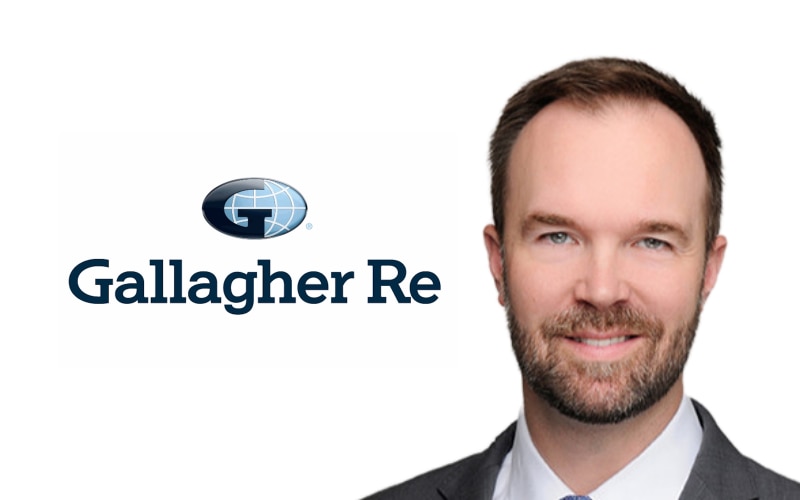
As traditional reinsurers expand coverage and show a greater willingness to support lower tiers, primary underwriters will benefit from more options and less pressure to leverage captives for first-tier risk, said Adam Schwebach, head of North America property at Gallagher Re.
In an interview with Reinsurance News, Schweinbach commented on how the downward expansion of capacity has reduced the need for carriers to use captives to cover first-tier risks.
“Most importantly, it gives cedants options,” Schwebach noted. “They have the option of leveraging captives, which historically, when the market didn’t exist, captives might have underwritten the entire first tier, or were priced unattractively to pass the risk to third parties. Now, we’re seeing captives being used more as co-participants in the tier, alongside traditional reinsurers. It’s a good story for both parties because the interests are aligned.”
“But again, in a lot of cases, we’re going to have situations where we don’t need the captive to fill out the tiers. The captive may have owned the entire first tier before, and now it’s 100% in the traditional market. That gives the client the ability to look at that tier and say, ‘Is this really a risk I want to retain? Or is it better served in the traditional market?'”
Schwebach said choice will be the biggest benefit, as some cedants will seek to maintain their captive strategies to match their overall risk tolerance, while others take advantage of opportunities to strengthen third-party reinsurer relationships or move risk off the balance sheet entirely.
The current weak momentum in capital allocation and interest rates is expected to continue into the second half of 2026, and the Atlantic hurricane season is unlikely to dampen reinsurer appetite, the executive said.
“It’s always difficult to know exactly what’s going to happen going forward. My gut tells me I think most plans will sign up. Most reinsurers won’t be able to fully deploy, so I think they’ll be looking for opportunities to continue deploying beyond June 1,” Schwebach said.
Rather than withdrawing capital due to seasonal climate risks, reinsurers are faced with large amounts of capital that need to be put to work. While Schwebach doesn’t expect anyone to deploy capacity “recklessly or irrationally”, supply and demand dynamics will inevitably put pressure on pricing.
He continued: “But I think we will continue to see reinsurers looking for ways to deploy excess capacity, which may lead to lower rates after mid-year.”
In this soft environment, cedents are redirecting cost savings towards lateral protection, such as integrating third and fourth event cover back into their placements.
While these are not the top-to-bottom cascade structures seen in soft loops of the past, they provide significant protection for the top layers. Schwebach noted that these structures have been unavailable in recent tough markets due to Florida’s intense litigation environment and widespread reinsurer disinvestment.
“This kind of coverage would have been appropriate during the soft market cycles of the past few years, but in a tough market cycle, a dollar is only worth so much, so they have to make some decisions about what is ‘beneficial’ and ‘necessary,'” he said. Often these policies are either unavailable or cost too high to purchase. “
The executive noted that the resurgence of these structures has been influenced by competition in the ILS and catastrophe bond markets, which have also been demonstrating a willingness to offer such insurance.
Schwebach noted that in early spring, clients in the catastrophe bond market seek top-and-down or total coverage as part of their annual reinsurance protection.
He explained: “When this happens, reinsurers will take notice and brokers will try to remind them that if the catastrophe bond market offers this insurance, then it would be great if they were willing to offer it as well. We are seeing an increasing willingness from traditional reinsurers to provide this insurance and to do so in a cost-effective manner, but often it is a collaboration between the traditional market and the ILS market to provide this type of insurance.”