Recently, the UK government launched a “Be Ready” campaign, which suggests “simple and effective steps you can take to be ready for emergencies and the disruption they cause”.
This could include cyberattacks, natural disasters, and other adverse events.
Defence Secretary Wes Streeting stressed that the government didn’ have a “specific thing [they had] in mind” when making the suggestion, and that it’s best to be “alert, not alarmed”.
As part of the campaign, the government recommended keeping 17 items – like three days’ worth of food and water, a torch, a wind-up battery, and a first aid kit – on hand where possible.
They asked us to consider the items we have already, and many (like written copies of phone numbers and scans of your documents) are inexpensive.
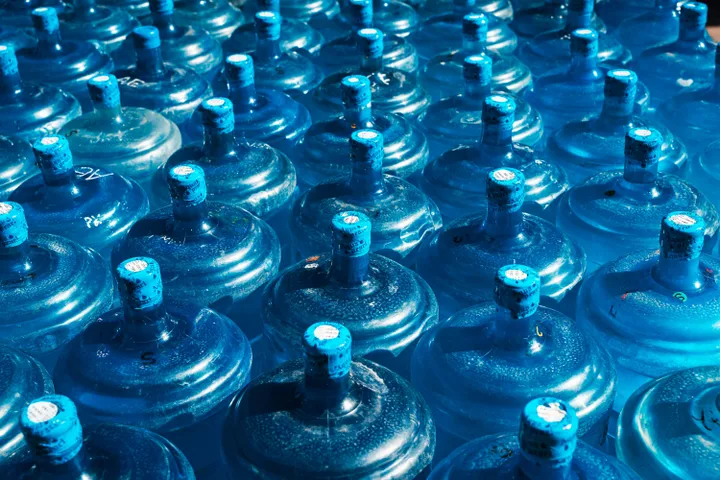
But others, including cash, a first aid kit, a charged power bank, and at least nine liters of bottled water, may take more time, space, and money to stockpile.
Thilina Alagiyawanna via Unsplash
Posting to Reddit’s r/AskBrits, site user u/aqmrne asked members of the forum: “Is anyone in the UK actually stockpiling or are we just vibing?”
As you might expect in a high cost-of-living age, the responses were mixed.
Some, like r/rakemitri, were pretty straightforward about the viability of the proposed stockpile.
“With what money? If I could, I would, it’s just common sense and something my parents just did while I was growing up,” the site user wrote.
“You never know when you’re gonna get sick, or gonna get power cuts, or whatever other normal life circumstances that we all go through one time or another. Having a few candles, a radio that doesn’t need electricity, some extra batteries, water, canned food, instant soup and such – all a life saver.
“But right now I’m so money-tight that I can’t.”
Jacob McGowin via Unsplash
Their concerns echo those shared by low-income families who told the BBC that they felt priced out of the recommendations. Some prioritised water over food, for instance, while others outright said the plan wasn’t “realistic”.
Then, there’s the other possible problem: space.
Millions of people in the UK live in houseshares where cupboard and fridge space may already be low. Additionally, about half of those in flatshares don’t have access to a living room – making the prospect of storing, say, 27L for a three-person flat, feel quite daunting.
“Where is everyone keeping all this stockpiled food?” u/Unfair_Matter313 wrote.
“I’ve only got a small kitchen; I can’t be dealing with a tower of baked beans behind the TV.”
And u/Only-Perception-6989 added: “We have five people in our household. Where the hell am I supposed to keep 45L of water?”
Meanwhile, some commenters said they were taking a gentle, “soft stockpile” approach to the advice.
“I wouldn’t say stockpiling, but more, consciously moving away from never having anything in the cupboards”, wrote u/Critical-Welcome4451.
“Buy what you can afford with each shop you do, even if it’s a 30p pack of paracetamol or bar of soap, that is how I am doing it,” added u/Haggis-in-Wonderland.
And u/ForwardBandicoot4325 shared, “I’m buying extras each shop… My kids will always eat tomato soup, beans, tinned pears, pot noodles. The only extras I bought were a power inverter for my electric car so I can charge and run household stuff off it, a better first aid kit, and some power banks”.
Lastly, a couple of respondents said they felt the vagueness of the requirements was unhelpful.
“It would help if there was some indication of what we’re planning for. Supply chain disruption? In that case, stocking up the freezer would help. Power outages? At which point using up all the food in the freezer and buying cans instead would make sense.
“Do we need water? Food? Candles? Bog roll?” u/Old_Bat282 opined.
The government’s advice currently suggests we should stock up on non-perishable food, toiletries, and keep a backup battery-powered light source on hand, though they say torches are a lot safer than candles.
To read the government’s Be Ready campaign in full, go to their site through this link.