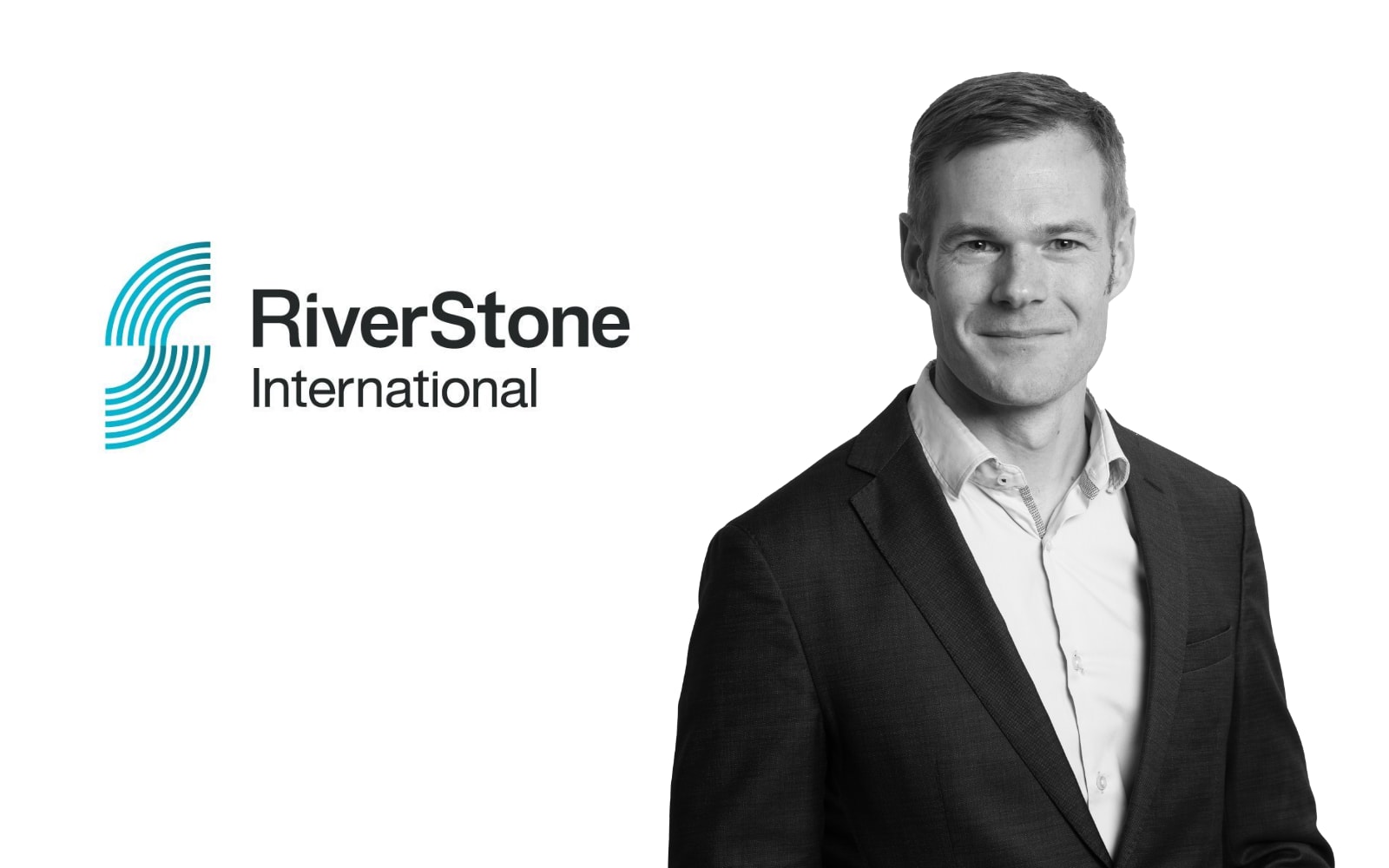
Andrew Creed, group president and group chief financial officer (CFO) of RiverStone International, said the traditional market continues to evolve and while it is clearly no longer the solution of last resort, more needs to be done to continue to build market acceptance and resilience in order to seize opportunities.
Reinsurance News met Creed at the 2026 IRLA annual conference in Brighton, some five months after Creed assumed the dual role of group president and group chief financial officer. We discuss his new role within the group, traditional market conditions and the industry’s continued transformation towards strategic capital solutions.
It was announced last July that Luke Tanzer would retire in 2026 after 27 years at RiverStone, 16 of them as CEO. RiverStone hired Enstar’s Paul Brockman to take over as CEO, and also confirmed the promotion of Creed to group president and concurrently as group chief financial officer.
RiverStone is eager to position the addition of Brockman and Creed’s previously very close working relationship with Tanzer as an ongoing partnership going forward.
“It fits very well with where I think RiverStone is today,” Creed said. We have had CVC for almost five years. When they acquired us we were a UK-focused business with a UK company and a Lloyd’s of London syndicate. Over the past five years we have focused on two key priorities: firstly, we want to ensure we are the dominant specialist legacy carrier in the Lloyd’s and UK markets and demonstrate a real commitment to this; secondly, we want to grow internationally and establish our operational platform in Bermuda, the US, Ireland and now Australia. “
Today, RiverStone operates globally through platforms in the UK, US, Ireland, Bermuda and, most recently, Australia with a local acquisition in the first quarter. Australia was the logical next step in terms of RiverStone’s international growth strategy, Creed explained.
“It’s a mature international insurance market with clear opportunities in terms of underlying and long-tail liabilities to transition into traditional areas and there’s growing interest in traditional trading. We’re interested in continuing to grow our presence there and that’s a really logical next step for us. I don’t think it’s going to be a significant part of our global balance sheet. If it’s 10% of our global balance sheet To 15%, I would be happy with that. Having a presence there really demonstrates that as an international group we want to be present in all key and core insurance markets,” Creed said.
As for the main challenges of expanding into Australia, Creed stressed that it is no different than entering any other jurisdiction, with regulatory aspects and building the RiverStone brand in the region in a resilient manner seen as key.
The global legacy acquirer’s entry into Australia comes in a year marked by generally low deal flows, with PwC analysis showing total deal liabilities expected to be $5.4 billion in 2025, with the majority occurring in the fourth quarter. Of course, this only includes publicly disclosed transactions where the amount of transferred liability is known.
Discussing the traditional market last year, Creed highlighted that while two $1 billion-plus deals were publicly completed in 2025—the Enterprise Asbestos deal and the widely publicized Everest ADC—these deals were not completed with core specialty acquirers such as RiverStone.
“We’re seeing counterparties come into the market who tend to acquire legacy liabilities and use the asset management part of the balance sheet as a core economic driver. That does change the dynamic somewhat compared to core retrospective legacy value creation, which is active claims management,” Creed said. “Despite this, there was adequate deal flow in the background. Generally speaking, deals were completed, but on a smaller scale and away from what I would normally consider RiverStone’s core area.”
Overall, though, Creed believes the retrospective market “continues to evolve,” as evidenced by the issuance of hybrid structures or forward exit option-type products, as well as the increase in more capital management-type structures.
“When I look at the drivers of our deal flow, I would say at least two-thirds of the companies are now no longer restructuring, so they are primarily capital solutions or reserve swing protection rather than purely operational or discount businesses. This continued shift shows that the market has moved very clearly away from solutions of last resort to solutions that are now more on a strategic scale.
“There’s more work to be done and it’s important that we as a market are aware of the different levels of strategic use. When there’s a problem that needs to be solved, real-time markets are no longer simply thinking about traditional markets, but more tactically thinking about, ‘How do I support my business priorities in terms of capital solutions, balance sheet optimization and earnings protection, that’s good?'”
Despite the progress, Creed acknowledged that more work remains to be done before retrospective solutions become purely systemic, although he sees no reason why this can’t be achieved.
“I would like to be able to think about buying retrospective solutions in the same way as buying forward-looking solutions. We are not there yet, and that is where we as a market can continue to evolve. This will come through continued education, closer engagement with our customers and counterparties, and a clearer understanding of their needs. This will continue to come from demonstrating that RiverStone and the broader legacy market operate on a foundation of deep financial and operational strength,” Creed said.
“I don’t think it’s going to be easy. I do think it’s a matter of continuing to engage with the market, understanding how we can best support our clients, and continually demonstrating strength through execution. We can have the best strategy, but delivery is what matters – and we need to be comfortable with a degree of volatility.
“Scale is also important because it gives us a broader risk appetite. For every trade we do, of course we want it to be a profitable trade, but that is not realistic in all cases and we have to be comfortable and resilient to that risk. This approach will continue to help us find the right balance between traditional and real-time markets, and that’s where scale is important,” he added.
A notable recent trend in legacy markets around the world is the increased inclusion of greener or newer underwriting years. It is no longer uncommon to see trades in the market with unexpired tails. This is all well and good and will obviously help raise the profile and understanding of the sector, but as Creed explains, traditional markets must offer differentiation to have real value.
“We have to be able to be clear about what our strategy is and therefore what our focus is and how we can make a difference. This cannot be a zero-sum game where the value generated from traditional transactions does not accrue to the internal organic drain on the real market balance sheet. To achieve this, we have to Doing something that’s different from the real market and the addressable market so that ultimately what we offer our customers is a real end benefit. When I think about our differentiators, that’s where our strengths are. Financial and operational skills are really important, and that’s where the next level of maturity has to be.
“For example, if we don’t have direct claims control, and active claims management has historically been a key differentiator in legacy markets, how do we continue to drive excellence on the balance sheet liability side? By working hard to select strong TPA partners, providing strong oversight, and by working with existing spin-off teams, we can continue to make a difference,” Creed said.