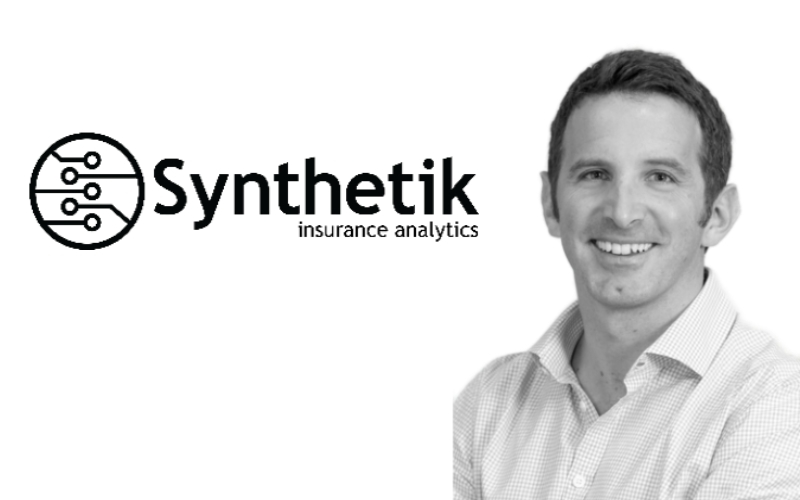
Synthetik COO Tim Brewer said that as data centers become an increasingly critical piece of infrastructure, insurers and reinsurers are looking to more sophisticated analytical models to better quantify potential losses from political violence and terrorism (PVT) risks.
Synthetik is a research and development company based in Austin, Texas. It focuses on advanced computational modeling, physics-based artificial intelligence and synthetic data solutions to address complex challenges in defence, security, energy, environmental resilience, transportation safety and insurance.
In an interview with Reinsurance News, Brewer explained how the market’s view of data centers has evolved, with the asset class shifting from standard property risks to highly specialized risks that require more detailed analysis.
“There are more and more details about what these assets are, how they operate, and the efforts being made to understand what exposures and losses might look like,” Brewer said.
“The insurance value to the market is high because data centers contain orders of magnitude more value than a typical building of the same size, but what insurers see is more of a tail risk. As far as we know, it’s not like a normal building. It contains very sensitive networked equipment and has all the other dependencies on different service networks. Those tail risks are where the market sees the most uncertainty, and they are really trying to quantify what the risks are,” he added.
Brewer went on to outline why data centers are a particularly complex asset class when it comes to modeling PVT risk.
“We look at different threats, and there are clearly different threats in different parts of the world. In conflict-affected areas in the Middle East, scenarios might include drone and missile attacks. And if you look at other parts of the world, it’s very different. There might be strikes, riots and civil unrest or other things,” he said.
“Then there’s how those threats interact with the structure, the property and how it gets damaged, and then there’s the dependencies of the data center: power, cooling and network connectivity, which is another big part of it, and then the people who rely on it. The interactions between all of those things are different.
“The value of these assets can be orders of magnitude higher than the average property of the same size, and the equipment inside them is more sensitive to shock, vibration and stress than standard building content such as laptops and computers. This makes them a type of asset that we really deserve to pay attention to, especially given the value of the asset and the value locked in by the insurance policies that cover it. These are key challenges that we have to address.”
Brewer emphasized that existing market models can effectively classify risks and help identify high-risk and low-risk exposures.
Insurers and reinsurers are increasingly focusing on more sophisticated models that can help them better understand and quantify potential losses, he added.
Advertisement
On how reinsurers/reinsurers should approach cumulative risk in the industry, Brewer said insurers and reinsurers should assess risk exposures through four key lenses.
“One is the physical lens, so what does the building look like? And then, what are the dependencies? That means things like transmission lines, fiber optic cables, cooling, water and other critical dependencies. Services, that is, who does the data center work for, because a single data center might serve a hyperscale cloud provider or a technology company, or it might serve different customers, so there might be some interesting dependencies there. And then there’s the contract and insurance related provisions: How are these covered? What does the structure look like? Is there enough capacity there?
Looking ahead, Brewer commented on how he expects the insurance market to assess data center risks to evolve.
“I would say there is more consistency in terms of classification, in other words, what we call things. Data centers are quite heterogeneous in structure; one data center is not the same as other data centers. The key is to understand what its components are and for insurers to understand what that means for their risk exposure.
“More advanced scene modeling is another area, and I think that’s true of PVT as a whole. Things are much better than they were in the 1990s or 2000s “
“Finally, there’s the portfolio management piece, which is probably differentiation across tens of thousands of data centers. In Texas, new data centers are being added all the time. So it’s really about understanding at the portfolio level how to differentiate and how to look at the accumulation of spatial and regional risk,” Brewer concluded.