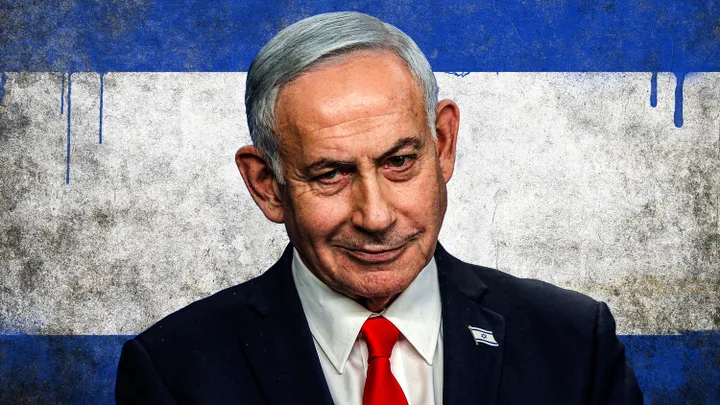
Israeli Prime Minister Benjamin Netanyahu, who has spent the better part of the past two decades leading the country, will face one of the toughest battles of his political career on Tuesday.
Netanyahu is the longest-serving prime minister in Israeli history and is no stranger to political comebacks — including when he was ousted from power in 2021, only to regain his position about 18 months later.
“It took him just a year to manage to bring down the government, and then there was another election. He came back, and he’ll be trying to do that yet again,” Anshel Pfeffer, The Economist’s Israel correspondent and author of Bibi: The Turbulent Life and Times of Benjamin Netanyahu, told HuffPost.
But many things have changed in just the past few years, and Israel has taken a hard-right turn. Netanyahu is the first sitting Israeli leader to stand trial on corruption charges, has pushed through a controversial agenda egged on by his far-right coalition partners, and has refused to accept any responsibility for the Oct. 7, 2023, attacks that happened under his watch — all while the country’s international standing has taken a major hit amid the wars in Gaza, Lebanon and Iran, as well as the surge in settler violence in the occupied West Bank.
Illustration: HuffPost; Photo: Getty Images
The upcoming election, analysts say, will be a referendum on Netanyahu’s leadership since his return to power.
“I do feel that this time around there is a difference because we were never in this situation that we experienced [on Oct. 7], so this is the worst tragedy that happened to Israel since its creation,” said Ksenia Svetlova, an executive director of the Regional Organization for Peace, Economics and Security and a former member of the Israeli Knesset, or parliament.
“Not even the debacle of the October War can be compared to that,” she said, referring to the 1973 Yom Kippur War that broke out when Egypt and Syria launched a surprise attack on Israel.
Parties that aren’t connected to Netanyahu could have a good shot at taking control of the government, as long as they’re able to put aside their differences enough to work together when it matters, said Dahlia Scheindlin, a pollster and political consultant.
Parties outside the prime minister’s coalition, she said, “clearly have a majority as far as it looks — unless we’re terribly surprised.”
The Race To Create A Government
Parliamentary elections in Israel are scheduled to take place every four years, but they can happen more often. The country uses a proportional representation voting system, meaning parties are allocated a set number of seats in the Knesset based on the share of the vote they get. But they can only gain parliamentary representation if they cross an electoral threshold of 3.25%.
No single party has ever managed to secure an outright majority, so the Israeli government has always been a combination of different factions and parties. Once the election results are announced, Israel’s president — the country’s head of state who is elected by the Knesset and has a more ceremonial role compared to the prime minister — will instruct a member of parliament — typically the leader of the party that wins the largest number of votes — to form a government. That person then has 28 days to complete the task of putting together a governing coalition, which then has to be approved by a vote of confidence by the Knesset. That person has the ability to request a 14-day extension if they are unable to complete the task by the original 28-day deadline.
If that effort fails, the president can order another member of the Knesset to take a shot at forming a government. If that also fails, a group of 61 Knesset members can ask the president to name a third person to try to create a government. But that person will only have 14 days to do so. If they fail to create a government, new parliamentary elections will be triggered.
Netanyahu’s Likud party came first in the March 2021 election. But Netanyahu was subsequently unable to form a government by the deadline, prompting then-President Reuven Rivlin to instruct Yair Lapid, a centrist politician and leader of the Yesh Atid party, to create one instead. Lapid reached a deal to form a governing coalition, ending Netanyahu’s 12 years in power. But that coalition government, which faced tremendous pressure from Netanyahu’s right-wing bloc, collapsed just over a year later, in part due to ideological differences within the coalition over the rights of the country’s Arab minority and settler policy in the occupied West Bank.
The government’s collapse triggered a new election, which Netanyahu won. By Dec. 29, 2022, he was back in his old job, being sworn in as prime minister of the most right-wing government in the country’s history after forging a partnership with ultra-nationalist and ultra-Orthodox parties.
His return to power quickly turned controversial.
Netanyahu pursued a sweeping judicial overhaul, sparking mass protests across the country. The first package of the overhaul was paused due to public backlash and came to a halt following the Oct. 7 massacre, but last year Netanyahu’s government took steps to revive key parts of that agenda, including by passing legislation weakening the attorney general’s power.
Netanyahu has also resisted accountability for Oct. 7, 2023, opposing an independent, public inquiry into the attacks, during which Hamas-led militants killed 1,200 people and took about 251 hostages. He has claimed that an independent state commission appointed by the Supreme Court would be biased against him. New reports also suggest he received warnings about the attacks — allegations he vehemently denies.
Netanyahu’s premiership appeared to be in jeopardy in the immediate aftermath of the Oct. 7 attacks, but he managed to keep his job. He stayed in power, in part because his right-wing coalition partners were unwilling to force his resignation, recognizing that they had to stand by him if they wanted a chance at staying in power and advancing their agenda. The prime minister even achieved a rare milestone, as this is the first time since 1988 that a Knesset has completed a full four-year term. Israel held five separate elections between 2019 and 2022 before creating its current government.
Polling shows, however, that many Israelis blame Netanyahu for failing to prevent the attacks.
The Oct. 7 attacks also prompted Israel’s brutal war in Gaza, which has killed at least 74,000 people, according to local authorities. The International Criminal Court has issued an arrest warrant for Netanyahu, accusing him of war crimes and crimes against humanity — accusations that the Israeli leader has dismissed. Beyond Gaza, Israel has also seized large swaths of land in Lebanon and Syria over the past two and a half years, and joined the U.S. in fighting two wars against Iran. This appears to have resulted in a major shift in public sentiment for Israel, as a majority of American adults now hold an unfavorable view of the Israeli government, according to Pew.
Large swaths of Israelis took to the streets of Tel Aviv on Saturday, just days ahead of the vote, to protest the government and press for the creation of an independent panel to investigate Oct. 7.
“A little over three years after that bitter and terrible day on which our sons and daughters, our brothers and sisters, were abducted, massacred, burned, raped and murdered, the leadership has still not made the decision to carry out the most important and necessary thing — an investigation into the truth,” Elhanan Danino, whose son Ori was one of the hostages killed by Hamas in August 2024, said at the protest, according to The Times of Israel.
Yair Palti/Anadolu via Getty Images
Several party leaders from the anti-Netanyahu bloc, including former military chief Gadi Eisenkot, joined the rally. Eisenkot, who lost a son and two nephews in the Gaza war, served as an observer in Netanyahu’s war cabinet following Oct. 7. He resigned eight months later and has emerged as Netanyahu’s main challenger as leader of the newly formed Yashar party.
“Leaders are tested by results. Netanyahu brought upon Israel the greatest disaster since its establishment,” Eisenkot told The Times of Israel in an interview published earlier this month. “He then defined the war aims, and none of them was achieved except the return of the hostages — and that was largely thanks to U.S. President Donald Trump.”
Eisenkot has pledged to reverse and repeal laws passed by Netanyahu’s government that undermined the justice system and announced plans to create a formal Oct. 7 inquiry.
But although Eisenkot has condemned settler violence in the West Bank, which has been increasing since 2023, he opposes Palestinian statehood and said the total disarmament of Hamas is a prerequisite for Israeli troops to leave Gaza.
AP Photo/Ariel Schalit, File
Another issue looming large on voters’ minds is the military draft exemption for religious students. A recent poll from Israeli news outlet Channel 12 found that the issue was the second-highest priority for voters, according to CNN. While Israeli forces have been fighting wars on multiple fronts since Oct. 7, the exclusion of religious students from the IDF has become controversial, even within some right-wing communities who feel the ultra-Orthodox, also known as Haredim, are not contributing their fair share. Netanyahu’s critics have blasted the prime minister for his efforts to introduce a law to shield Haredi Jews from conscription.
“A country that sends its best sons and daughters to fight and sacrifice their lives cannot tolerate a reality in which a state within a state exists,” Eisenkot said.
‘Never Seen Something Like This’
Most Israelis are barred from casting absentee ballots from outside Israel, but the stakes of this election are so high that thousands of Israelis living abroad — about 67,000 people, according to an estimate from AID Coalition, a US-based nonprofit — are flying home to cast their ballots.
“I’ve never seen something like this,” Svetlova said. “This is really extraordinary and indicates the concerns and fears that Israelis had prior to this election.”
While the figure is just a small fraction of the estimated 630,000 Israelis living abroad, their votes could still make a difference given how close the race is. Polls show Eisenkot’s bloc leading Netanyahu’s coalition by a narrow margin. A Channel 11 poll released Friday showed Eisenkot’s coalition holding a two-seat edge over the Netanyahu bloc. That would leave Eisenkot well short of the seats needed to form a government and require the Yashar leader to potentially rethink his refusal to partner with Palestinian-led parties.
Lital Lee Doron, an Israeli who has lived abroad for over 15 years and traveled to Tel Aviv from Barcelona to cast her vote for the opposition, told Bloomberg that both the Oct. 7 attacks and Netanyahu’s efforts to overhaul the judicial system brought into sharp focus the importance of this election.
“People think election results only affect those living in Israel, but they impact Israelis abroad just as much,” Doron told the outlet. “We went from an admired nation to an ostracized state.”
Danny Peleg, a former Israeli special forces captain who lives in Boulder, Colorado, told The New York Times that many Israelis would likely leave the country if Netanyahu remained prime minister.
“Israel will no longer be a democratic state, and I’m afraid that the decisions will be led by a person who has the fear of going to jail, and wars will continue forever,” he said.
Netanyahu faces a corruption trial on charges of bribery, fraud and breach of trust, stemming from three different, but related, cases. He denies wrongdoing.
“Any other politician you can imagine would at that point have announced their resignation,” Pfeffer said. “But Netanyahu is not that kind of a person.”
Regardless of the election’s outcome, Netanyahu is “not going anywhere,” Pfeffer said.
“Even when he’s lost elections, and he’s lost quite a few, he’s relentless. He keeps coming back. He’s a total politician,” Pfeffer added. “The idea of retiring or taking a back seat is totally foreign to him. He can’t accept that idea, and that’s why he’s built the whole Israeli political system around him.”
Listen to Commons People, the podcast that makes politics easy. Every week, Kevin Schofield and Kate Nicholson unpack the week’s biggest stories to keep you informed. Join us for straightforward analysis of what’s going on at Westminster.