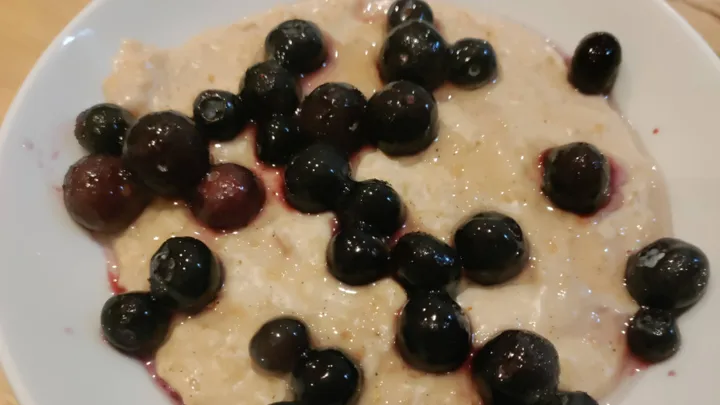
If you’re looking for a healthy, balanced breakfast, dietitian Freya Perry previously told HuffPost UK that porridge is a great all-rounder.
Oats “are naturally rich in fibre, including beta-glucan, a type of soluble fibre that can help maintain healthy cholesterol levels as part of a balanced diet,” she told us – and seeing as most of us (over 90%) don’t get enough of the nutrient, it’s a good idea to include it where we can.
Toppings like berries, nuts, and seeds can boost those benefits even further.
Health benefits aside, of course, I matter how my breakfast tastes, too. I’ve tried toasting my oats (it’s worth the extra couple of minutes on the hob), adding poached pears, and even infusing the milk with chai latte spices.
But having tried a Pret recipe, I might leave the dairy ’til far later in the future.
Water-first cooking makes oats surprisingly creamy
Pret’s “Libby’s perfect porridge” recipe doesn’t include any milk for the first part of the cooking process, though it is added later.
In the beginning, it tells us to “simmer oats in water for a few minutes”; the milk is stirred in closer to the end.
It sounds a little “Oliver Twist”, but there’s science behind the decision. Mashed said that adding water to your oats makes them lighter and thinner, while milk tends to make them thicker and stickier.
For the perfect balance, use both (oats with more water in them are less likely to scorch, too).
In fact, some people even soak their oats in water overnight for the most delicious results. A The Kitchn writer found it left their porridge with an “ultra-creamy, almost airy texture”.
They saw “fluffy” results from letting them steep for as little as 20 minutes.
In case you needed more convincing – the Scottish porridge championship, The Golden Spurtle, only allows contestants to use oatmeal, water, and salt. I’ve actually also bought a spurtle, which also promotes luxuriously creamy porridge.
So… what’s the verdict?
I cook porridge with either water or plant milk quite often, but this was my first time trying both.
The result was far silkier than I’m used to, and it was far faster to cook too (you can boil water quickly without having to worry about burning it, which isn’t true of milk).
My editor has also tried it and decreed the result “the best porridge I’ve made in ages” and “so creamy”, even though she used semi-skimmed milk instead of the recommended whole milk.
Neither of us will be going back to our old ways any time soon…