I was diagnosed a few months ago with a “fat disease”. Writing that sentence brings me shame, as much as I tell myself it shouldn’t.
For years, I had negotiated a fragile peace with my body. Not love. Love is too shiny a word for my feelings toward a body that has been praised, punished, starved, swollen, cut open, medicated and kept alive by devices and drugs. But I thought I had achieved a fragile peace, that I had silenced the sorority of cruel voices within me.
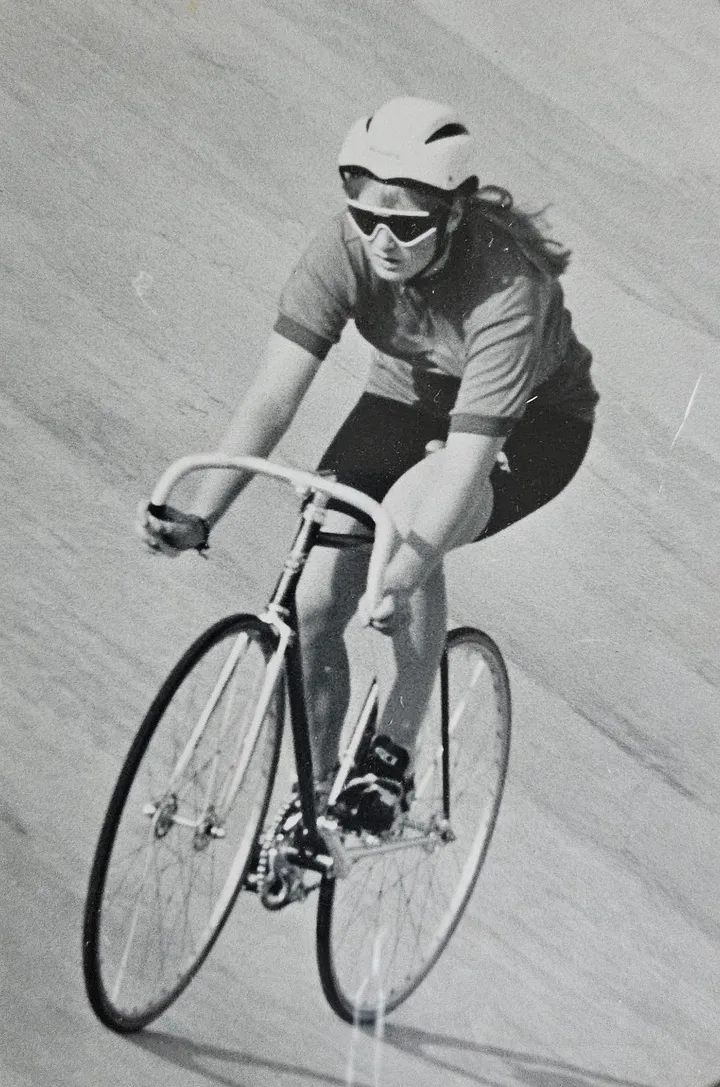
Those voices started up when I was a young, national-class cyclist spending months at the Olympic Training Center. Every morning, we had to record our weight on a form in the hallway. The coaches scrutinised the numbers. If I was up a pound, one of them would call across the cafeteria at mealtime: “Seriously, Stanfel? Dessert today?”
I was 17 years old, trying to get to 14% body fat. I lived with constant, gnawing hunger. Even on an 80-mile ride, I would deny myself a bite of banana. I thought this was discipline.
Almost 40 years later, my legs became so swollen and painful that I could barely walk more than a few steps. I cut the sides of my socks so they would stop digging into my skin. Then I stopped being able to wear shoes. By the end of the workday, my clothes were tourniquets. I felt like I was living inside skin three sizes too small.
I spent nearly two years trying to get help. Doctors looked at me and asked if I had thought of trying to lose weight.
A few months ago, I was finally diagnosed with lipoedema, a chronic disease that causes abnormal, painful fat accumulation, usually in the legs and lower body, although it is sometimes in the arms, abdomen and other parts.
It is not the same as ordinary weight gain. It is not caused by caloric intake. It cannot be fixed by dieting harder or exercising more. There is no cure for lipoedema, only treatment to manage its symptoms and try to prevent its progression.
Still, even when a doctor at a renowned medical centre finally recognised lipoedema, his advice was “try losing weight”. Then he suggested I find a recumbent bike I could ride with my legs above my heart. I am fairly sure no such bike exists, at least not outside of a Dr. Seuss book.
By then, I had heard some version of those three words – “try losing weight” – from multiple doctors. Others told me to wear over-the-counter compression socks, which I now know were making things worse by cutting into my swollen legs. Some gave me high doses of diuretics, which can be harmful in lipoedema. They all seemed to believe that if I would just try harder, my body would comply.
I am no stranger to living with a rare disease. For more than two decades, I have lived with sarcoidosis, an inflammatory disease that has affected my heart, nervous system, liver, bones, skin and other parts of my body. I have been through chemotherapy, high-dose steroids, immune suppression, implanted cardiac hardware and long hospitalisations. I know what it is like to have a body that does strange and frightening things.
But this was different. This was a disease that made my body look like a failure. That is the part I have been most ashamed to say. That I sometimes succumb to this thinking.
Back in my athletic heyday, I would not have said I had an eating disorder. I was an elite athlete, doing what elite athletes did. Later, I was fortunate to find an excellent therapist. I was even more fortunate to fall in love with my husband, Jay.
Jay has never treated my body as a problem I need to fix. He loved me in the slim body I had when we met. He kept loving me when I gained 100 pounds during the sarcoidosis years. When my sarcoidosis went into remission in 2018, and I was able to taper down on prednisone, stop chemotherapy and start hiking, riding my bike and speed skating again, I lost all the weight I had gained.
Jay did not praise me for becoming smaller. He has never even commented on my weight. He has loved every body I have been in.
I thought I had learned something from all of that. I thought I had learned to respect my body, no matter what the numbers on the scale said. My body had carried me close to the Olympics. It had brought a child into the world. It had trudged up mountains on backpacking trips. It had survived a disease doctors told me could kill me.
Then lipoedema brought the old arguments back.
As I was gaining weight and becoming increasingly immobilised, I told myself I could lose it. I had done it before, after all. All I needed was for the doctors to figure out what was wrong. Then I could get back to exercising, after which I assumed my body would return to some version of itself I recognised.
But lipoedema fat does not work that way. I could starve myself, and the lipoedema fat would remain. The best conservative treatment is not weight loss but management: manual lymphatic drainage, specialised compression, careful movement, skin care and in some cases surgery.
I now spend about 22 hours a day wrapped in foam and short-stretch compression bandages. I changed my diet, restarted an exercise program in water, and found a care team that understands the disease. I now see a lipoedema specialist who tells me I am doing everything I can. It is still not enough.
The disease is not only changing how I look. It is threatening basic movement. I now need surgery to try to free my lymphatic system and my Achilles tendons, which have become entombed by diseased fat and fibrosis.
Photo Courtesy Of Rebecca Stanfel
A few days after my diagnosis, I was back at work when I started sobbing and could not stop. I had seen photos of lipoedema’s progression. I knew what the disease could do. The words that came into my mind were ugly, deformed, horrible.
I hate writing that. I hate that those words live in me. I hate that after all these years – after therapy, marriage, motherhood, illness, remission, relapse, survival – the cruelest part of my mind still knows exactly where to go.
Fat? Lazy. Fat? Lazy. That voice, which began in 1986 on my bike, had just been waiting for an opening.
I am back in therapy, but I am exhausted by the lipoedema protocol I am following. I am more exhausted by living in a body that is out of my control. I do not want to look at pictures of myself. I do not want to be touched. I want to hide.
But I still have some of my old athlete’s heart. When my new care team told me that exercising in water could help, I went to the pool.
The first day I limped out, my belly stretched my swimsuit and my legs felt enormous. As I slid into the water, my eyes were leaking tears, but I kept my face in the water. And I moved. Not beautifully. Not fast. Not like the athlete I used to be. But I moved.
I wish I had a tidy lesson to offer. I am not going to pretend I have made peace with this. I have not.
Photo Courtesy Of Rebecca Stanfel
I am angry at the doctors who told me to “lose weight” when what I needed was diagnosis and treatment. I am angry at the wellness influencers who insist every illness can be cured with enough willpower or their expensive supplements. I am angry at strangers who offer unsolicited advice about my body.
But anger is easier than grief. The harder work is listening to the vicious critics in my mind and refusing to let them have the final word. I do not know if I can fully exorcise them. For now, I argue with them. I get in the pool.
I am writing this because I am tired. I am tired of living in a culture that treats fatness as an external manifestation of an internal weakness. I am tired of doctors who see a body like mine and mistake its complexity for failure. I am tired of making the same mistake myself.
Lipoedema has changed my body. It will change it more. I am trying to learn how to live with that, without shame. My body is fat in a way I cannot discipline away, if that’s even a thing. My body is swollen, painful and complicated. It still deserves grace.
I am trying to believe that.
Rebecca Stanfel is a freelance writer who lives in Helena, Montana. You can follow her writing on Substack.
Do you have a compelling personal story you’d like to see published on HuffPost? Find out what we’re looking for here and send us a pitch at pitch@huffpost.com.