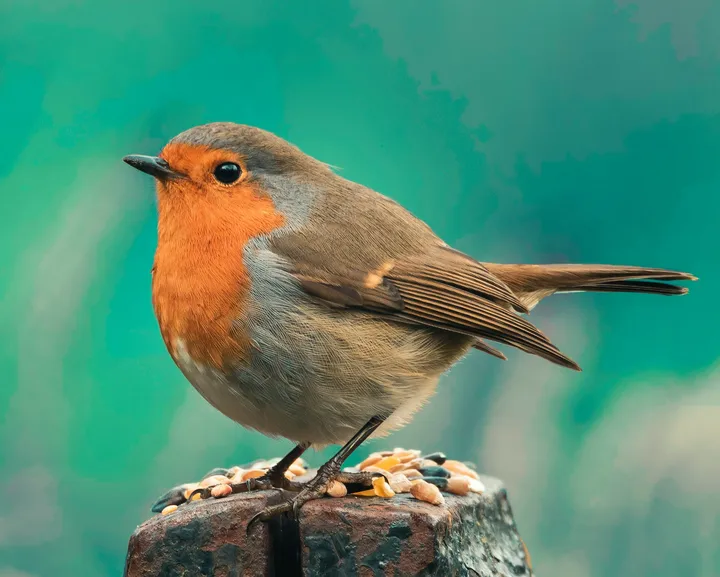
I was recently digging up weeds from our flowerbed when I realised I was being watched very closely.
The red-breasted bird followed me around the garden, hopping from branch to branch, as I attempted to turn the (rock-solid) soil and dig out the weed roots.
A few worms appeared at the surface as I did, and as soon as I’d moved, my new feathered friend descended.
It didn’t surprise me. The top of the soil had dried out and hardened dramatically over the summer, no thanks to the drought conditions which dominated much of England and Wales. It was like digging into concrete.
This widespread problem has meant birds that rely on invertebrates for much of their diet – like robins – have faced more of a struggle to source food.
As a Royal Society for the Protection of Birds (RSPB) spokesperson told HuffPost UK via email: “While high temperatures make things challenging for many species, it is the knock-on consequences of extreme heat and drought that cause the greatest impact. For example, hard ground makes finding food more difficult for birds with an invertebrate diet.”
The repeated heatwaves may have also negatively impacted what the nation’s birds could feed their young, the RSPB’s spokesperson added. “As vital areas of vegetation collapse, so do the invertebrate populations which many young birds depend on.”
How to help the birds as winter approaches
After a particularly harsh summer, we might also be in for a difficult autumn and winter weather-wise, in part because of the growing (and record-breaking) El Niño climate phenomenon, which is set to intensify in the coming months.
The Met Office has said it’s expected we’ll experience wetter, stormier conditions throughout autumn. It’s also possible we’ll see cooler, drier weather in the winter.
If you’re able, the RSPB advises putting out a small amount of bird food and water on a regular basis through the autumn and winter months, as birds need “high-energy, high-fat foods” during cold weather.
Seeds and peanuts should only be fed between November and April due to the risk of disease transmission, which is causing serious declines in some UK bird populations.
Food in feeders should be eaten in one to two days, the RSPB advised, and suet balls eaten within seven days. Water should be rinsed out and refilled daily.
The best year-round food for birds
- Suet balls
- Mealworms
- Suet pellets and blocks
- Leftover fruit (as long as it’s not mouldy) like apples and pears.
If any food is left in feeders after a few days, bin it before adding fresh food to reduce the risk of illness.
The wildlife charity advises scrubbing feeders and water containers with a mild disinfectant solution weekly to stop diseases from spreading.
It also recommends moving feeders to a new spot each time you refill it so there’s not a build-up of bird droppings in one place in your garden.