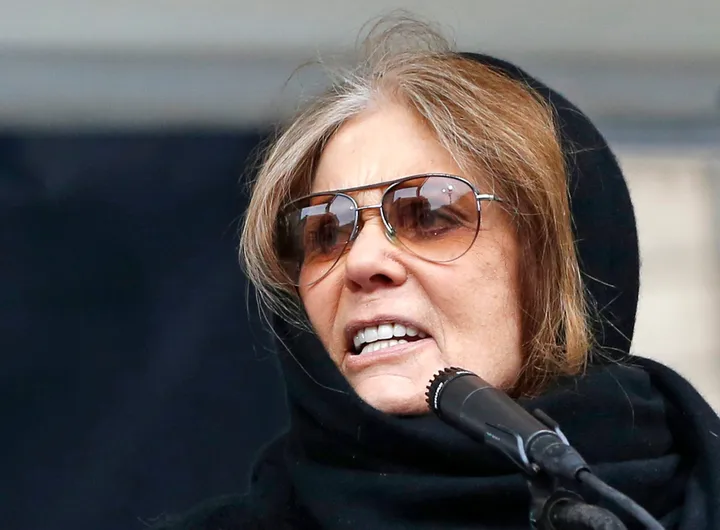
Writer, activist and feminist trailblazer Gloria Steinem has died at the age of 92.
Her spokesperson confirmed that, on 2 September, she passed “peacefully at her home in New York City, surrounded by some of the many who loved her”.
Paying tribute, they wrote on Instagram: “Gloria’s near-century on earth were years well-lived, and she continued working for equality until the very end.
“Gloria’s greatest gift was her ability to listen to others, to make others feel seen and heard.
“Her words, actions, and example gave people permission to be their truest selves. Gloria lived true to her independent spirit, always with curiosity and a great sense of humour.”
Here are six of the defining moments from her life and career, many of which go to show what a pivotal figure she was in amplifying the second-wave feminist movement and ensuring women’s voices were heard.
1. She went undercover as a Playboy Bunny in the 1960s – and wrote an article all about it
Trying to carve out as career as a journalist was no mean feat for a woman in the 1950s and 60s, however Steinem persevered and gained national attention in ’63 when she went undercover as a Playboy Bunny and penned a two-part series for Show magazine on what it was really like for women to work at the Playboy Club, including what they were paid and some of the sexist practices that went on behind the scenes.
2. She penned ‘After Black Power, Women’s Liberation’ for New York Magazine in 1969
In April 1969, Steinem connected the fight for racial equality to that of gender equality in a New York Magazine essay which won her national attention and helped to spread feminist ideas outside of small activist bubbles and into wider public awareness.
3. Steinem co-founded the National Women’s Political Caucus
The National Women’s Political Caucus (NWPC) was founded in 1971 by Steinem and fellow activists Shirley Chisholm; Betty Friedan; Fannie Lou Hamer and Bella Abzug, with an aim of identifying, recruiting, training and supporting women candidates for elected and appointed office in the United States.
In 1971 there were 15 women in US Congress, which rose to 150 women in 2026. Similarly, there were just seven female Mayors of cities with a population of over 30,000 people in 1971, compared to 428 in 2026.
4. She co-founded feminist publication Ms Magazine
In 1972, Steinem launched Ms Magazine, a national feminist publication, as she put it, “for those of us who had the radical idea that women are people”. The magazine covered topics typically unexplored in traditional women’s glossies, such as domestic abuse, sexual harassment, abortion, race and sexuality.
Reflecting on the publication’s success back in 2022, Steinem said: “The response was shocking … It sold out in eight days.”
5. She advocated strongly for reproductive rights
Steinem was a firm believer that women should have control over their bodies and reproductive choices. She opened up about her own abortion, at the age of 22, and even dedicated her book, My Life On The Road, to the London physician Dr John Sharpe, who carried out her abortion back when it was illegal to do so.
In 2011, she told The Guardian: “It [abortion] is supposed to make us a bad person. But I must say, I never felt that. I used to sit and try and figure out how old the child would be, trying to make myself feel guilty. But I never could!
“I think the person who said: ‘Honey, if men could get pregnant, abortion would be a sacrament’ was right. Speaking for myself, I knew it was the first time I had taken responsibility for my own life. I wasn’t going to let things happen to me. I was going to direct my life, and therefore it felt positive.”
6. She repeatedly banged the drum for women’s and girls’ rights and equality
She has spoken publicly at hundreds of events over the years, including the Women’s March on Washington in 2017, all of which helped project women’s rights and issues into the forefront of discussion.
Per the National Women’s History Museum, she also co-founded: the Women’s Action Alliance, the Women’s Media Center, Voters for Choice and the Ms. Foundation for Women, as well as helping to create Take Our Daughters to Work Day, empowering young girls to learn about career opportunities.
In 2013, she was a recipient of the Presidential Medal of Freedom for her work leading the women’s rights movement.