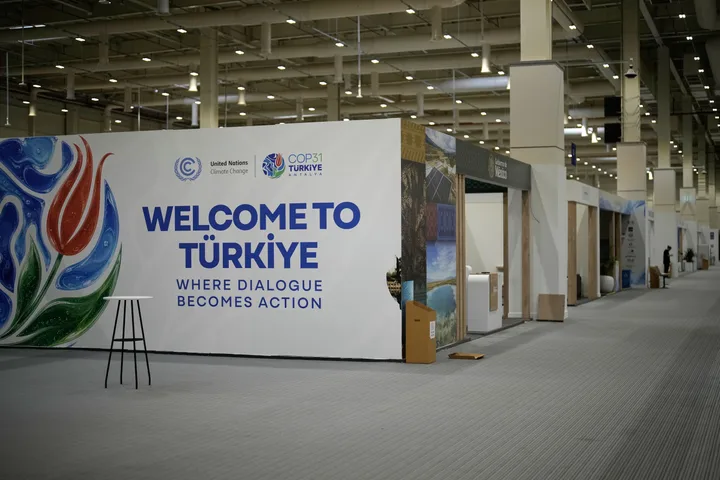
COP31, the United Nations Climate Conference, took place over the weekend as countries around the world failed to come to any deal regarding global climate change.
Organised by the United Nations, and this year hosted in Antalya, Turkey, COP31 brings together representatives of government, business and civil society from around the globe.
The international climate meetings have been taking place on a yearly basis since the project first began in 1995, and has provided a series of major international breakthroughs such as the 2015 Paris Agreement.
This year, however, despite being the longest climate summit of its kind ever, failed to bring nations together as the talks came to a dramatic end on Sunday, November 22. Here’s everything you need to know about COP31 and what it means in real world terms.
What happened at COP31?
In short, nations failed to come to an agreement on the future of the climate drafted in the ‘Antalya Pact’.
The European Union, UK and allies in the developing world outright rejected the deal, which omitted any detail about fossil fuels and their role in climate change going forward.
The Antalya Pact urged countries to spark their economies, called for wealthier nations to finance poorer ones in an effort to curb the impact of climate change, and encouraged the world to minimise the “overshoot” of the 1.5C global heating standard – solidified in the Paris Agreement 11 years ago.
More than 130 countries demanded the “transition away from fossil fuels”, but according to representatives, the deal failed to address this issue, instead including controversial provisions on Carbon Capture and Storage (CCS) technology that, according to some encourages fossil fuel use.
Ireland’s environment minister, Darragh O’Brien, speaking for the EU, said the proposed Antalya Pact “failed to meet the moment”.
“We will not endorse a decision that does not respond to the science and that actually risks deepening the chasm between global commitments and the action required. It does not even mention fossil fuels,” he said.
What does COP31’s failed outcome actually mean?
The collapse of the main agreement in Turkey – the Antalya Pact – doesn’t erase any existing climate laws in place.
For everyday people, however, there are very tangible consequences going forward across sectors including finance, energy and climate safety.
Developing nations and small island states have been left without any new financial commitments from wealthier countries to upgrade infrastructure or recover from extreme weather.
The fact wealthier nations failed to agree on grant-based funding for poorer countries also means they’ll be left relying more heavily on loans to pay for climate disasters.
This will inevitably lead to worsening national debt and money diverted away from integral societal structures such as education and healthcare.
The rejected Antalya Pact acknowledged the world is set to exceed the 1.5C warming threshold agreed in 2015, but failed to reach a deal on plans to cut emissions, meaning people worldwide will face the consequences.
More frequent and severe heatwaves, floods, wildfires and crop and harvest disruptions are all expected to become more frequent as the planet warms up.
What does COP31 mean for the UK?
The good thing is, the failure of this year’s COP31 doesn’t cancel out the longstanding Paris Agreement or impact domestic laws in individual countries.
In the UK, the government confirmed its legally binding net-zero targets and clean energy plans will not change going forward.
The UK Government writes: “This does not change our domestic commitments or our international climate leadership. Events this weekend only highlight the importance of accelerating progress to keep 1.5 degrees within reach.
“The UK remains committed to its legally-binding net zero targets, to delivering the clean energy transition, adapting to the impacts of climate change and to supporting our partners internationally.”
Has there been a failed COP before?
Yes. This is not the first time that countries have been unable to reach agreement on a deal at a COP.
The UN climate summit in 2009, held in Copenhagen, also failed to come to a global agreement.
Reaching an agreement at COP summits can be exceedingly difficult as it requires consensus between more than 190 countries, which all have different economies, priorities and circumstances.