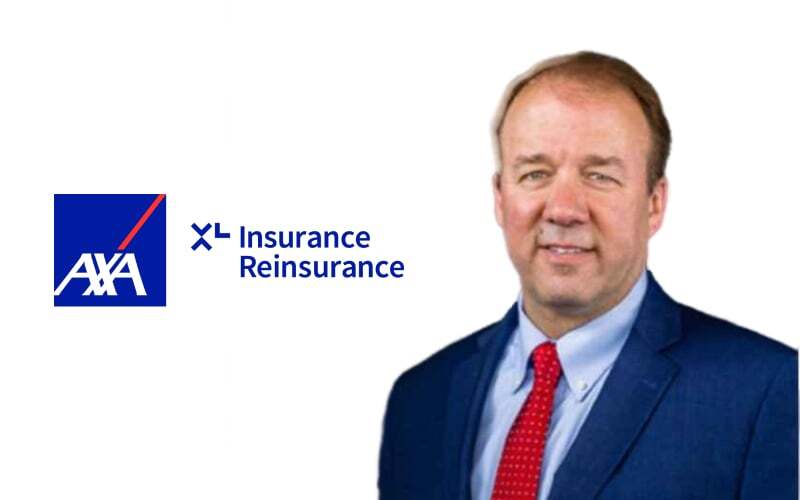
Greg Schiffer, Head of North America at global reinsurer AXA XL Re, said that one of the central themes at the APCIA Annual Meeting 2026 was how the industry can continue to provide sustainable capacity in a more complex and uncertain risk environment.
In an interview with Reinsurance News following the American Property Casualty Insurance Association (APCIA) Annual Meeting, Schiffer said clients discussed how reinsurance partners can maintain consistency as market conditions become more competitive.
He said, “There were significant discussions around property-catastrophe loss trends, secondary perils, casualty reserve uncertainty, social inflation, the use of technology and AI, and how the industry manages emerging systemic risks.
“For AXA XL Re, APCIA is an opportunity to listen closely to clients and brokers, understand their priorities for the coming renewal season and discuss where we can deepen relationships across classes. We have clear objectives by cedant and the ability to lead and quote across most classes. Our ambition is to support our core clients with meaningful capacity and to sign our authorized lines.”
Regarding the current state of the US P&C reinsurance market, Schiffer emphasised that there is no single market, with conditions varying significantly by line of business, client, structure and exposure.
In property catastrophe, he noted, “Capacity has grown and competition is increasing in some areas. However, that does not mean the underlying risk has reduced. Inflation, exposure growth and changing weather patterns continue to affect loss costs, so it remains important to look beyond headline rates and maintain appropriate attachment points and structures.”
Schiffer highlighted continued client interest in frequency protection and aggregate covers, particularly as loss activity becomes more unpredictable.
He said, “From AXA XL Re’s perspective, we are cautious about structures that create significant exposure to frequent losses, such as low-attaching aggregate covers, second-loss or third-loss protections, unless the underlying data, structure and price support them.
“Our preference is for clear, sustainable risk sharing, with appropriate attachment points and terms that reflect the true exposure. That is especially important where inflation has eroded the real value of retentions. A retention that appears unchanged in nominal terms may provide materially less protection than it did a few years ago.”
Schiffer emphasised that AXA XL Re will consider solutions that meet a genuine client need, but discipline on structure, attachment and pricing remains essential.
Meanwhile, casualty presents a different picture, with many cedants finding placements challenging and becoming increasingly selective about their partners.
In casualty, Schiffer explained, “Many cedants are still finding placements challenging, particularly where there is uncertainty around social inflation, reserve development and long-tail exposures. Clients are therefore increasingly selective about their partners, placing real value on financial strength, technical expertise, claims capability and consistency through the cycle.
“We understand that some cedants face greater challenges completing programmes with high-quality reinsurers. We have observed a significant share of US casualty reinsurance capacity exiting the market in recent years, while the underlying challenges across the line remain. In this environment, ceded reinsurance buyers need long-term partners that understand their strategy and can provide consistent, reliable capacity through the cycle.”
He noted that while rates are generally continuing to improve in many casualty segments, the underlying loss environment remains high and uncertain.
“That means reinsurers need to be selective, focus on established carriers and look carefully at how cedants manage limits, attachment points, claims and exposure aggregation,” said Schiffer.
He continued, “Data will also be increasingly important. We are seeking additional information through questionnaires and direct client engagement to enhance our risk assessment, and many cedants are improving their own data capture and portfolio-management capabilities.
“We believe that clients with strong underwriting discipline, high-quality data, thoughtful limit management and proven claims expertise will be rewarded. Those are the partners with whom we want to build deeper, long-term relationships.”
Overall, Schiffer said AXA XL Re is pleased with the shape and balance of its portfolio and considers itself well positioned for different market conditions.
Schiffer also discussed the growing importance of technology, data, modelling and AI across property and casualty reinsurance.
He explained, “They can help us process large volumes of information, improve the quality of our analysis, identify trends earlier and better understand exposure and accumulation across a portfolio.
“Data establishes the baseline. Rooted in historical experience, economic trends and climate patterns, it tells us where we have been and where we are today. It is the ‘what’ in the risk equation.
“Models and AI can then help us interpret that information at greater speed and scale. They can support underwriting decisions, enhance modelling capabilities and help us explore a wider range of scenarios. In a complex market, that is valuable.”
However, Schiffer stressed that human expertise remains essential, arguing that data and technical knowledge, without imagination, risk simply ‘building a better rear-view mirror’.
He said, “For us, imagination means having the ability to look at data, models and risk structures and ask how they could change in ways we have not seen before. Data and expertise tell us what happened and why; imagination helps us consider what could happen.
“We will continue to invest in data, analytics, modelling and AI, and to use them responsibly. But technology must support — not replace — the judgement, experience and curiosity of our underwriting, actuarial and claims experts. The best decisions will come from combining all of those strengths: data, know-how and imagination.”
During the interview, Schiffer also discussed how alternative capital is influencing the market heading into 2027, describing it as an important source of capacity.
“It can provide a more diversified backstop for clients and help the industry absorb peak risks, particularly in property catastrophe.
“As conditions become more competitive, the ability to combine traditional reinsurance expertise with diversified forms of capital will become increasingly valuable. From our perspective, the objective is not simply more capacity but resilient, well-structured capacity that can support clients consistently through the cycle.
“Ultimately, alternative capital works best when it complements strong underwriting, high-quality data, robust modelling and disciplined portfolio management,” said Schiffer.