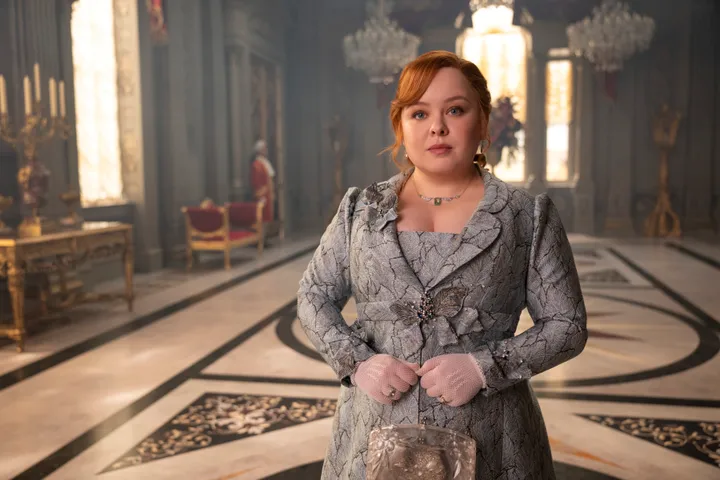
Nicola Coughlan has admitted she has complicated feelings about fame and celebrity since her international breakthrough in Bridgerton.
The Irish star first gained a following thanks to her scene-stealing work as Claire in Derry Girls, before landing the role of Penelope Featherington in Netflix’s raunchy regency drama.
During a new interview with The Observer, Nicola shared that when she first signed up for Bridgerton, she “didn’t think about it making me famous”, which is something she now acknowledges “sounds really thick”.
She then revealed: “I had a lot of regret, actually, after that, about how recognisable it made me, and I definitely went to ground for a bit.”
While originally a supporting character, Nicola’s Bridgerton character wound up becoming embroiled in one of the show’s central storylines, and later took the lead in season three, in which she primarily shared the screen with Luke Newton.
After Bridgerton became a worldwide smash, Nicola said that she’s been approached for photos in “very vulnerable medical situations” and at funerals.
“You assume [that] because you would never do that, then other people wouldn’t do that. But people will do it,” she lamented.
She added that she now encounters “people who have success, and they say they want to go and do every blockbuster movie”, which is something she claims is the opposite of how she feels.
Even her part in the box office Barbie, she pointed out, only required her to be on screen “for a second”.
Nicola is gearing up for the release of her new drama, the latest instalment in Channel 4’s I Am… anthology series.
I Am Helen co-stars former Peaky Blinders’ Joe Cole and raises issues around online radicalisation, misogyny and the so-called “manosphere”.
An official synopsis reads: “The latest instalment of the critically acclaimed Bafta-winning anthology series explores the experience of womanhood within a world shaped by masculine power, aggression and control.
“Told through a female lens, the story examines the pressures and expectations placed on women while confronting the realities of toxic masculinity and the damage it can create in modern relationships.”