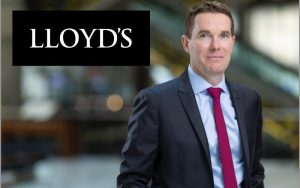
Lloyd’s, the global insurance and reinsurance marketplace, does not currently expect the continuing conflict in the Middle East to become a capital event for the market or have a material effect on its profit and loss, according to Chief Executive Patrick Tiernan.
In a statement accompanying Lloyd’s first-half 2026 results, Tiernan said the market had experience in dealing with many of the individual risks arising from major geopolitical events, but highlighted the greater challenge posed when several threats occur at the same time.
“The industry has experience of many of these individual threats. We have much less experience of managing so many of them simultaneously. Physical damage can trigger cyber disruption; cyber attacks can disable financial infrastructure; sanctions can alter the insurability of assets overnight; and geopolitical fragmentation reduces the possibility of multi lateral approaches to managing these risks.”
Tiernan described the continuing conflict in the Middle East as a significant example of these interconnected risks. He said the human consequences remained the primary concern, while also pointing to the wider commercial and insurance implications for businesses operating across the region and beyond.
He added: “First and foremost, there is the human cost and continuing uncertainty for communities across the region. But the commercial and insurance implications are also significant.”
According to Tiernan, Lloyd’s assessment has drawn on experience from previous major events in the Middle East and other parts of the world. The market is considering both its current exposure and how the conflict could develop, including the potential for indirect effects across the wider economy.
“Our experience of past major events in the region and elsewhere has informed our modelling and response. We continue to assess not simply current exposures but how the situation might evolve, including through the development of second-order effects driven by inflation, energy security, affordability and availability, sanctions, supply chain stress and wider economic disruption.”
Tiernan said Lloyd’s role extended beyond assessing the risks themselves and included helping clients and other stakeholders respond to the uncertainty. “But our role cannot simply be to understand risk. Rather it must be to help our stakeholders navigate it. Notwithstanding some frustration and misinterpretation in the days immediately following the outbreak of hostilities at the end of February, the Lloyd’s market has continued to provide cover and expert advice to its clients throughout the conflict.”
He also highlighted the response of underwriters during the initial stages of the conflict, particularly in relation to maritime risks. He said some underwriters continued working from their offices through the first weekend as they assessed and priced relevant risks.
He said this demonstrated the market’s commitment to established relationships with customers and brokers, while noting that available insurance was not necessarily taken up where shipowners considered the risks to crews and vessels too high.
“The quotes kept coming, even when shipowners chose not to take them up because the risks to crews and vessels were simply too great. The market has also responded with additional capacity, including new marine war facilities (for example, those led by Chubb and Beazley) to prepare for a range of potential scenarios. This was the market yet again doing what it does best: bringing both expertise and capital to bear on a crisis so that commerce can continue even when uncertainty is at its greatest.”
Tiernan added that the Corporation, which oversees and supports the Lloyd’s market, had also been engaging with governments and diplomatic representatives to provide information on insurance market conditions and risk developments.
“At the Corporation, we proactively engaged with governments around the world and their London embassies to share critical insight on market dynamics and risk intelligence. It is a delicate balance to advocate for the market while maintaining discretion and retaining the trust of those making critical decisions.”
He acknowledged that the events had highlighted a need for greater clarity around terminology used by the market, particularly during periods of heightened uncertainty.
“We will work with the market to make our terminology clearer and prevent any confusion at critical moments. Thank you for your continuing trust. There are lessons to be learned in every crisis, but rest assured, we will always work tirelessly with the market’s wellbeing and long-term interests at heart in such situations.”
On the financial implications for Lloyd’s, Tiernan said the assessment remained that the conflict was unlikely to have a material effect on the market’s capital position or profit and loss based on information available at the time of the statement.
“Based on exposures and damage observed to date, we do not currently expect the situation to constitute a capital event for the Lloyd’s market or to have a material impact on the P&L.”
Tiernan added that maritime traffic through the Strait remained well below levels recorded before the crisis and said Lloyd’s would continue monitoring developments while assessing potential outcomes for the conflict.
The post Middle East conflict is not currently expected to be a capital event, says Lloyd’s Tiernan appeared first on ReinsuranceNe.ws.