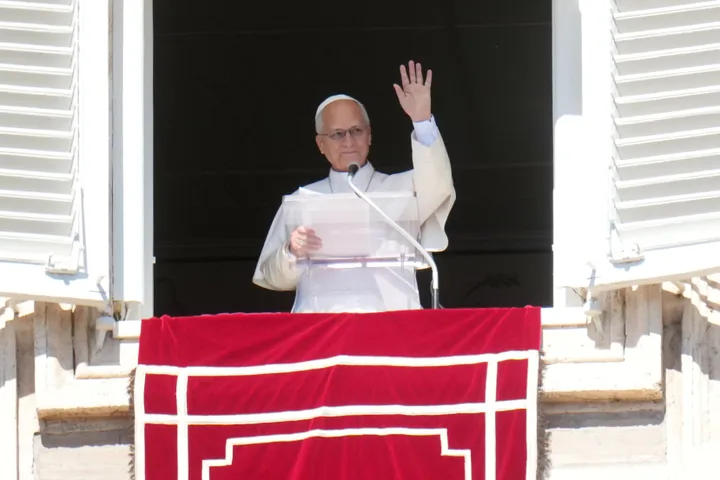
The Vatican has shared that Pope Leo XIV has been diagnosed and treated for lung adenocarcinoma, the most common type of lung cancer, during a planned surgical procedure.
A statement shared on the Vatican News website said: “The Pope was in the operating room for approximately three hours, while the operation itself lasted about 90 minutes.
“The doctors said it was successful and there were no complications.”
They added that an intraoperative histological examination confirmed the diagnosis of lung adenocarcinoma, “as suspected” from pre-op examinations.
What is lung adenocarcinoma?
It’s a type of non-small cell lung cancer (NSCLC). The charity Macmillan Cancer Support explains: “Adenocarcinoma is the most common type [of non-small cell lung cancer].
“It develops from cells that make mucus and is more often found in the outer area of the lung. Although the main cause is smoking, this type of NSCLC is more common in non-smokers.”
Over the past 15 years, more non-smokers have been diagnosed with lung cancer.
What are the signs and symptoms of lung adenocarcinoma?
On its website, the NHS shares that common signs of this type of cancer include:
- a cough that is not going away,
- shortness of breath,
- coughing up blood,
- chest or shoulder pain,
- recurrent chest infections, or having a chest infection that is not getting better,
- losing weight without trying,
- not feeling hungry (loss of appetite),
- feeling tired all the time.
Additionally, these symptoms are uncommon but could be signs of the condition:
- swelling of your face or neck,
- difficulty swallowing,
- a hoarse voice that does not go away,
- changes in the way your fingers look (clubbing) – your fingertips may look wider than usual or curve downwards.
Can you prevent lung cancer?
While there are factors outside of our control, such as environmental factors or a family history of lung cancer, which could increase the risk of developing it, the National Cancer Institute said quitting smoking also reduces a person’s risk.
“In smokers who have been treated for lung cancer, quitting smoking lowers the risk of new lung cancers. Counselling, the use of nicotine replacement products, and antidepressant therapy have helped smokers quit for good,” the institute said.
“In a person who has quit smoking, the chance of preventing lung cancer depends on how many years and how much the person smoked and the length of time since quitting. After a person has quit smoking for 10 years, the risk of lung cancer decreases 30% to 60%.”
The NHS provides resources and support for quitting smoking.