No parent wants to entertain the thought that another young person could abuse their own child – yet sadly, peer-on-peer abuse “persists unabated at schools in England and Wales”.
That’s according to a Guardian investigation, which suggested the issue may well be more worse now than a decade ago, as a result of social media, rising misogyny and extreme online porn.
The newspaper’s analysis of police data from between 2021 and 2025 found there were almost five sexual crimes a day, on average, involving children under the age of 12 in schools in England and Wales.
While schools obviously have a part to play in recognising and responding to peer-on-peer abuse, experts say “safeguarding cannot sit solely with schools”.
Safeguarding consultant Dr Karen Miller told HuffPost UK: “As parents, we have a duty to provide children with consistent messages about respect, consent, healthy relationships and personal boundaries both at school and at home.
“Most importantly, we must continue to challenge the idea that abuse is simply part of growing up. Harmful behaviours should never be normalised, minimised or excused.”
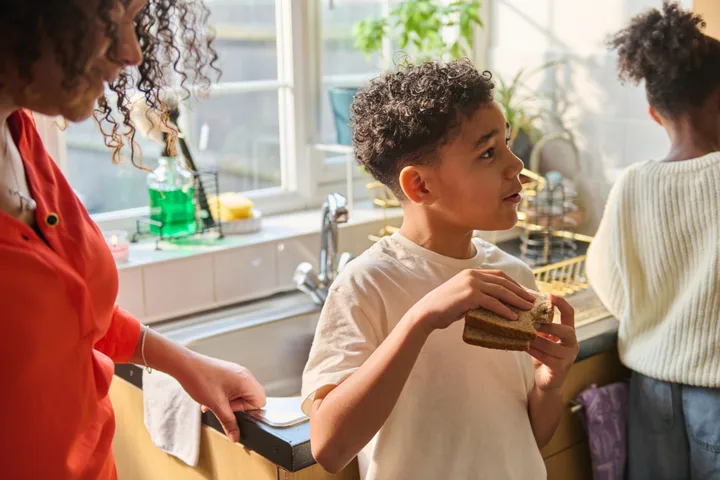
Flashpop via Getty Images
It’s horrifying to even think about – yet with experts like Dame Rachel de Souza, the children’s commissioner for England, describing peer-to-peer abuse as “widespread” and “normalised” – parents might be wondering how they can help their children build understanding and confidence to recognise what’s OK behaviour, and what’s not.
Julia Cornford-Hooke, project development manager at the NSPCC, said: “We know for parents and carers, it can feel hard to know where to start when talking to your children about peer-on-peer harm and abuse.
“It’s completely normal to feel anxious or uneasy, but there are things parents and carers can do so it feels simpler and builds understanding. These can help to have supportive conversations with children so they can recognise unhealthy and healthy behaviours.”
Here are some ways you can do just that.
Talk about bodies, boundaries and consent ‘little and often’
“Parents don’t need to have one big conversation,” said Dr Miller. “The most effective approach is a series of small, age-appropriate discussions woven into everyday life.”
This might include talking about respecting personal space, understanding that everyone has ownership of their own body, recognising when something feels uncomfortable and knowing how to seek help from a trusted adult.
“Even though you may feel awkward or unsure, talking about bodies, private parts, consent and boundaries helps everyone learn what is OK and not OK behaviour,” said Cornford-Hooke.
“Regular, relaxed conversations can build trust and help to make children feel more confident talking about these things.”
The NSPCC’s “Talk PANTS” guidance is a useful resource that has helped parents have more than eight million conversations with children about their bodies, reaffirming their body belongs to them, private parts are private, “no means no” and the importance of telling a trusted safe adult if something makes them feel upset or worried.
“Focus on messaging and language that is child-friendly and isn’t scary, keeping it simple and clear,” advised Cornford-Hooke.
Per the NSPCC, some conversation-starters include:
“Your underwear covers up your private parts and no one should ask to see or touch them. Sometimes a doctor, nurse or family members might have to. But they should always explain why, and ask you if it’s OK first. Remember, what’s in your pants belongs only to you.”
“Your body belongs to you. No one should ever make you do things that make you feel embarrassed or uncomfortable. If someone asks to see, or tries to touch you, underneath your underwear, say ‘NO’, and tell someone you trust and like to speak to.”
“No means no and you always have the right to say ‘no’ – even to a family member or someone you love. You’re in control of your body and the most important thing is how YOU feel. If you want to say ‘no’, it’s your choice.”
As part of these conversations you can also teach children about “tricky people” and that “safe adults don’t ask kids to keep secrets, break rules or ignore their own sense of discomfort or the word ‘no’”.
Be your child’s safe space
If your child thinks you’ll shout at them when they tell you something bad has happened, the chances are they won’t tell you.
That’s why experts are increasingly encouraging parents to offer reassurance to their child, telling them: “You can talk to me about anything and ask me any questions if you feel unsure.”
This is increasingly important as children get older and are online more.
As ex-police officer and cyber safety expert Susan McLean previously told HuffPost UK: “We know that a parent’s first response when they’re told something will often dictate to that young person whether they’re going to disclose more.”
Dr Miller said having a trusted adult who listens without judgement is “the most important protective factor for any child”.
“Children are far more likely to disclose concerns when they feel they will be listened to rather than questioned,” she said.
If something has happened and your child finds the courage to tell you, “try to stay calm and focus on support”, advised Cornford-Hooke. “This helps children feel safe coming to you, no matter what’s happened.”
Dr Miller agreed, adding that you can also thank them for speaking up and reassure them that they have done the right thing.
“Children don’t need parents to have all the answers; they need to know there is someone they can turn to when something doesn’t feel right,” she said.
Signs to watch out for
While we can teach and advise our children on consent and bodily autonomy, if something does happen, we do also need to be on the lookout for signs that something’s not quite right.
“Parents often ask what they should look out for if they are concerned about their child,” said Dr Miller. “While every child is different, there are some common indicators that a child may be experiencing abuse, bullying or other forms of emotional distress.”
- Withdrawal from family activities
- Isolation from friendship groups
- Increased anxiety or worry
- Changes in mood or behaviour
- Reluctance to attend school
- Loss of confidence or self-esteem
- Changes in sleep or eating patterns
- Increased emotional sensitivity or distress
If your child does disclose something has happened at school, calmly and gently ask them to tell you what happened so you can write it down.
Share their exact phrasing and then note the date and time when it happened, where it happened and who was there.
You should then contact your child’s school and ask to speak to their safeguarding lead or headteacher (unless the allegation involves them).
You can also contact the NSPCC Helpline on 0800 800 5000 for free, confidential advice from safeguarding specialists.
Help and support:
- Rape Crisis services for women and girls who have been raped or have experienced sexual violence – 0808 802 9999
- Survivors UK offers support for men and boys – 0203 598 3898
- Childline – free and confidential support for young people in the UK – 0800 1111