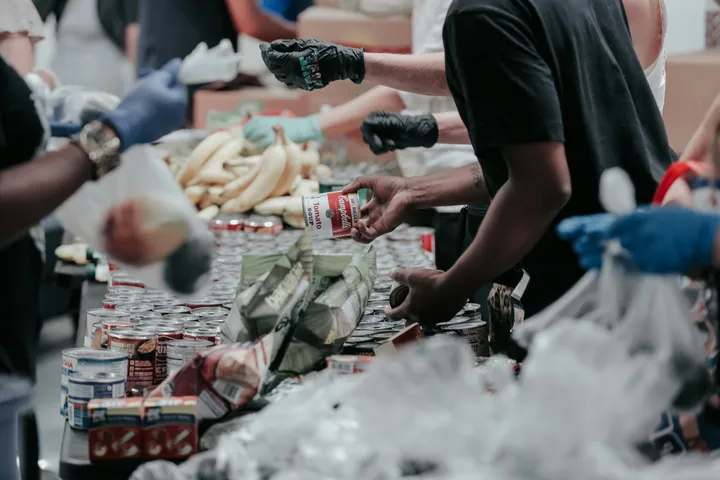
Even for families where both parents are in work, it’s very hard to get by right now. More than half (56%) of low-paid workers with dependent children have been forced to use food banks, according to the Living Wage Foundation.
Sadly, this is unsurprising given so many costs are already sky-high – and they’re expected to increase even further in the next 12 months.
The average annual energy bill is predicted to soar by hundreds of pounds come January. The Food and Drink Federation (FDF)’s latest forecast shows food inflation could reach nearly 4% by Christmas, peaking at 6.4% next July.
Food prices have risen by nearly 40% since 2020 – with costs due to rise again. The FDF said what would’ve been a £100 weekly shop in 2020 is expected to cost roughly £150 by next summer.
There are multiple factors contributing to these increases. Wars are driving up the costs of food, energy and fuel; this year’s drought had a knock-on impact on food supply; and the brewing El Niño weather phenomenon may well impact food availability and prices leading into next year. It is a hard – and uncertain – time for many.
On top of that, people are being urged to store food and bottled water in case of emergencies.
And when these hard times hit, many have no choice but to pull in their purse strings. At a time when charities need support more than ever, they start to also feel the pinch as donations dwindle.
Food banks are bracing themselves for a very busy winter.
Lynda Battarbee, director of operations at Trussell, which runs 1,400 food banks, told HuffPost UK that many food banks “are stretched to breaking point and having to purchase significant amounts of food just to keep shelves stocked, as the level of need continues to outpace donations”.
“Winter is often the busiest time for food banks in the Trussell community – but the rising cost of food and energy is making it even harder for food banks to keep their services running,” she said.
FareShare Midlands rescues good-quality surplus food from across the food industry and delivers it to people experiencing hardship via a network of hundreds of charities and community organisations.
Its CEO, Simone Connolly, told HuffPost UK they are currently receiving a “good range of food” and are working hard to maintain a balanced supply.
However the range of challenges currently affecting food supply across the UK “could impact the amount and type of surplus food available for redistribution”, she suggested.
“Over the coming months, we may see some variation in the availability of certain food types, particularly fresh produce, as well as changes in the mix of food available from week to week.”
Most of the food they redistribute comes from across the food industry and therefore depends on what surplus is available throughout the supply chain.
“When harvests are smaller and more of each crop is needed to meet commercial demand, there can be less surplus food available for charities like FareShare Midlands to redistribute,” said Connolly.
“Similarly, when less food is available, growers, manufacturers and retailers have a greater incentive to maximise every tonne, potentially meaning less predictable surplus for redistribution.”
Like Trussell, FareShare Midlands is preparing for “another challenging autumn and winter”, as are volunteers at Feed My City, which provides emergency food for people living in Manchester. The latter food bank’s spokesperson said they are gearing up for a “very busy autumn and winter”.
“It is completely understandable that people are keeping a little extra for their own households or finding it harder to afford items to donate because the rising cost of living affects everyone,” said Feed My City’s spokesperson.
But they added that even picking up one extra tin (which can cost less than 50p) during your weekly food shop “makes a massive difference”, as can volunteering.
For those who do have extra cash to spare, monetary donations can go a long way and enable food banks and distribution centres to buy food in lieu of fewer donations.
Ultimately, charities are hoping the government will step in to support the most vulnerable households this winter.
Battarbee ended with one final plea for the prime minister “to stand by the Labour party’s manifesto commitment to end the need for emergency food, so we can one day end hunger for good”.
A spokesperson for the UK government told HuffPost UK they are “determined to turn the tide on poverty after years of rising hardship”.
“Our recent statistics show that effort is beginning to make a difference – household incomes have risen 5% in real terms, food bank usage has fallen, and food insecurity is down,” they said.
“To ease cost-of-living pressures we have brought forward a wide range of measures including raising the National Minimum Wage, suspending tariffs on everyday staples including a number of food items, leading to lower prices at the till, and our £1 billion Crisis and Resilience Fund which can be used by councils to help tackle food poverty.”