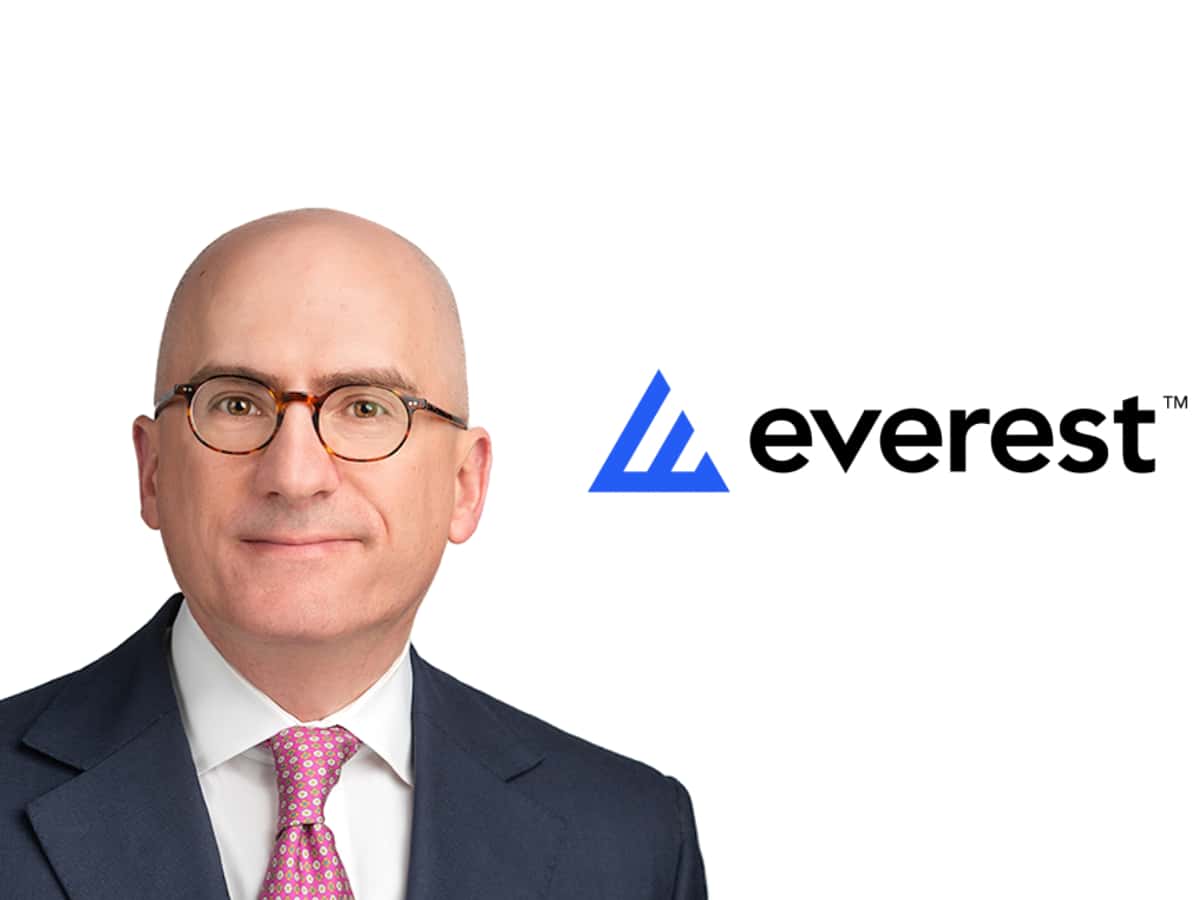
Everest Group President and CEO Jim Williamson said the first quarter highlighted what the “new Everest” can offer, calling the company’s position the strongest in years and expressing confidence in its trajectory.
The Bermuda-based global reinsurer posted net profit of $653 million in the first quarter of 2026, up more than 210% year-on-year, and its combined ratio improved 11.6 percentage points to 91.2% due to lower pre-tax net catastrophe losses.
Net operating income also expanded to $648 million, compared with $276 million in the first quarter of 2025.
On an earnings call following the release of the figures, Williamson said the company would continue to prioritize profitability and shareholder returns over revenue, adding that the first quarter was clear evidence that the strategy was working.
The CEO continued that Everest will continue to focus on markets where the company is well positioned to win; be disciplined in underwriting; deploy capital only when return expectations are significantly above thresholds; maintain a strong balance sheet anchored by prudent loss selection and reserving practices; expand its third-party capital base; and maintain a clear capital return trajectory.
“While this quarter was a meaningful step in our journey, we are not declaring victory. Market conditions are more competitive than they were a year ago. The U.S. legal environment remains hostile and we will have to continue to win on our results, deal by deal, update by update, and quarter by quarter,” the executive explained.
Speaking about the mid-year extension, Williams pointed to ongoing competitive conditions, adding, “Florida will be an interesting dynamic with strong demand every season and meaningful tort reform benefits that we clearly see in the data.
“We will continue to deploy capacity where feasible and reduce capacity where it is not. We have a preferred position in the Florida market. We are the primary reinsurer for many of the best local underwriters.
“Obviously, renewals are still ongoing; it’s still early days, but so far we’re pretty optimistic about where things are going. Assuming rates move in a reasonable direction, you should expect this to be fairly consistent in terms of capacity deployment.
“We see very strong statistical evidence that tort reform has worked, which is clearly a positive outcome given the current state of our books.”
He added that conditions in Florida are expected to remain largely stable, with tort reform supporting growth in demand.
However, he stressed that the market still faces structural challenges given its catastrophe exposure and the fact that the market is a peak risk area, with industry players generally being sensitive to potential underwriting risks.