This summer of heatwaves has made the climate crisis impossible to avoid for most Brits as temperatures continue to break records.
Andy Burnham’s government has pledged to help bring down the cost of living, but ministers have been remarkably quiet over the consequences of this excessively hot summer.
A spate of record-breaking heatwaves have swept across Europe and the UK is currently in the middle of its third drought in five years.
The Green Party has urged the prime minister to hold an emergency COBRA meeting on how to meet this challenge – and it’s far from the only voice calling for action.
Here’s a look at what’s at stake as the stifling summer continues.
1. Food Shortages
The National Farmers’ Union (NFU) warned on Sunday that food shortages could be on the horizon following periods of extreme weather.
NFU president Tom Bradshaw told the BBC the government should give farmers tax breaks to build water storage systems on their lands.
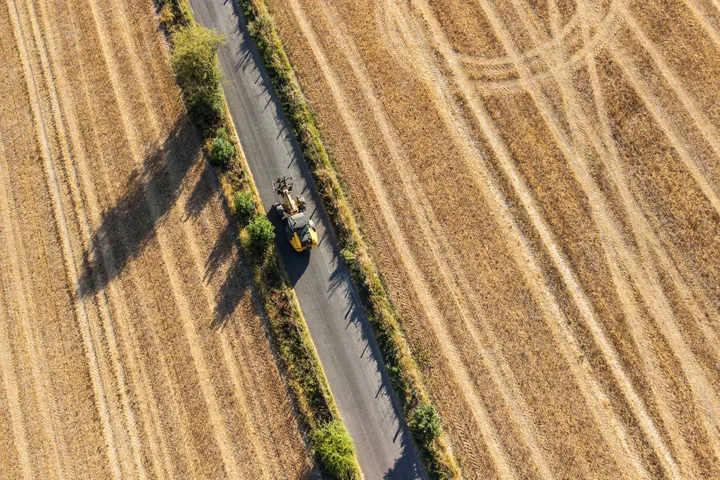
Winter floods made it difficult to sow seeds and the current drought means any crops which were planted are struggling to grow.
Wheat is growing to just half its normal height and farmers across England have been forced to harvest earlier in the year to salvage what remains.
The climate impacts, together with the loss of EU-derived subsidies which protected farming, means that a third of British farmers are now making a loss or narrowly breaking even.
Livestock farmers are struggling as well due to low grass growth, and are resorting to using their winter supplies.
The issue stretches to farms around the world. Bradshaw warned the countries which we rely on for food are also facing changing climates.
These pressures have driven the price of fresh food up. Wholesale tomatoes have risen in price by more than 60%, iceberg lettuce by 90%, and potatoes by more than 40%.
2. Water Supply
The Met Office reported England had just 8% of its average July rainfall last month.
It is expected to be recorded as the driest July to date. In some parts of the country, it has not rained in more than a month.
Approximately 23 million people across England and Wales are under a hosepipe ban now, and to top it off, there’s also been a surge of wildfires, particularly in Suffolk.
Habitats are being destroyed as a result, and there are fears of irreversible ecological collapse, according to Natural England.
The water policy manager at Wildlife Trusts, Ali Morse, told the Guardian: “This week we’ve seen drought declared across half of England, but even under normal conditions, water scarcity is emerging as an urgent issue.
“If we don’t secure new water supplies and become more efficient with our use, it’s clear that, under a changing climate, we won’t have enough water to meet the needs of both society and the environment in future … but what most don’t realise is that across large parts of the country, we’re already reaching this limit.”
BROOK MITCHELL via AFP via Getty Images
3. Energy Concerns
Electricity demand typically goes up during extreme heatwaves, as people turn to air conditioning and fans, while their fridges go into overdrive to stay cool, putting further pressure on the system.
The very equipment controlling the grid might also struggle as power lines and insulators expand in high temperatures.
Overhead lines and underground cables can droop in hot weather too, bringing them close to surrounding environments with trees, buildings and the ground.
National Grid warned this week that “power cuts may be more common than usual”, as hot weather slows down the network.
The system told the Mirror: “Sustained heat like this puts extra pressure on our network. Equipment doesn’t get the chance to cool down overnight, and demand for cooling during the day adds to the strain.
“Longer heatwaves increase the risk of heat-related faults, which can cause power cuts for our customers.”
National Grid also advised Brits to keep a torch nearby with a spare set of batteries in case of unexpected power cuts.
4. Transport Strains
London bus drivers plan to strike later this month over working conditions with cab temperatures reaching almost 40C lately.
Soil shrinkage has disrupted rail services as well, while heat can warp rails, forcing operators to lower speed limits for safety.
The International Transport Forum warned that heatwaves are putting passengers at risk across Europe.
It said: “High temperatures can buckle railway tracks, strain power and cooling systems, and make buses, trains and stations unsafe or uncomfortable.
“Heat also increases the risk of heat exhaustion and heat stroke among transport workers, with implications for operational safety.”
The intergovernmental organisation called for vehicles to be modernised with effective cooling systems and more reflective materials to be used to reduce heat absorption, too.
5. Homes And Workspaces
UK buildings are built to retain warmth with thick walls and small windows but that means during heatwaves, it can feel impossible to cool down.
Most properties do not have air conditioning installed, either.
Not only are current homes and offices struggling to cope with the extreme weather, there’s a consequence for new homes, too.
Many of the areas in England where the government was hoping to build more homes are now facing major water shortages.
That means ministers may struggle to achieve their promise to build 1.5 million homes by the end of this parliament.
Secretary general of the TUC Paul Nowak told the Guardian: “As heatwaves become our new normal, we need to find ways to work and live with hot weather.
“That means new laws on maximum working temperatures, adapting buildings and workplaces to keep them cool, and ambitious climate action to tackle the problem at its root.”
Labour said last month it was considering making it illegal to work when it is “too hot”.
6. Health Fears
England is heading for its highest number of heat-related deaths this summer with an estimated 2,877 people who died in the May and June heatwaves.
The UK’s Health Security Agency (UKHSA) released heat health alerts for eight regions of England this week, amid particular concern for the elderly.
UKHSA’s Polly Ashmore said: “We are urging health and social care services in affected regions to ensure they are prepared, and reminding people to look out for elderly relatives, neighbours and those with underlying health conditions, making sure they are aware of the forecast and following the necessary advice.
“Simple steps such as staying hydrated, avoiding the sun during the hottest part of the day and keeping your home cool are some of the key ways to help keep yourself and others safe during periods of hot weather.”
The NHS has also been urged to adapt to the rising temperatures.
Health secretary Yvette Cooper said this week that A&E pressures during summer will end up being as intense as those during the winter flu season.
The Royal College of GPs also advised doctors to cancel surgeries in extreme weather.
Radiotherapy machines and NRI scanners have failed in the heat too.
Listen to Commons People, the podcast that makes politics easy. Every week, Kevin Schofield and Kate Nicholson unpack the week’s biggest stories to keep you informed. Join us for straightforward analysis of what’s going on at Westminster.