An El Niño has been “firmly established” for months now, with the peak just around the corner.
The phenomenon involves the eastern and central equatorial Pacific Ocean becoming hotter than normal. It is declared when sea temperatures in the tropical eastern Pacific rise 0.5°C above the long-term average.
If they rise by an average of 2°C, it’s considered a pretty big event. But the US-based National Oceanic and Atmospheric Administration (NOAA) has said temperatures have now reached 4.4°C above average in some parts of the Pacific, prompting meteorologists to describe it as a “Godzilla” and “mega” event.
As a result of this unprecedented shift, globally, it is expected the world will see more flooding, drought and extreme levels of heat which will continue into next year. This is on top of the effects of climate change, which is already heating up our planet.
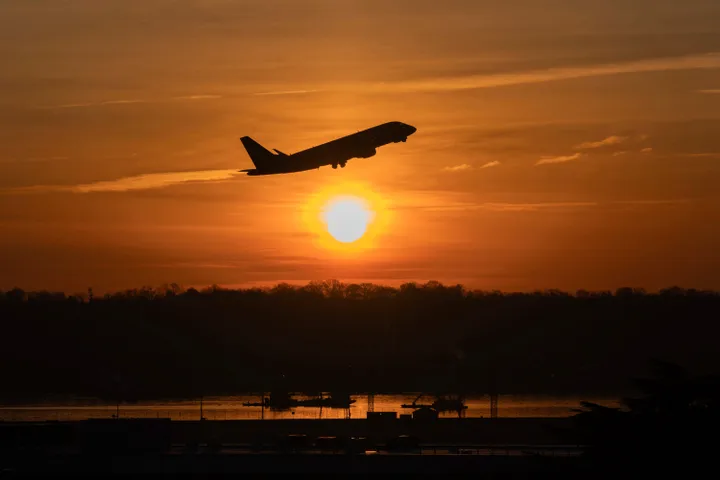
For those travelling by plane, it could also mean more turbulence on your travels. Here’s what you need to know.
Why this year’s El Niño might impact turbulence
“A strong El Niño can influence atmospheric circulation patterns on a global scale, including the position and strength of the jet streams,” Dr Paul Williams, Professor of Atmospheric Science at the University of Reading, told HuffPost UK.
“These changes can, in turn, affect the wind shear that helps generate clear-air turbulence, particularly at the cruising altitudes used by commercial aircraft.”
Wind shear is basically a sudden change in wind velocity and/or direction – it’s usually described as either vertical or horizontal wind shear, depending on where it’s coming from.
Per Airbus, wind shear can be a “severe hazard to aircraft during take-off, approach and landing”.
While there is an increased likelihood of turbulence owing to El Niño, it’s not a “guarantee of widespread severe turbulence”, added Prof Williams.
That said, his research pointed to an increase in pilots reporting turbulence when flying over the USA during the winter of 1997-98, which happened to coincide with one of the strongest El Niño events on record.
“The atmospheric response to El Niño varies from one event to another, and turbulence is influenced by several interacting factors, not simply the strength of the underlying jet stream,” added Prof Williams.
But he suggested people should be “alert” to the possibility of bumpier conditions on some major flight routes this winter, “particularly across North America and the North Atlantic”.
“Modern aircraft are designed and certified to withstand significant turbulence,” he reassured.
How to stay safe
The UK Civil Aviation Authority advises keeping seat belts fastened at all times to stay safe, particularly if there’s turbulence.
Prof Williams agrees: “The most important precaution for passengers remains a simple one: keep your seatbelt fastened whenever seated, even when the seatbelt sign is switched off.”