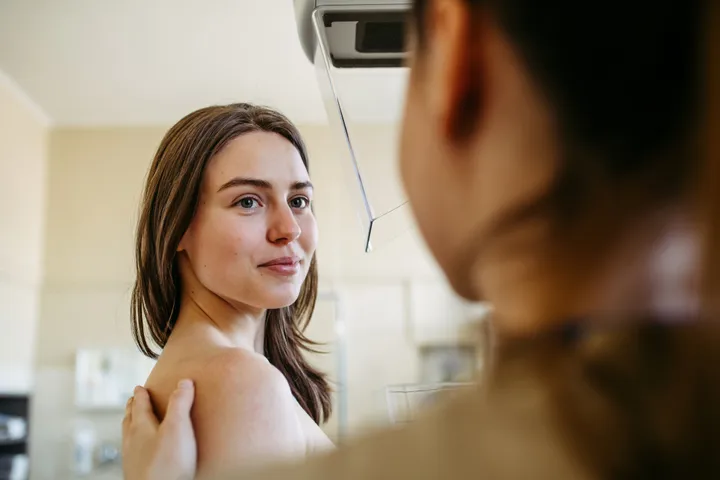
While most cancers occur in older people, statistics are consistently showing that in places like the UK and US, more people are being diagnosed before 50.
According to a new analysis by the World Cancer Research Fund (WCRF), more new cases are being diagnosed among those younger than 50 for several site-specific cancers.
The analysis uncovered “statistically significant” increases in new cases of breast, bowel, kidney, liver, pancreatic, prostate and uterine cancer in England.
Prostate cancer incidence among under-50s quadrupled between 2001 and 2023, according to the analysis, while rates of bowel, kidney and uterine cancers more than doubled.
Halfpoint Images via Getty Images
Why is this happening?
Dr Jiri Kubes, radiation oncologist and medical director at Proton Therapy Center in Prague, said the figures need to be viewed carefully rather than interpreted as evidence that cancer is suddenly becoming more common among younger people.
“We are seeing some striking increases in the incidence of certain cancers among younger adults, but it is important to distinguish an increase in the number of diagnoses from an overall change in how common cancer is among younger people,” he said.
“Cancer remains predominantly a disease of older age. What these figures tell us is that certain cancers are being diagnosed more frequently in younger adults, and that is something researchers need to understand.”
There are a few possible explanations as to why cancer rates appear to be rising in this age group.
1. Lifestyle factors
Dr Kubes noted that lifestyle factors are among the areas researchers are investigating. Obesity, diet, alcohol consumption, physical inactivity and environmental exposures can all influence cancer risk, but Dr Kubes warned against reducing the findings to a single lifestyle explanation.
“It is tempting to look at these figures and immediately ask whether diet, obesity, alcohol or another lifestyle factor is responsible,” he said.
“These factors can certainly influence cancer risk, but the reality is much more complicated.”
WCRF’s research translation manager, Dr Vanessa Gordon-Dseagu, pointed out that approximately 40% of cancers are considered preventable because they are attributable to modifiable behaviours.
“As rates of these behaviours change in a population, so too do rates of cancer. This likely explains some (but not all) of the changes in the number of cases of early-onset cancer,” she said.
Different cancers have different risk factors and there can be interactions between genetics, environment, lifestyle and other factors that we do not yet fully understand.
Meanwhile, Dr Kubes warned that “we should be careful not to tell younger people that they have caused their own cancer through a particular lifestyle choice when the scientific picture is much more complex”.
2. Environmental exposures
As Dr Kubes previously mentioned, we know environmental exposures can influence cancer risk.
“While no single exposure explains the global rise in early-onset cancer, researchers suspect environmental changes across generations may be part of the picture,” said Dr Gordon-Dseagu.
She highlighted that scientists are currently exploring whether long-term exposure to pollutants, chemicals, plastics, water and air pollution could be contributing to cancer risk.
3. Better awareness and detection
Changes in screening and medical practice can also affect cancer statistics. Quite simply: we might be getting better at spotting it earlier.
“Detection is an important part of the story,” said Dr Kubes. “If we look harder for a disease, we will inevitably find more of it.
“Better diagnostic technology can identify cancers that might previously have gone undiagnosed, while greater awareness can encourage people to seek medical attention sooner.
“That does not necessarily mean that every increase we are seeing is simply down to better detection. The challenge for researchers is separating those effects from a genuine increase in cancer risk.”
Dr Gordon-Dseagu also suggested that compared with previous generations, younger adults are more likely to be aware of the signs and symptoms of cancer and be more likely to seek out medical advice when they experience them.
The takeaway?
Younger people shouldn’t be alarmed by the latest figures or become anxious about cancer, Dr Kubes has insisted.
“But it does reinforce the importance of taking persistent or unusual symptoms seriously rather than assuming that cancer is impossible simply because of someone’s age,” he added.
“From a research perspective, the priority now should be understanding why these increases are occurring and which factors are genuinely driving them.”