Labour promised it would knock £300 off energy bills by 2030 in its campaign leading up to the 2024 general election.
But that vow has been quietly phased out over the last two years.
Now, the energy price cap is set to soar by £443 a year from January, taking the average bill to £2,166. So just how did we get here?
Where Did The £300 Figure Come From?
In June 2024, Labour unveiled its plan to launch Great British Energy, a “new home-grown, publicly owned clean energy generation company”.
The party said this was part of its “Green Prosperity Plan” which would create 650,000 good jobs, cut bills by £300 on average and deliver real energy security.
Labour said this strategy would lower bills “because renewables are far cheaper than gas”.
The energy regulator Ofgem put the energy price cap at the significantly lower value of £1,568 for a typical dual-fuel household when Labour first came to office under Keir Starmer.
That means the energy price cap was meant to fall to around £1,268 under Labour within six years.
Did Labour Stand By That Promise After The Election?
The government told Channel 4 in August 2024 that it stood by its independent modelling that “savings could be up to £300 when comparing prices before the election to a 2030 clean power system”.
The fact-checking charity Full Fact reported before the election that the analysis – from energy think tank Ember – was based on what a “clean power system” could look like.
However, that does not mean it was based on Labour’s net zero policies. It was instead based on the previous government’s environmental targets.
Labour has also approved production at the Jackdaw gas field in the North Sea with gas coming into Britain from November.
Environmental campaigners say that undermines UK climate targets, though the government insists it still aligns with the country’s 2050 net-zero targets.
The calculations from Ember were also based on the price cap from July-October 2023, when it was higher at £2,074.
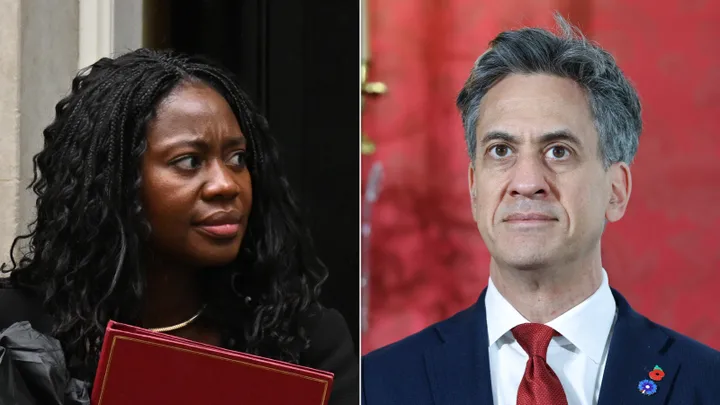
The government has largely avoided using the £300 figure since Andy Burnham replaced Starmer and former energy secretary Ed Miliband – now the foreign secretary – was replaced by his ally Miatta Fahnbulleh.
Why Are Prices Going Up Now?
Wholesale gas prices have risen since Donald Trump attacked Tehran in February, which led the Iranian Revolutionary Guard Corps to effectively close the major shipping lane, the Strait of Hormuz.
Nine months later and trade has still not returned to pre-conflict levels, meaning wholesale energy prices have risen.
The west has also tried to wean itself off Russia’s cheap energy exports since the war in Ukraine began in 2022, which has added long-term pressure to energy prices.
Ofgem’s director general for markets, Neil Kenward, said: “Conflict in the Middle East continues to drive energy costs higher, and we know this price increase will be a worry for many households as winter approaches.”
Under Andy Burnham, Labour has tried to help out the public by offering up a £100 payment for 20 million households to help with the cost of their bills.
However, that will be eclipsed by the increased energy price cap in January.
In response to the price hike, energy secretary Miatta Fahnbulleh said the government was still trying to give the public “breathing space”.
She said: “But there is more to do to take the pressure off families and bring bills down for good. That means more cheap, clean, homegrown power so we’re less reliant on expensive fossil fuels, and reforming our broken energy system so it’s fairer for British people.”
HuffPost UK has approached Fahnbulleh for comment on sticking to the £300 pledge.
How Have Political Rivals Responded?
The influence of overseas factors have not stopped Labour’s political opponents weighing into the upcoming price hike.
Reform UK posted on X: “Labour promised £300 off your energy bills. Instead, they’ve slapped on another £443.”
The Tories’ shadow energy secretary Andrew Bowie said: “It is an outrage that, as bills soar, Labour are not only piling green levies and taxes onto bills but signing us up to an EU scheme that risks pushing them even higher.
“Labour are utterly out of touch and could fix this tomorrow if they had the backbone.”
Green MP Hannah Spencer said: “Bill payers are being ripped off again, and more and more people I speak to don’t know how they are going to make it through winter. And yet, fossil fuel giants continue to rake in billions and billions in profit.
“Andy Burnham’s £100 handout was welcome, but hope fades when accompanied by another extortionate hike in energy bills for literally millions of people come January.”
Listen to Commons People, the podcast that makes politics easy. Every week, Kevin Schofield and Kate Nicholson unpack the week’s biggest stories to keep you informed. Join us for straightforward analysis of what’s going on at Westminster.