I recently learned that a man I dated decades ago – who I believe lied, owed me money and left me for another woman – was getting great press for a shiny new project he launched.
Despite effective therapy, a happy marriage to someone better for me and zero contact all these years, it was still distressing.
The zeitgeist was constantly exploding with ruthless men being externally rewarded despite lifetimes of bad behaviour, so I wondered why this public acclaim for an old flame felt so inflammatory. Because I’d been having a rough time in the same field – as well as coping with my husband’s failing health and recent career setbacks – in my imaginary contest, my ex was winning in my long-time arena, and I was losing again.
There should be a statute of limitations for how long breakup PTSD could linger. Reading the news online, I felt bombarded by his name, title, image and links.
I admit I clicked, and noted that he didn’t look so hot on the small screen and that some reviews of his recent magnum opus were mixed. I was relieved I had enough self-control to not initiate a one-star ratings bomb online.
Still, I couldn’t help but flash back to our first blind date when I was 24, a low paid peon at a magazine, and awed by his career.
“Someone else is joining us tonight,” he told me when I had arrived at his Greenwich Village brownstone where he was making us dinner.
I feared he was setting up a threesome, but he opened the door to a medium-sized mutt who bounded out, jumping and barking.
“This is Oscar,” he said. “He wants you to pet him.”
I reached over and the pooch licked my hand.
“Oscar likes you,” he told me. “He’s got a thing for gorgeous brunettes.”
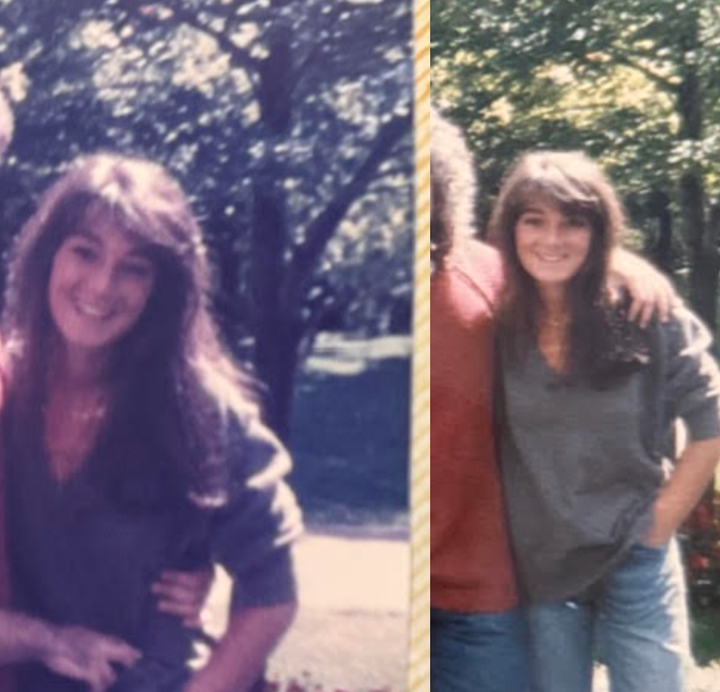
“Tell me about your work,” I said, suddenly embarrassed I’d worn a low-cut knit top, flowery summer skirt and strappy sandals when he was in worn jeans and a grey shirt. With his shoulder length curly salt-and-pepper hair and earring, he looked like a rock star.
“Tell me about your work,” he’d countered. “I loved your line about your friend ‘who met the man she wanted to father the children she didn’t want to have.’”
Quoting from my first national magazine clip? He had done his homework. I was flattered.
Our blind date was set up by my college roommate Sarah, who worked as his assistant. He was 12 years my senior and way more successful. By the time he’d fed me fancy chicken and wine on French country tableware and showed off his chic railroad flat, I was falling for him.
“Two creative brains,” he’d smirked. “That means our kids will be doctors.”
I almost choked. Did he know I was from a medical family from my other essays?
After mentioning an early meeting the next morning, he walked me home and offered a quick kiss goodnight. I thought it was over, but he soon called for another get together.
Courtesy of Susan Shapiro
During the following 12 months, he’d cook me gourmet meals and then we’d sit on his stoop with Oscar, sipping vino, discussing art, music and literature like we were auteurs in Paris. He read my rough drafts, and told me to make the endings more surprising. He surprised me in bed, insisting I climax first. When he came, he called me gorgeous again.
The advice, compliments and chivalry were a good argument for dating older men. He talked me into giving up my sublet and resigning from my publishing job to go freelance like him. (The argument against dating older men.)
When we visited my family in Michigan, I snapped a picture of him in torn Levi’s with my red-headed, designer-clad suburban mother.
“Looks like I’m selling her drugs,” he joked when he saw the photo. I liked his self-deprecating side.
Not as funny were the red flags that rose months later, after I moved in with him.
I heard he owed Sarah for hundreds of hours she’d worked on his project. Picking up the landline we shared when he was out, I was confronted with his ex screaming into the phone. It appeared some of his colleagues were pissed that he’d missed more deadlines and that he was dealing with creditors who were demanding payments from him. He offered excuses I tried to accept.
After extending a two-week business trip, he asked me to cover the rent and bills that he promised he’d repay upon his return. Looking for other invoices he may have ignored that I’d be responsible for, I found worse: what looked to me to be flirty correspondence with an actress I’d met with him where he called me his “assistant” (like Sarah), not his live-in partner.
Humiliated, I left, and crashed on the couch of my best childhood buddy Claire, unable to eat or sleep as mutual acquaintances spilled other secrets: It seemed his divorce from his first wife wasn’t final and that he may have clandestinely moved out of his last place at dusk to avoid back rent. I heard that he was seeing another woman before we’d split, and double dating with supposed friends of mine. I don’t remember him ever reimbursing me for the few thousand dollars I’d laid out, which was a ton of money to me back then. I felt taken and vengeful.
“Be the bigger person. Just cut your losses and move on,” my shrink recommended.
Claire and my family helped me land a lease nearby. Every day he’d stroll by my window with his dog and new girlfriend. She quickly became his fiancé and wife while it took me a decade to wed. Feeling dejected and alone, I was moved when a comrade sent the adage: “He didn’t leave you. The universe moved him out of the way so you could find your destiny.”
I eventually met a burly TV comedy writer. I felt relieved he was fiercely honest, humble, hilarious, and his favourite meal was soda pop with cheese and pepperoni slices on paper plates. Still, I wouldn’t co-habitate until after we married and at 35, I insisted my name was on our apartment deed and that we kept some finances separate.
A colleague called it “screw-you money” – a safety net to escape any beau, boss or relative you needed to escape. Thankfully, I never did. It turned out that laughing well was the best revenge.
I rarely thought of my ex – until a midlife crisis inspired me to write my provocative sex, drugs and marriage memoir that revisited my past relationships, and I decided to call to ask him to lunch.
Over an amiable hour, he spoke of his cherished daughter, the death of the dog he’d adored, and reluctantly relocating to the burbs where it was cheaper. I depicted him humorously in my book as a suave yet deceptive ex, poking fun at my own gullibility and quoting my therapist saying, “You’re only guilty of believing what someone you trusted told you.”
My chapter on our chaotic connection sounded amusing to me and more than fair. His response after reading the book was to email me “ha ha,” and he never spoke to me again. (My husband recommended I repeat this recipe with all my exes.)
But, eons later, while I was struggling with deadlines, the minutiae of medical issues, caretaking, trying to improve my sleep habits and diet, my ex’s press junket triggered new questions, along with fantasies of retribution. What if being the bigger person made you smaller? His fresh acclaim skewed my belief that bad things happened to bad people. Seeing my ex-cad lauded by the world-at-large made me think karma was bullshit.
Not that I was alone. The #MeToo movement had revealed there didn’t need to be an expiration date for seeking justice. Sometimes the fame that narcissists pursued was what allowed them to keep behaving the way they did, without consequences. Yet I hadn’t been groomed, assaulted, raped or ruined by this man. It was a consensual relationship gone wrong.
If I refused to see myself as a victim of anything but naiveté, why were the ancient embers of rejection resurfacing? It wasn’t rational, since my ex had in fact done me a favour by revealing who he was early on. I’d escaped relatively unscathed, and I questioned if I was even entitled to brood when comparatively, his conduct was disturbing but not criminal.
Courtesy of Susan Shapiro
“What’s this here to teach you?” my shrink would annoyingly ask.
I worried that my current vulnerability and sadness made me pettier, throwing me back to the past I thought I’d fully recovered from. In reality, my ex had been a springboard. He’d encouraged me professionally, insisting I’d outgrown my low-level clerical job. He swore I’d do better on my own, and I let him convince me.
Luckily, I didn’t figure out how quixotic he was until years later. You need to be a bit delusional to think you could make it as a freelancer in an creative field in this city. His confidence and visions of grandeur were liberating.
In retrospect, his deceits weren’t about me. They were self-aggrandising, bolstering himself into believing he was making it – that he was free of his former failed marriage when he wasn’t yet. That he might land a famous mate he had no chance with. That he could afford his cool, boho, two-bedroom when he probably couldn’t.
“What did you see in him?” my spouse asked.
“He lived in this beautiful book-filled New York pad and seemed to be so successful working in an artistic field,” I’d recalled.
“So you didn’t want to marry him. You wanted to be him?”
Aha. I did. And I sort of was – ensconced in our Greenwich Village home, surrounded by several hardcovers with my name on the jackets. I was sure my hard-won success over-compensated for all previous harm to my heart and ego. While I felt like I was regressing, I’d actually gone from hero-worshipping an older man to feeling competitive and jealous of a peer, as if “achievement were redemption,” to quote a poet I knew.
I was raised to believe that being an honest, good person is what led to fame and fortune. Unfortunately, it didn’t. Nor was it the reason to pick an ethical path. Life wasn’t fair; I couldn’t control who society punished or honored, nor should I try. On some level, seeing an ex excel offered a chance to revise my story and review my romantic trajectory, refocusing on its miraculous overview.
Indeed, I was blessed with long-lasting work, love and a warm, stable home with a partner who kept his promises. When I asked about the female voicemail I’d heard on his phone, my husband told me, “Susan, if I ever cheat on you, it will be with pizza.”
Susan Shapiro is an award-winning writing teacher and the bestselling author of several books her family hates, including “The Forgiveness Tour” and “Five Men Who Broke My Heart,” which is being developed for a movie by a top motion picture studio. Follow her on Instagram at @profsue123.
Do you have a compelling personal story you’d like to see published on HuffPost? Find out what we’re looking for here and send us a pitch at pitch@huffpost.com.