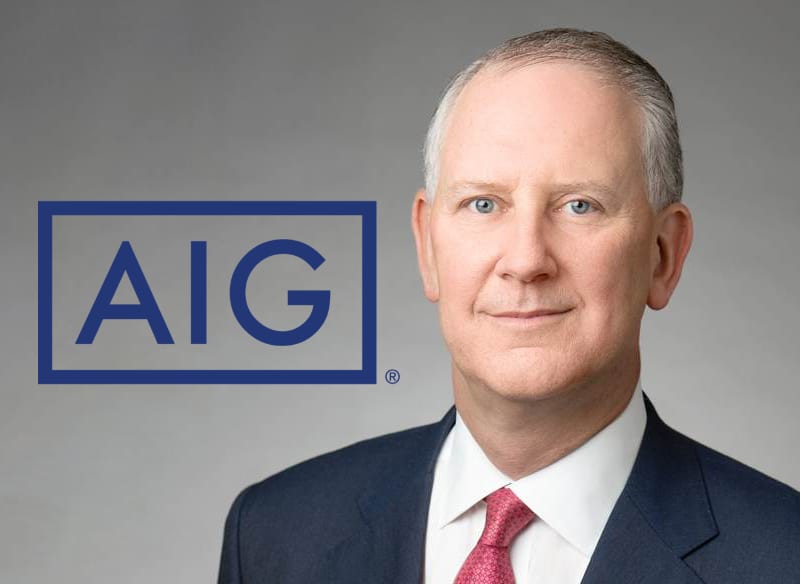
Chirag Shah, global head of casualty insurance at Gallagher Re, said that despite competition on terms, the casualty reinsurance market capacity increased on April 1, 2026, supported by existing players and new entrants, and reinsurance renewals also increased.
In reinsurance broker Gallagher Re’s latest Issue 1 report, Shah noted that the casualty market of 1.4 reflected a continuation of the trends observed in 1.1, with reinsurers adopting a prudent approach to growth. This is driven by dynamics in the original market, where carriers are maintaining disciplined underwriting strategies and continuing to increase rates to offset loss trends and developments over the past year.
“Performance in recent accident years remains a key focus as the results crystallize, with discussions and negotiations continuing to deepen into quantifying underwriting and claims management actions. Reinsurers have responded more aggressively when insurers provide detailed insights into their strategies, as well as technical evidence indicating changes in their future performance trajectories,” Shah said.
Gallagher Re reported that in the United States, the market remains relatively stable, with original business rates remaining positive and exceeding loss trends, and there is ample reinsurance capacity.
Allowance share relinquishment commissions were flat to up +1 percentage point, while risk-adjusted rate changes for excess loss plans ranged from flat to -5% for loss-impacted plans, and flat to +5% for loss-affected plans.
“Most reinsurers want to maintain their position and some are pursuing growth opportunities with core clients. Clients continue to utilize multiple tools to optimize their reinsurance strategies, with growing interest in alternative capital solutions, particularly sidecars, to complement traditional reinsurance,” Shah explained.
Internationally, the focus of 1.4 is the Japan Treaty, where the reduction of limits on U.S. exposure under global umbrella policies continues to dominate the discussion. 2026 marks the third year of this strategic shift, during which the Japanese cedant has achieved further double-digit exposure reductions. Therefore, given the fixed-premium nature of reinsurance contracts, renewal negotiations focus on recognizing this in reinsurance payouts.
In Japan, the risk adjustment rate changes for no-loss plans for general third-party liability plans range from +2.5% to +5%.
In Japan, personal accident plans continue to soften as both new and existing capacity providers seek to protect existing share and/or pursue growth opportunities. This dynamic supports ceding companies achieving double-digit premium reductions while seeking to fully or partially restore communicable disease coverage.
Overall, Shah said technical arguments and competitive dynamics played a key role in shaping the results, with firm order terms (FOT) reflecting a currency reduction of -7.5% to -12% due to a significant reduction in exposure. While views on risk-adjusted rates vary, currency reductions typically translate into single-digit risk-adjusted rate increases to keep up with losses.
Additionally, seeking additional markets to support its real estate offerings resulted in Treaty’s over-allocation increasing by 10%-20%.