Insurance and reinsurance industry losses due to natural catastrophes are expected to exceed $100 billion in 2025 for the sixth consecutive year, but are expected to total $107 billion, 24% lower than the $141 billion in 2024 and 3% below the 10-year average of $111 billion, according to Swiss Re.
Data from the reinsurance giant shows that the Los Angeles wildfires in January 2025 were the world’s costliest events, with insured losses reaching US$40 billion, and severe convective storms (SCS) in the United States costing US$50 billion were another major driver of total losses in 2025.
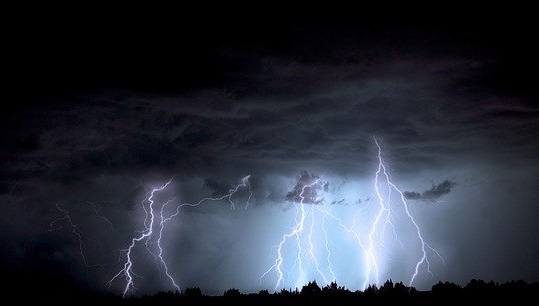
In fact, Swiss Re’s analysis found that 2025 was the third-highest year for SCS losses after 2023 and 2024, driven by heavy SCS activity in the first half and lower than seasonal normal hail and wider thunderstorm impacts in the second half.
Of the total insured losses of $107 billion, the United States was once again the most affected market, with losses of $89 billion, accounting for more than 83% of total natural cat insured losses.
“Insured losses continue to rise amid annual fluctuations. This is why enhanced prevention, protection and preparedness are crucial to safeguard life and property. Reinsurers and the wider insurance industry play a dual role: acting as financial shock absorbers and supporting the development of resilient, risk-informed public policies and private investments to reduce future losses,” said Jérôme Jean Haegeli, Chief Economist at Swiss Re.
In addition to high SCS activity in the United States, Europe also experienced significant hailstorms in May and June in 2025, although Swiss Re noted that insured losses were small as the strongest activity hit areas with lower concentrations of high-value risks.
“We have observed a steady increase in losses from severe convective storms. Factors such as urbanization in hazard-prone areas, rising property values, rising construction costs and aging roofs make these storms a major hazard for insurers. Since a single event rarely results in a major insured loss, insurers must consider the cumulative impact of frequent, low-loss events and increasing property values and repair costs. A more comprehensive understanding of this hazard is critical to ensuring appropriate underwriting and risk management,” Balz Grollimund, Head of Catastrophe Risk at Swiss Re.
While 2025 is an active season for hurricane activity, losses are lower this year, caused by Hurricane Melissa, the costliest hurricane of the year, with estimated insured losses of up to $2.5 billion, according to the Swiss Re Institute.
The company also highlighted that severe flooding occurred in Southeast Asia, especially Vietnam, Thailand and Indonesia, in late November, which was caused by “a complex series of weather systems, including the interaction of multiple cyclone systems and the intensification of monsoons under La Niña conditions.”
In terms of economic losses caused by natural disasters, Swiss Re Institute expects this figure to be US$220 billion in 2025, down from US$327 billion in 2024 and below the 10-year average of US$267 billion.
Total economic losses, including man-made events, of $13 billion will reach $233 billion by 2025, while total insured losses will reach $118 billion, including $11 billion in insured losses from man-made events and $107 billion in losses from the aforementioned natural cats.