


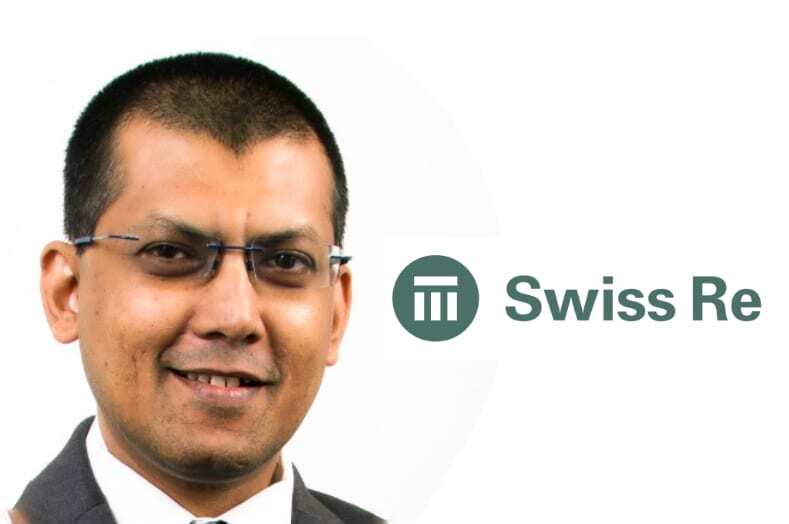
In a recent interview with Reinsurance News, Amitabha Ray, CEO of Swiss Re India, shared his insights on the changing landscape of reinsurance in 2026, with a specific focus on India and the wider Asia-Pacific market.
As the global reinsurance market looks ahead to 2026, despite rising uncertainty, resilience continues to define the landscape, particularly across the Asia-Pacific region. “Across the region, clients are navigating a complex environment created by geopolitical uncertainty, heightened risks related to extreme weather, and ongoing economic adjustments,” Wray said.
“What we are seeing ahead of renewals is not a single cycle, but a very diverse market landscape, with different business segments at different stages of the underwriting cycle. Some economies are still adapting to higher loss costs and inflationary pressures, while others are stabilizing and preparing for future growth. This will likely be reflected in 1/1 renewals, with more differentiation expected across businesses, geographies and portfolio quality, and risk-adequate terms and conditions rather than broad softening,” Ray continued.
In India, the reinsurance market is expected to continue its rapid growth trajectory despite increasing competition. “The establishment of new domestic reinsurers and the expansion of the International Financial Services Center (IFSC) in Gujarat are reshaping the market landscape, attracting global players and increasing capacity,” he noted. New demand areas including cyber, guarantees and renewable energy are emerging as insurers seek to cover changing risks.
Ray highlighted the regulatory environment as another key factor shaping the market. “The upcoming shift to a risk-based capital regime as part of IRDAI’s broader regulatory reforms is expected to improve capital efficiency and open up new avenues for reinsurers to innovate and expand their operations in India. “Reinsurers are expected to play a key role in building resilience, particularly in addressing natural disaster ‘risk hotspots’ such as Gujarat, Maharashtra and Tamil Nadu.
For Swiss Re, the focus over the next 12 months remains on fundamentals and long-term customer engagement. “Improving underwriting performance remains critical to ensuring long-term sustainability and attracting market reinsurance capacity. At Swiss Re, we remain focused on fundamentals, maintaining risk-adequate underwriting in our approach and working closely with clients to build long-term resilience,” Ray explained.
The company emphasizes early and transparent dialogue, tailor-made local solutions, and a partner mentality that supports sustainable growth through changing market cycles. This approach includes enhancing technology pricing, increasing data transparency, and applying prudent portfolio management practices.
By the end of 2025, the reinsurance market will face both challenges and opportunities. Ray pointed out that demand in the Asia-Pacific region will be driven by geopolitical instability, continued economic uncertainty and natural disaster losses, which average more than $100 billion per year. “In 2024, global natural disasters caused economic losses of US$318 billion, only 46% of which were insured. In Asia, the protection gap is about 84%, which means that only about 16% of natural disasters (about US$66 million) are insured,” he said.
Specialty insurance programs are particularly vulnerable. “Amid policy uncertainty and economic fragmentation, specialty insurance businesses such as maritime, engineering, credit and guarantees are directly affected by the economic impact of trade disruptions. Maritime insurance is directly affected by reduced global trade flows and shipping volumes, reducing underwriting risk while increasing the risk of port delays and route disruptions.”
“At the same time, engineering insurance is facing pressure from rising construction costs due to more expensive imported machinery and materials, as well as a general rise in inflation, which is increasing the severity of claims. Credit and surety insurance is also an area of concern as the risk of defaults and project cancellations increases as economic activity slows,” he explained.
Certain industries such as aviation and agriculture may face less disruption, but costs may rise due to increased inputs such as aircraft parts, maintenance delays, fertilizers and machinery.
He continued: “While cyber insurance is not directly related to policy uncertainty, geopolitical fragmentation does increase systemic cyber risk exposure, making cyber insurance more strategically important.”
At the same time, demand for business interruption and trade interruption insurance is expected to grow as businesses seek stronger protection. “Overall, specialty industries face higher risks, but also opportunities to support resilience in an increasingly fragmented global economy,” Ray concluded.