


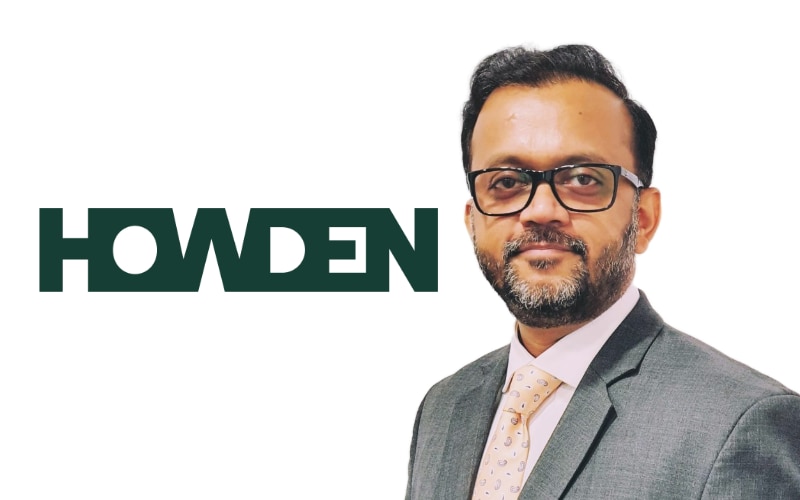
Speaking to Reinsurance News, Amit Agarwal, Chief Executive Officer (CEO) and Managing Director (MD) of Howden India, explained that prices are expected to soften in some segments of the market ahead of April renewals due to ample capacity and increased competition; however, the reinsurer remains firmly committed to the long-term potential of the Indian market.
“India is at the forefront of global insurance growth and is one of the most attractive and strategically important markets in the world,” Agarwal said. “The continued development of GIFT City, with the establishment of multiple IFSC Insurance Offices (IIOs) and more in the pipeline, underlines this confidence. The market is evolving rapidly, combining scale-driven growth with increasing technological sophistication and global consistency.”
In terms of key growth opportunities in the country, Agarwal highlighted that the “most compelling” ones are sectors such as large industrials, energy and infrastructure risks, whose size and complexity require advanced structures and strong market access.
He further highlighted how the life and health reinsurance industry continues to offer significant long-term potential as penetration and innovation increase.
“Marine and political violence terrorism hotlines are also gaining traction, driven by supply chain risks and geopolitical developments. These segments reward technical expertise, analytics-led underwriting, and strong client advocacy,” Agarwal continued.
While the opportunities in India are clear and broad, Agarwal stressed that doing business in the country does come with some challenges.
“The market remains highly price-sensitive, with fierce competition fueled by annual tenders and aggressive broker pricing strategies. Margin pressure is an ongoing reality. At the same time, regulatory evolution, particularly around capital and compliance requirements, has increased structural complexity. Operating successfully in this environment requires agility, discipline and the ability to adapt quickly to regulatory and commercial changes,” he said.
Looking ahead, the CEO highlighted macroeconomic uncertainty and geopolitical volatility as the major forces influencing market decisions in India over the next 12-24 months.
“The current global and Asia-Pacific centric turbulence will continue to impact supply chains, ocean exposure and overall risk appetite. Increasing competition is tilting the levers towards cedants, while underwriters are responding by relying more on analytics, automation and AI-driven insights. Over the next 12 to 24 months, data-led underwriting discipline will become a key differentiator to sustain profitable growth,” Agarwal said.
Regular readers are aware that India has recently liberalized its re/insurance industry, allowing up to 100% foreign direct investment (FDI) under the automatic route, marking a major shift in the ownership policy of re/insurers operating in the country.
“The introduction of 100% FDI has fundamentally changed the Indian reinsurance landscape,” Agarwal said. “It enables global reinsurers to deepen their commitment to the market, deploy capital more confidently and bring in higher levels of technical expertise. This increases underwriting complexity and intensifies competition, while aligning India more closely with global reinsurance standards. The result is a more capital-rich, resilient and international reinsurance market with strong long-term growth prospects.”
As for reinsurance renewals in April 2026, Howden India expects the market to remain broadly disciplined despite potential instability in specific segments.
“Insurers and reinsurers are entering the season with strong capital positions and ample capacity, which will continue to support a relatively weak market. Nonetheless, the degree of weakness is uneven,” Agarwal said.
The country’s three most volatile areas remain real estate, construction and large industrial risks, reflecting loss experience, risk complexity and selective underwriting preferences.
He added: “Competition is intensifying as capacity seeks to be deployed, but outcomes will increasingly depend on data quality, risk differentiation and rigorous pricing, not just capacity.”
Agarwal noted that while the geopolitical landscape and the legacy of the current conflict in West Asia has not caused widespread direct damage to the Asia-Pacific region as a whole, its indirect effects are becoming more apparent, especially for India.
“The energy, hull and cargo mix associated with Middle East trade routes is coming under greater scrutiny. Traditional product lines remain broadly stable, but with greater sensitivity to the risk of political violence.
“Capacity withdrawals at local and international levels, coupled with increased geopolitical uncertainty, are driving upward pressure on ocean and political violence pricing. This reflects a forward-looking reassessment of cumulative risks rather than direct loss impacts,” he explained.