


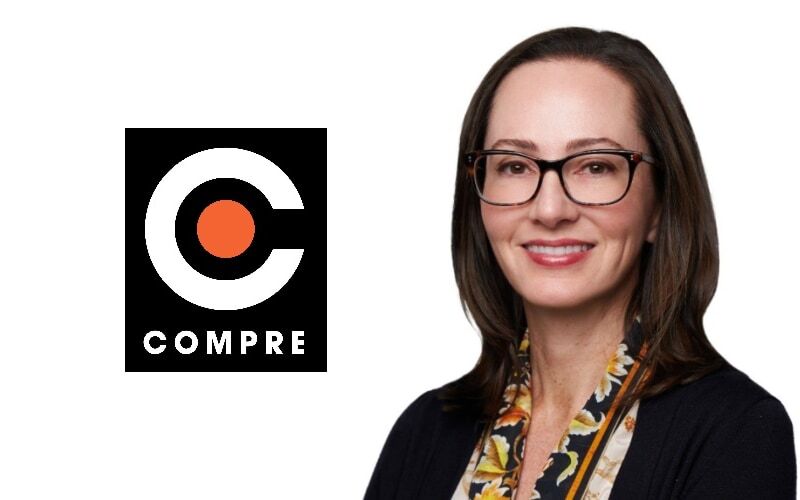
Compre chief underwriting officer (CUO) Rachel Bardon said the traditional re/insurance market continues to evolve and is increasingly moving towards pure capital relief structures, which are increasingly complex and require creative, patient, long-term partners.
In an interview with Reinsurance News during our visit to Bermuda, Baden discussed the current state of the traditional market.
She explains: “We are noticing more complex transactions. Traditional transactions have historically involved discontinued businesses where the client wanted to wind up all claims administration, which is still common. However, we are now seeing purer capital relief structures, particularly the more complex structures.
“Before joining Compre, I was more familiar with traditional capital relief methods such as mortgage reinsurance and sidecars. But these renewable legacy capital relief structures (such as cancellation and replacement of new accounts) are a unique form of residual capital. I believe the complexity of the legacy space will continue to grow and will require creative, patient, long-term partners.”
Baden also said she expects third-party capital to become more involved in the overall property and casualty insurance market, noting that such capital will require clear exit solutions while traditional capital has the ability to increasingly participate in helping third-party capital adapt to these longer-term assets.
She continued: “I foresee an increased focus on building long-term partnerships and identifying ways to support more collaborative efforts.
“There’s also the concept of providing solutions throughout the entire lifecycle of exposure, and I think our engagement on the forward-looking side helps facilitate that as well.”
Additionally, she highlighted the huge growth potential of the traditional U.S. market, while emphasizing that it is more complex and requires patience.
“Compre’s heritage has been Europe-focused, but in recent years we have expanded into the United States. While Europe remains central to our strategy, U.S. involvement is increasing. The U.S. market is more complex and there is greater uncertainty due to its judicial system, changing statutes of limitations and 50 different state regulators approving transactions. So you have to be very patient.
“Cedents in the U.S. have an opportunity to deflect some potentially adverse developments; however, this can lead to bid-ask spreads that are sometimes difficult to bridge. There are ways around this, and it does require some creativity, so making the cedants comfortable and ensuring that if their reserve selection is correct, they will benefit from it. But if our reserve selection is correct, we will not be adversely harmed by it. It is important to use creative mechanisms such as corridors and experience accounts,” he said. Baden.
Looking ahead, Baden reiterated that the need for capital relief structures is likely to increase in the coming years, while continuing to examine how legacies can partner with third-party capital in potential transactions such as sidecars.
“I think the opportunities for traditional players to participate in more and different types of transactions than historically have expanded,” Baden said.